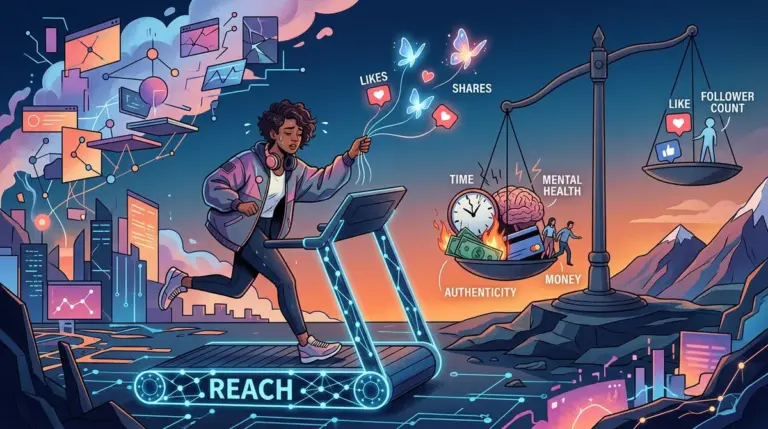

Building a business on a social media platform is a high-stakes lease agreement where the landlord can change the locks, raise the rent, or demolish the building without notice. For creators and digital publishers, platform risk isn't a theoretical concern—it is an operational reality that dictates the valuation and longevity of their brands. When a single algorithm update can slash reach by 70% overnight, "audience" becomes a liability rather than an asset if you do not own the underlying data. This precarious situation highlights why building a business on shaky ground is a recipe for disaster when you don't own your audience.
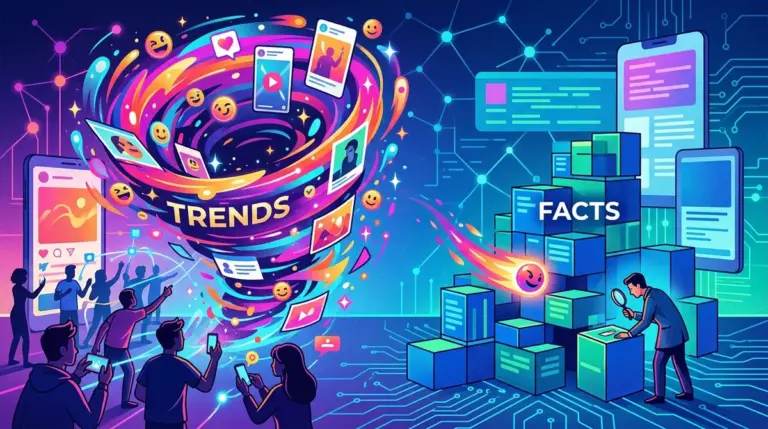
The current creator economy is built on a "rented land" model. Whether it is TikTok’s potential ban, Instagram’s pivot from photos to reels, or X’s volatile API pricing, the infrastructure of the internet is increasingly centralized and unpredictable. To survive, creators must transition from being platform-dependent entities to platform-agnostic media businesses. This trend suggests that platforms eventually converge in their strategies, making true independence a challenge.
The Algorithmic Single Point of Failure
Most creators treat platform algorithms as partners, but they are actually gatekeepers with misaligned incentives. A platform's primary goal is time-on-site and ad inventory liquidation, not the growth of your specific business. When these goals diverge, the creator loses. This creates a "single point of failure" where a content strategy optimized for one specific feed becomes obsolete the moment that feed’s weighting criteria change.
Technical Reality: Platforms use machine learning models that prioritize engagement signals over subscription signals. This means having a million followers does not guarantee a million impressions. In fact, organic reach on legacy platforms like Facebook has dwindled to low single digits. If your revenue is tied directly to these impressions, your business model is essentially a derivative of the platform’s stock price and quarterly earnings goals.
The Monetization Trap and Revenue Clawbacks
Relying on platform-native monetization—such as YouTube’s AdSense or TikTok’s Creator Fund—is the most fragile way to build a business. These programs offer zero transparency into rate changes. We have seen "Adpocalypse" events where entire niches were demonetized due to brand safety concerns that had nothing to do with the individual creators affected. Furthermore, these platforms act as the sole arbiter of disputes, leaving creators with no legal recourse when funds are withheld or accounts are suspended.
Warning: Never allow a single platform to control both your distribution and your payment processing. If a platform bans your account, they often freeze your pending balance simultaneously. Use independent payment gateways like Stripe or Lemon Squeezy for direct-to-consumer sales to ensure your cash flow remains decoupled from your social standing.
Diversification Beyond the Follower Count
The shift from "followers" to "first-party data" is the only way to mitigate platform risk effectively. A follower is a vanity metric controlled by a third party; an email address or a phone number is an asset you can move between service providers. The goal of every social post should be to migrate the user from the "rented" platform to an "owned" channel.
Best for: Creators with over 50,000 followers who currently see declining engagement rates despite consistent posting schedules.
- Email Lists: The gold standard of owned media. With a deliverability rate that isn't subject to a feed algorithm, email remains the most stable conversion tool.
- SMS Marketing: High-urgency communication for product drops or breaking news, boasting open rates north of 90%.
- Private Communities: Moving core fans to platforms like Discord, Slack, or Circle where you control the moderation and the data.
- Self-Hosted Hubs: A central website (CMS) that serves as the permanent archive of your work, protected from platform-wide purges.
The Infrastructure of Ownership
To truly de-risk, you must look at your technical stack. If you are using a "link in bio" tool that you don't own, you are adding another layer of platform risk. If that tool goes down or changes its terms, your entire funnel breaks. Smart creators are moving toward custom domains and self-hosted landing pages that they control via a traditional web host.
The Death of Third-Party API Access
We saw this with the Reddit and X API changes: tools that creators relied on for scheduling, analytics, and community management were priced out of existence overnight. This "enclosure" of the social web means you can no longer rely on third-party integrations to bridge the gap between platforms. Your workflow must be resilient enough to function even if API access is revoked. This means maintaining manual backups of your content, captions, and engagement data in a localized database or a cloud-based spreadsheet.
Hardening Your Content Distribution Stack
A "hardened" stack is one where no single entity can shut down your ability to communicate with your audience. This requires a shift in how you produce and distribute media. Instead of creating "native" content that only works on one platform, adopt a "COPE" (Create Once, Publish Everywhere) strategy that prioritizes the most stable format: long-form video or text.
By using a long-form piece as the "source of truth," you can derivative-cut it for various platforms. If TikTok disappears, you still have the source files to fuel YouTube Shorts or Instagram Reels. If your Instagram is shadowbanned, your newsletter subscribers still receive the core message. This isn't just about being on multiple apps; it’s about ensuring the intellectual property exists independently of the distribution channel.
Building a Platform-Agnostic Media Business
To move forward, conduct a "risk audit" of your current operations. Identify every point where a third party has the power to stop your business from functioning. If you find that 80% of your leads come from one source, or 90% of your revenue is processed through one platform’s internal wallet, you are in a high-risk zone.
Start by implementing a 24-hour migration plan. If your primary account was deleted today, how would you notify your audience tomorrow? If the answer involves "starting from zero," you haven't built a business; you've built a profile. The transition to a platform-agnostic model is difficult and requires more technical overhead, but it is the only way to ensure that the brand you build today will still exist five years from now.
Frequently Asked Questions
What is the most effective way to move followers to an email list?
Offer a "lead magnet" that provides immediate, tangible value that cannot be replicated in a social feed. This could be a specialized template, a deep-dive PDF, or access to a private video. Direct calls-to-action (CTAs) in the bio are less effective than "value-first" exchanges where the user gets something specific for their data.
Is it worth building on new platforms like Threads or BlueSky?
Yes, but only as a secondary distribution layer. New platforms often offer high organic reach to attract users, which makes them excellent for "top-of-funnel" discovery. However, you should treat them with the same skepticism as established platforms. Use the early-adopter reach to aggressively funnel users to your owned properties.
How do I handle the costs of self-hosting and newsletters?
View these as "insurance premiums" for your business. While social media is "free," the cost of losing your audience is infinitely higher than the monthly fee for a CMS or an Email Service Provider (ESP). Start with lean tools like Substack or a basic WordPress install and scale as your revenue grows.
Does platform risk apply to B2B creators on LinkedIn?
Absolutely. LinkedIn frequently adjusts its algorithm to favor different content types (e.g., moving from "broetry" to "knowledge-based" posts). While it is a more professional environment, the core risk remains: you do not own the connection to your professional network on LinkedIn; LinkedIn owns it and sells it back to you via Sales Navigator and Ads.