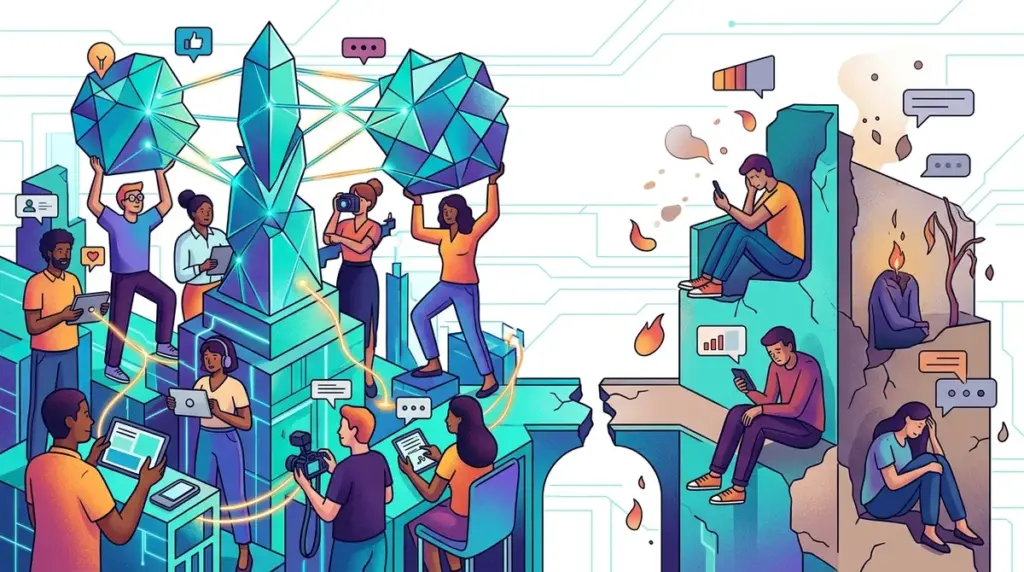
Most brand communities are actually just glorified mailing lists with a higher churn rate. Companies invest heavily in Discord servers, Slack channels, and private forums, yet 90% of these spaces become digital ghost towns within six months. The failure isn't usually a lack of content or a poor tech stack; it is a fundamental misunderstanding of the difference between an audience and a movement. An audience consumes; a movement contributes. When the incentive to contribute is purely transactional, the community fades as soon as the rewards—or the novelty—dry up.
For marketers and creators, the distinction is a matter of capital efficiency. Building a movement creates a self-sustaining marketing engine where members recruit others and defend the brand. A fading community is a cost center that requires constant manual intervention to maintain a pulse. To move from a passive group to a resilient movement, you must shift from managing a platform to architecting a culture.
The Structural Shift from Hub-and-Spoke to Mesh Networks
Traditional community management follows a hub-and-spoke model. The brand or founder is the hub, and every member is a spoke. In this setup, all value flows through the center. If the founder stops posting, the community dies. This is the primary reason why "influencer" communities often fail to scale into movements; they are personality-dependent rather than mission-dependent.
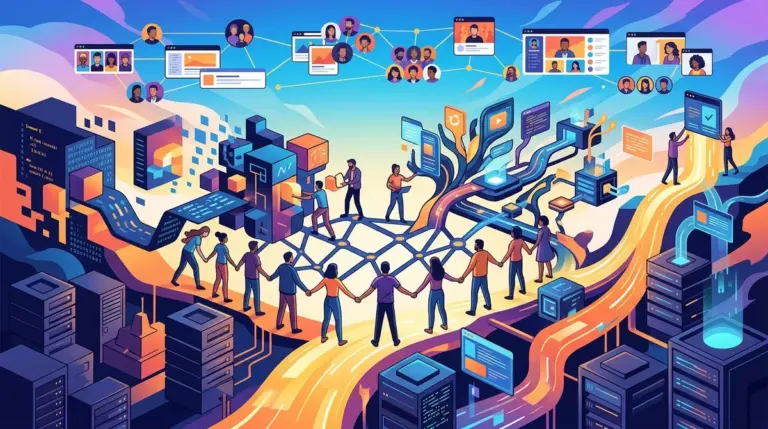
A movement operates as a mesh network. Members interact with each other without the brand acting as a mandatory intermediary. In a high-functioning movement, the brand provides the infrastructure and the mission, but the members provide the momentum. This requires a deliberate decentralization of authority. When members have the power to organize their own sub-events, create their own documentation, or moderate their own channels, they transition from "users" to "stakeholders."
The Role of Shared Language and Tribal Markers
Movements are defined by their boundaries. If a community is for everyone, it is for no one. Successful movements utilize specific nomenclature, inside jokes, and shared rituals that serve as a "proof of work" for membership. This creates an immediate sense of belonging for those inside and a clear barrier for those outside. In the developer world, this might be specific GitHub contribution norms; in the creator economy, it might be a specific set of emojis or acronyms used in comments.
Best for: High-growth startups and niche SaaS products looking to reduce customer acquisition costs (CAC) through organic word-of-mouth.
Engineering High-Friction Onboarding
Counter-intuitively, making it too easy to join a community is a recipe for a quick fade. Low friction leads to low commitment. When a community is "one click to join," it attracts tourists who have no intention of contributing. Movements that last often implement "vibe checks," application forms, or mandatory introductory tasks. This friction filters for quality and ensures that every new member is aligned with the core mission.
- The Application Filter: Requiring a 200-word explanation of why someone wants to join reduces volume but increases the average member lifetime value (LTV).
- The Initiation Task: Forcing new members to complete a specific action (like introducing themselves or completing a tutorial) before unlocking full access.
- The Peer-Review Process: Allowing existing members to vote on or vouch for newcomers, which reinforces the mesh network structure.
Warning: The most common mistake in community building is prioritizing "Member Count" over "Active Contribution Rate." A Discord with 50,000 silent members is a liability; a Slack with 500 active contributors is a movement. Never optimize for vanity metrics that don't correlate with peer-to-peer interaction.
The Governance as a Retention Engine
Movements survive because members feel a sense of ownership. This is why decentralized autonomous organizations (DAOs) and open-source projects often have higher retention than traditional brand forums. Even if you aren't using blockchain technology, you can implement "soft governance." This means giving the community a say in the product roadmap, the branding, or the rules of the space.
When a member sees their suggestion implemented in a software update or a new product line, their psychological switching cost increases. They are no longer just a customer; they are a co-creator. This level of engagement is the ultimate moat against competitors. A competitor can copy your features and undercut your price, but they cannot easily copy the five-year history of a member's contributions to your movement.
Technical Infrastructure That Facilitates Connection
The choice of platform dictates the behavior of the community. If you use a platform designed for broadcasting (like a standard email list or a Facebook Page), you will get an audience. If you use a platform designed for multi-threaded conversation and collaboration (like Discord, Circle, or custom-built portals), you have the foundation for a movement.
However, the tool is secondary to the "social architecture." You must design for serendipity. This means creating spaces where members can find each other based on shared sub-interests. For example, a community for "Digital Marketers" is too broad. A movement for "SEO Professionals specializing in Programmatic SEO" allows for deeper, more specific connections that keep people coming back daily.
Operationalizing Your Community Strategy
To prevent your community from fading, you must move away from "engagement for engagement's sake." Stop asking "What do you think of our new logo?" and start asking "How can we solve this specific industry problem together?" Transitioning to a movement-based model requires a three-step operational shift:
First, identify your "Super-Users." These are the 1% of your members who are already contributing without being asked. Give them formal titles, early access to features, and direct lines of communication to your team. Second, automate the mundane. Use bots and workflows to handle onboarding and moderation so your community managers can focus on high-level strategy and relationship building. Third, create a regular cadence of "Value Events." Whether it’s a monthly town hall, a weekly deep-dive, or a quarterly hackathon, these events act as the heartbeat of the movement, pulling passive members back into the fold.
Movement Growth FAQ
How do I know if my community is turning into a movement?
The clearest indicator is when members start creating content, tools, or events related to your brand without your prompting. If you see "unofficial" guides or community-led meetups appearing, you have moved beyond a simple audience.
What is the ideal size for a movement to remain effective?
Size is less important than density. Dunbar’s Number suggests humans can comfortably maintain about 150 stable relationships. For larger movements, you must break the community into "squads" or sub-groups of 100-150 people to maintain the intimacy required for a movement to thrive.
Can a movement survive the departure of its founder?
Only if the founder successfully transitioned from being the "Hub" to being the "Architect." If the movement’s identity is tied to the mission rather than the person, it will persist. If it’s tied to the person, it’s a cult of personality, not a movement, and it will likely fade when that person exits.
How do you monetize a movement without killing the vibe?
Monetization should feel like an "upgrade" to the member's ability to contribute or succeed, rather than a toll for access. Selling tools, advanced education, or physical goods that signal membership are effective ways to generate revenue while reinforcing the movement’s identity.