Marketing departments often allocate quarterly budgets to social strategies that expire within a week. The lifecycle of a digital trend has compressed from months in the era of Facebook to a matter of days on TikTok and Reels. For agencies and publishers, this creates a high-stakes environment where the "first-mover advantage" is the only advantage. Understanding why these trends collapse so rapidly is not just an academic exercise in internet culture; it is a prerequisite for protecting content ROI and avoiding the brand damage that comes with being late to a dead meme.
The Algorithmic Forcing Function
The primary driver of trend burnout is the efficiency of modern recommendation engines. In the legacy social model, content moved through social graphs—you saw what your friends shared. Today, content moves through interest graphs. When a specific audio clip or visual format begins to show high completion rates, the algorithm bypasses social connections to force-feed that content to millions of users simultaneously.
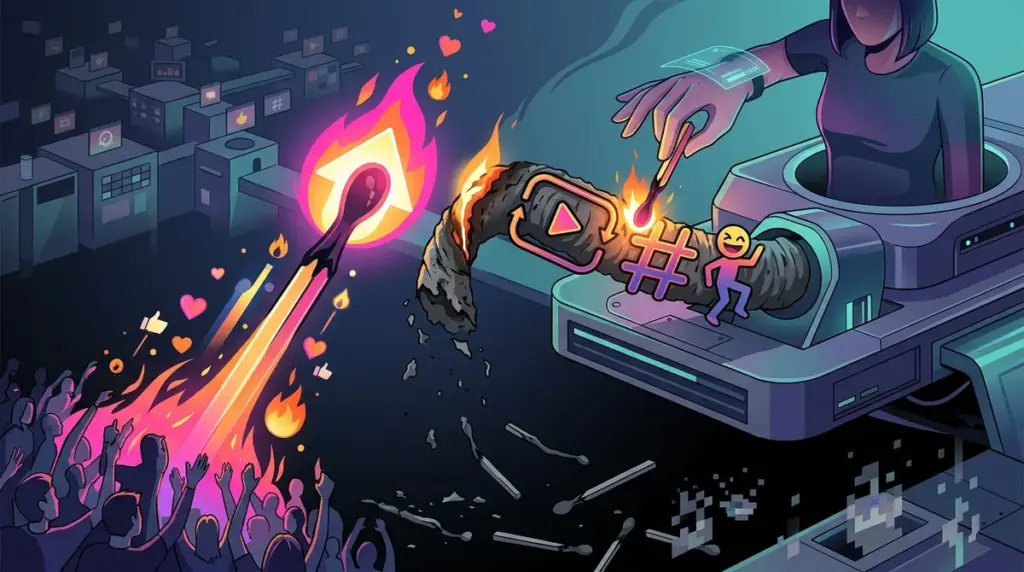
This creates a massive spike in visibility, but it also triggers immediate "semantic saturation." When a user sees twenty variations of the same joke in a single thirty-minute session, the dopamine response drops. The algorithm, sensing a decline in engagement, pivots to the next stimulus. This feedback loop ensures that any trend with high viral potential is consumed to the point of exhaustion within a 72-hour window.
The Law of Diminishing Creative Returns
As a trend scales, the barrier to entry drops. Early adopters usually bring high production value or a unique twist. By the time a trend reaches the "mass participation" phase, the quality of contributions inevitably plateaus. This creates a sea of derivative content that lacks the novelty required to sustain interest. For creators and brands, the cost of participation remains the same, but the attention-yield drops exponentially as the trend matures.
The Brand Colonization Death Spiral
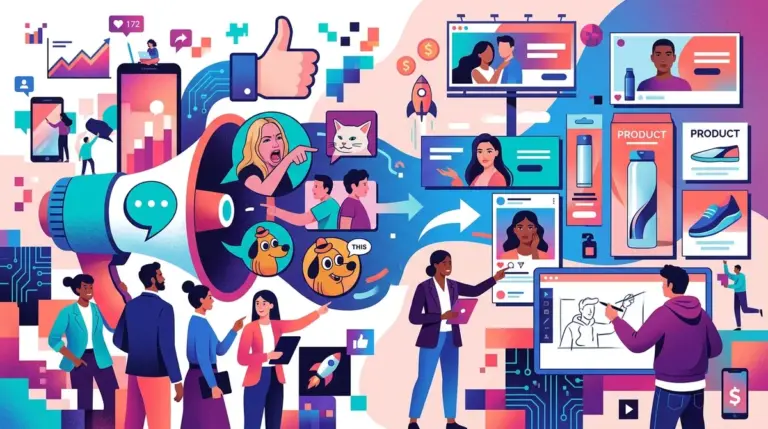
A trend officially enters its terminal phase the moment a major corporate brand attempts to "humanize" itself by participating. This is known as the commercialization death spiral. In the creator economy, authenticity is the primary currency. When a legacy brand uses a niche subculture's slang or a specific TikTok transition, it signals to the original creators that the trend is no longer "theirs."
Best for: Social media managers and creative directors who need to justify passing on a trend that has already reached LinkedIn status.
Corporate adoption acts as a signal of cultural obsolescence. Because brand approval processes—legal, PR, and executive sign-off—often take days or weeks, the content is usually published just as the organic audience has moved on. This "uncanny valley" of marketing not only fails to drive engagement but can actively alienate the target demographic by making the brand appear out of touch.
Pro Tip: To determine if a trend is worth the investment, track the "Brand-to-Creator Ratio." If more than 15% of the top-performing posts for a specific hashtag or audio are from verified corporate accounts, the trend has likely peaked and will enter a period of rapid decay within 48 hours.
The Economic Incentives of High-Velocity Content
The infrastructure of the creator economy is built for volume, not longevity. Creator funds and affiliate programs reward consistent posting schedules. This incentivizes creators to "strip-mine" trends for quick views rather than building evergreen narratives. When thousands of creators are incentivized to jump on the same trend simultaneously to capture a slice of a trending algorithm, they collectively accelerate its demise.
- Algorithmic Overexposure: Platforms prioritize the "new" to keep session times high, leading to the intentional suppression of older trending content.
- Low Production Barriers: Mobile editing tools allow for near-instant replication, leading to market oversupply.
- Fragmented Subcultures: Trends no longer cross the entire internet; they burn out within specific silos (e.g., "TechTok" or "FinTwit") before they ever reach the mainstream.
- Platform Competition: Features like "Remix" or "Duet" encourage imitation over innovation, leading to faster user fatigue.
The Role of Semiotic Decay
Trends often rely on a specific "inside joke" or cultural shorthand. As the trend spreads, the original context is lost. This is semiotic decay. When a trend becomes so abstracted that the average viewer no longer understands the "why" behind the "what," the trend loses its emotional resonance. It becomes noise. For publishers, chasing these abstracted trends results in high bounce rates because the audience can no longer find a point of connection with the content.
Building a Strategy for High-Velocity Markets
To survive in an environment where trends burn out in days, brands must shift from "trend-jacking" to "trend-setting" or, more realistically, "trend-curation." Instead of trying to replicate every viral dance, focus on the underlying shifts in consumer behavior that the trends represent. A trend is usually a symptom of a larger cultural shift—such as a desire for transparency, a specific aesthetic preference, or a reaction to current events. This requires a deep understanding of how platforms shape consumer behavior and influence underlying desires.
Invest in "Middle-of-the-Funnel" content that utilizes trending elements as a hook but delivers evergreen value. This ensures that even if the trend dies, the core content remains useful to your audience. The goal is to use the trend as a distribution vehicle for your brand's unique perspective, rather than letting the trend be the entire message.
Common Questions Regarding Trend Longevity
How can I tell if a trend is a "flash" or a "shift"?
A "flash" trend is usually tied to a specific audio clip or visual filter. A "shift" is a change in how content is structured, such as the move toward "lo-fi" aesthetic or long-form storytelling. Shifts have a much longer half-life and are worth structural investment.
Is it ever worth joining a trend late?
Only if you can provide a high-value subversion of the trend. If you are simply doing what everyone else did three days ago, you are wasting resources. Late entry is only viable if it serves as a self-aware commentary on the trend itself.
What is the average lifespan of a TikTok trend in 2024?
Data suggests the peak-to-trough cycle for a specific audio-based trend is now between 5 and 9 days. Visual formats and "challenges" tend to last slightly longer, often between 14 and 21 days, depending on the complexity of participation.
Does trend-jacking help SEO?
In the short term, yes, via "Discover" feeds and social search. However, because these trends lack longevity, they rarely contribute to long-term organic search authority. Use them for temporary traffic spikes, not as a foundational SEO strategy.