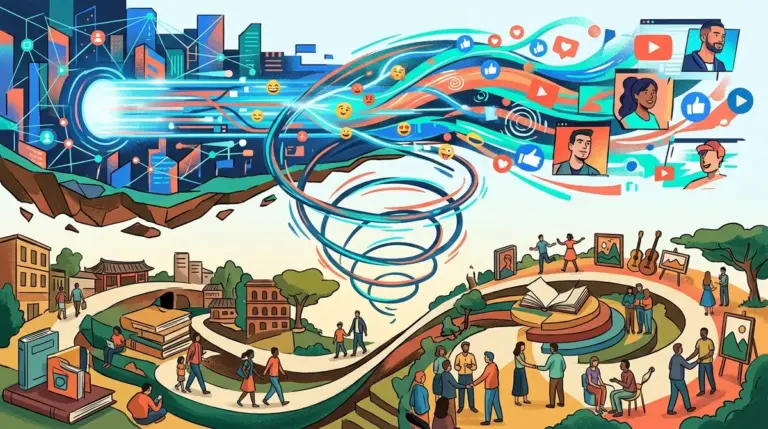
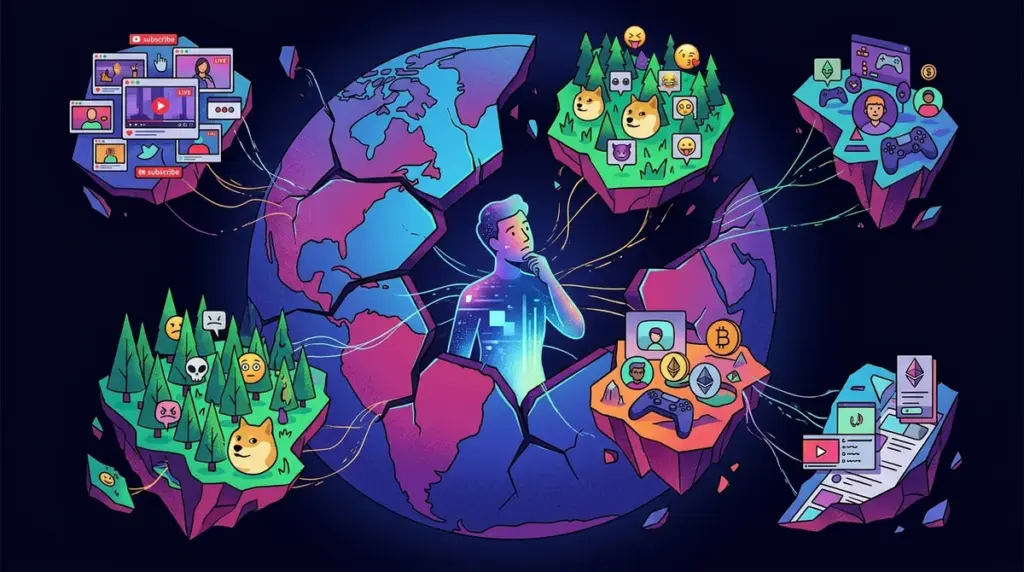
The era of the "Main Feed" has collapsed. For digital marketers and publishers, the death of the monoculture isn't just a sociological shift; it is a direct threat to traditional customer acquisition costs (CAC) and content distribution models. When everyone watched the same Super Bowl ads or followed the same trending topics on a unified Twitter timeline, brand building was a game of scale. Today, internet culture has fractured into thousands of hyper-specific, algorithmic silos where a trend can reach ten million people in a weekend without ever crossing over into the mainstream consciousness.
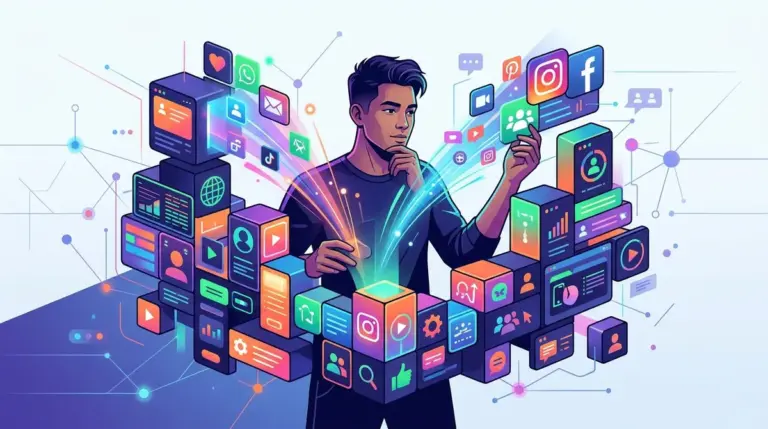
This fragmentation is driven by a fundamental shift in how platforms prioritize engagement. We have moved from a social graph—where you saw what your friends shared—to an interest graph, where you see what a machine predicts will keep you scrolling. For brands, this means the "viral hit" is no longer a reliable growth lever. Instead, success requires navigating a landscape of disconnected nodes, each with its own language, gatekeepers, and internal logic.
The Algorithmic Partitioning of Reality
The primary architect of cultural fragmentation is the "For You" feed. Platforms like TikTok, Reels, and YouTube Shorts have replaced the chronological feed with a high-velocity feedback loop. This creates a psychological environment where two users sitting on the same couch can experience entirely different versions of the internet. One is immersed in "Quiet Luxury" aesthetic tutorials, while the other is deep in "De-influencing" or niche mechanical keyboard hobbyist circles.
Best for: Niche publishers and D2C brands that rely on high-intent, narrow-interest groups rather than broad demographic targeting.
This partitioning makes traditional broad-reach SEO and PPC less efficient. When culture is fragmented, search intent becomes highly idiosyncratic. Users no longer search for generic terms; they search for the specific vocabulary of their subculture. If your keyword strategy doesn't account for the vernacular of these silos, you are invisible to the most engaged segments of your audience.
The Rise of "Dark Social" and Private Communities
As public platforms become more performative and ad-saturated, users are migrating to "Dark Social"—private channels like Discord, Telegram, WhatsApp, and gated Slack communities. This is where the real cultural heavy lifting happens. It is also where attribution goes to die.
- Community Gating: Users are willing to pay for access to curated environments (Substack, Patreon) to escape the noise of the open web.
- Signal Loss: When a product recommendation happens inside a private Discord server, it leaves no cookie trail and no referral header.
- Trust Proxies: In a fragmented world, trust is transferred through individuals (creators) rather than institutions (publications).
Warning: Relying solely on Last-Click Attribution in 2024 is a recipe for budget mismanagement. Fragmentation means the customer journey now involves multiple "invisible" touchpoints in private communities that your analytics software cannot see.
The Shift from Platforms to Protocols
We are seeing the early stages of a move toward decentralized social protocols. Whether it is the Fediverse (Mastodon), Bluesky, or Farcaster, the goal is to decouple the user’s data and social graph from the platform’s control. For marketers, this introduces a new layer of complexity: how do you maintain a brand presence when there is no central authority to buy ads from? The answer lies in "portable authority"—building a brand that users follow across protocols rather than relying on a platform's discovery algorithm.
Economic Implications for Digital Publishers and Brands
Fragmentation has killed the "middle class" of digital media. Large-scale publishers that relied on massive Facebook referral traffic have largely folded or pivoted to aggressive paywalls. The winners in this new economy are either the "Massive Aggregators" (Amazon, Google, Meta) or the "Micro-Authorities" who dominate a specific niche.
For a brand, this means your content strategy must shift from "broad and shallow" to "narrow and deep." A 2,000-word guide on a highly specific technical problem will often outperform a generic 500-word blog post because it signals authority to both the algorithmic filters and the human gatekeepers of niche communities. You are no longer competing for the "internet's attention"; you are competing for the attention of a specific node within the network.
Adapting to the Fragmented Search Landscape
Search engines are responding to fragmentation by prioritizing "Entity Authority." Google is increasingly looking for signals that a brand is a recognized leader within a specific topic cluster. This makes traditional backlink building less effective if those links don't come from relevant, high-authority sources within your specific niche.
Prioritizing Entity Authority Over Keyword Volume
Instead of chasing high-volume keywords with 90+ difficulty scores, the commercially savvy move is to dominate the "Long-Tail Intent" of a fragmented subculture. This involves:
1. Semantic Mapping: Identifying the specific terminology used within Discord or Reddit communities and incorporating it into your on-site copy.
2. Creator Partnerships: Not just for "shoutouts," but for co-creating content that lives on your domain, bringing their established entity authority to your site.
3. Zero-Click Optimization: Providing immediate value in search snippets to establish brand recall, even if the user doesn't click through immediately.
Building Resilient Brands in a Siloed Web
To thrive in a fragmented environment, you must stop treating the internet as a single entity. Start by auditing where your audience actually spends their "unstructured time." If they are on Reddit, your SEO strategy should include a plan for appearing in "Discussions and Forums" search features. If they are on Substack, your PR strategy should focus on newsletter mentions rather than legacy press releases.
The goal is to become the "connective tissue" between silos. Brands that can translate trends from one niche to another, or provide a centralized hub for a fragmented community, will capture the value that the platforms are currently leaking. Focus on owned data, direct-to-consumer communication (email/SMS), and technical SEO that emphasizes site structure and entity clarity. In a world of fragments, the most organized and authoritative voice wins.
FAQ
How does fragmentation affect SEO keyword research?
Standard volume metrics are becoming less reliable. Marketers must now look at "community-specific" keywords and slang that may have low global volume but 100% relevance within a target niche. Tools that track social sentiment and forum discussions are often more useful than traditional keyword planners for this purpose.
Is the "Viral Loop" dead?
It is not dead, but it is localized. A video can go viral within "FinTok" (Financial TikTok) and generate millions of views without ever being seen by someone in "BeautyTok." Commercially, this is actually better, as it reduces wasted spend on non-converting audiences, provided you can accurately target the right silo.
How can I track ROI if my audience is in "Dark Social" channels?
Move away from pure URL tracking and toward "Self-Reported Attribution" (e.g., adding a "How did you hear about us?" field on checkout) and "Incrementality Testing." By turning off specific channels and measuring the dip in total conversions, you can get a clearer picture of a channel's true value than a pixel can provide.