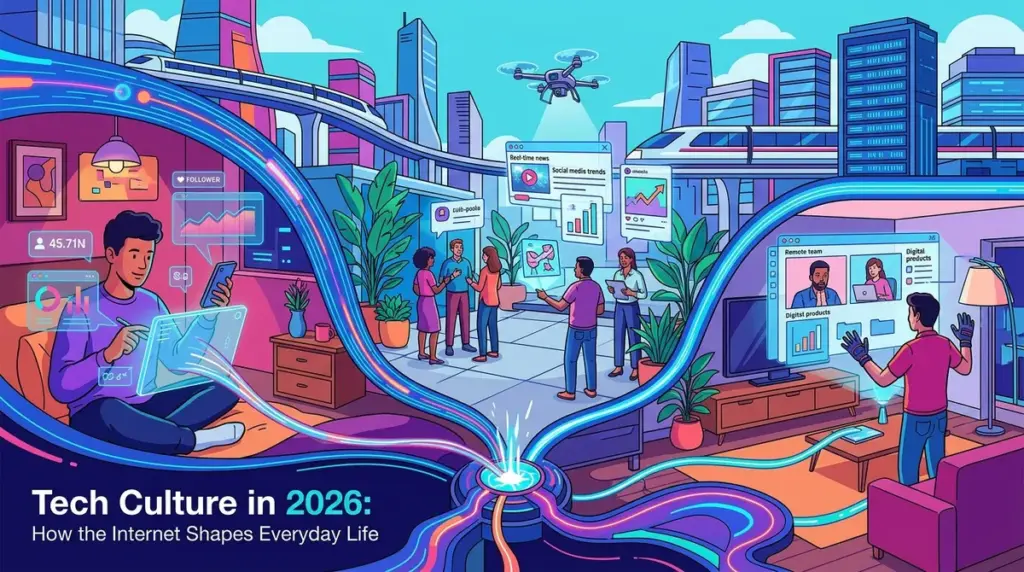
By 2026, the distinction between "online" and "offline" has effectively collapsed. For digital business owners and marketers, this shift represents a move from a destination-based internet—where users visit a site or app—to an ambient internet, where data layers are superimposed onto physical reality through spatial computing and AI-driven personal agents. Success in this environment requires a departure from legacy traffic-acquisition strategies in favor of deep integration into the user’s immediate context. This ambient internet is a core part of tech culture in 2026, fundamentally changing how the internet reshapes culture and our daily interactions.
The Spatial Web and the Death of the Browser Tab
The browser tab is no longer the primary unit of digital consumption. With the maturation of spatial computing hardware, digital interactions are increasingly triggered by physical proximity or visual recognition. For brands, this means "search" has evolved into "discovery by context."
Retailers are moving away from traditional e-commerce storefronts toward persistent digital twins. If a user looks at a product in a physical showroom, the digital layer provides real-time inventory, peer reviews, and compatibility data via AR overlays. This creates a high-stakes environment for technical SEO; if your product schema isn't perfectly optimized for visual search engines, you are invisible in the physical world.
Hyper-Local Data Accuracy
In 2026, "near me" searches are handled by autonomous agents that prioritize low-latency, high-accuracy data. Businesses must maintain ultra-granular data feeds that include not just hours and locations, but real-time foot traffic density and current in-store stock levels. The cost of a data mismatch—telling a customer an item is in stock when it isn't—is no longer just a lost sale; it is a permanent mark against your brand’s reliability in the agent’s recommendation algorithm.
The Rise of Agentic Commerce
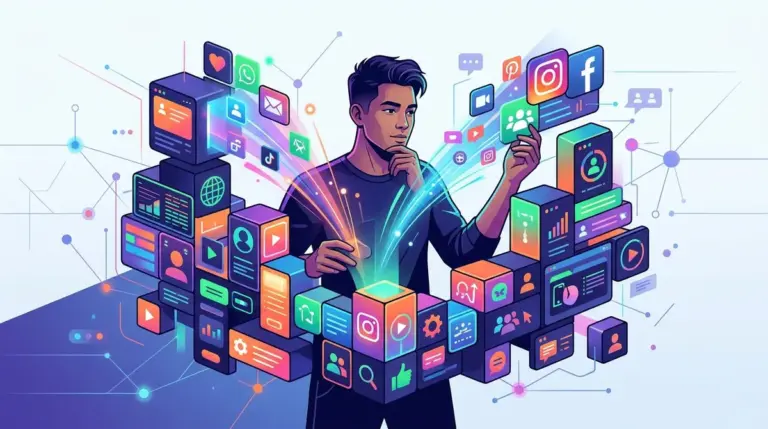
We have moved past the era of the chatbot. The 2026 internet is populated by "agents"—autonomous software entities that execute tasks rather than just answering questions. Consumers now use personal AI assistants to negotiate subscriptions, book travel, and curate their daily information feeds. This shifts the marketing focus from "convincing the human" to "qualifying for the agent."
Best for: B2B service providers and high-frequency consumer goods.
To survive agentic commerce, your digital presence must be machine-readable first. This involves:
- Extensive use of JSON-LD for every service offering, not just products.
- API-first content delivery that allows agents to pull data without rendering a full webpage.
- Transparent pricing models that agents can parse and compare instantly.
- Proof of "Human-in-the-loop" verification for high-stakes services like legal or medical advice.
Pro Tip: Stop optimizing for "keywords" and start optimizing for "capabilities." If your website doesn't clearly define the specific problems your software or service solves in a structured data format, personal AI agents will bypass your site in favor of competitors who offer a clear "capability manifest."
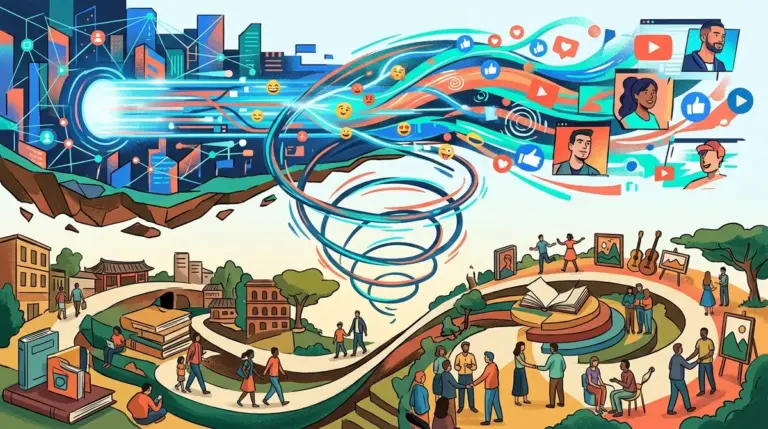
The Fragmentation of Social Consensus
The "global town square" model of social media has largely splintered. In its place, we see a rise in gated, high-trust communities—often referred to as "digital campfires." These are small, private, or semi-private spaces (Discord servers, specialized Mastodon instances, and niche professional networks) where the signal-to-noise ratio is strictly policed.
For creators and publishers, the metric of success has shifted from "reach" to "resonance." A million followers on a legacy platform is worth less than a thousand active participants in a private community. This fragmentation makes traditional broad-scale digital advertising less effective and significantly more expensive due to the lack of centralized data.
The Premium on Authenticity and Provenance
As AI-generated content saturates the public web, the "Human-Made" label has become a luxury signal. By 2026, digital provenance—the ability to prove who created a piece of content and where it originated—is a standard requirement for trust. Technologies like C2PA (Coalition for Content Provenance and Authenticity) are now integrated into most publishing workflows. Agencies that can prove their content is researched and written by subject matter experts, rather than synthesized by a model, command 3x the rates of generic content farms.
The Creator Middle Class and the Micro-SaaS Boom
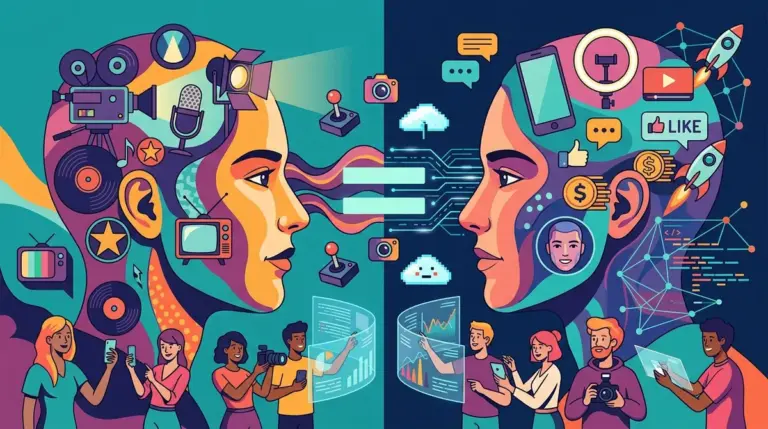
The creator economy has matured into a sophisticated vertical of the startup world. We are seeing the rise of the "One-Person Unicorn," where a single creator uses a stack of AI agents to manage production, distribution, and customer support. These creators are no longer just influencers; they are founders of micro-SaaS platforms built around their specific expertise.
This shift has turned the traditional agency model on its head. Instead of creators looking for agencies to manage them, agencies are now looking for creators to provide the "human face" for their automated tools. The internet of 2026 rewards those who can marry high-level creative direction with aggressive technical automation.
Future-Proofing Your Digital Infrastructure
To remain competitive as the internet becomes more integrated into daily life, businesses must pivot their technical and creative strategies immediately. The focus must shift from capturing attention to providing utility within the user's existing workflow.
First, audit your existing content for "agent readiness." If a machine cannot understand your value proposition in under 200 milliseconds of crawling, you are failing. Second, diversify your presence away from centralized platforms. Own your data, own your community, and use third-party social media strictly as a discovery top-of-funnel, not a permanent home.
Finally, invest in provenance. Whether through digital signatures or transparent "behind-the-scenes" documentation, showing the work is now as important as the work itself. In an era of infinite synthetic content, the process is the product.
Frequently Asked Questions
How does spatial computing change SEO in 2026?
SEO is no longer just about text; it is about 3D assets and location-based metadata. You must optimize for visual search engines that identify objects in the real world and link them to digital data. This means having high-quality USDZ or GLB files of products and ensuring your physical coordinates are tied to your digital offers.
Are personal AI agents going to kill website traffic?
They will kill "casual" traffic—the users looking for quick answers. However, they will increase the quality of "high-intent" traffic. When an agent sends a user to your site, it is because the agent has already determined your product or service is the best fit. Your conversion rates will likely go up, even if total sessions go down.
Is "Human-Made" content actually a ranking factor?
While search engines prioritize the "helpfulness" of content regardless of its source, user behavior has shifted. Users are increasingly seeking out content with clear human attribution and unique, non-derivative insights. Over time, this user preference signals to algorithms that human-verified content is more authoritative, indirectly boosting its rank.
What is the most important tech investment for a small agency in 2026?
Invest in a robust API infrastructure. Being able to push and pull data seamlessly between your tools, your clients' platforms, and third-party AI agents is the baseline for operational efficiency. If your data is trapped in silos, you cannot scale in an agent-driven economy.