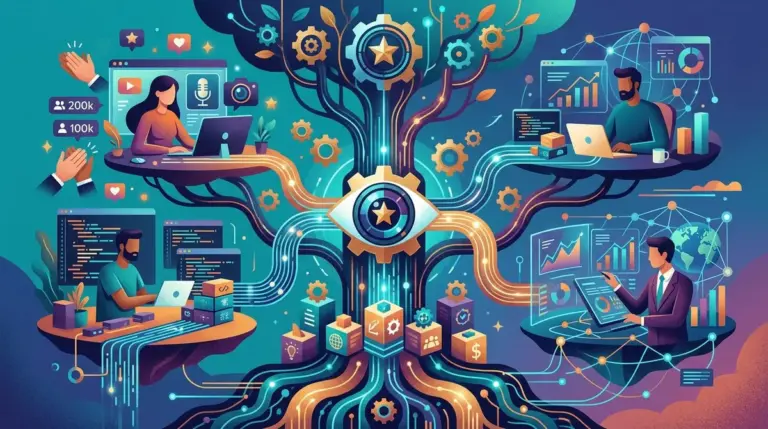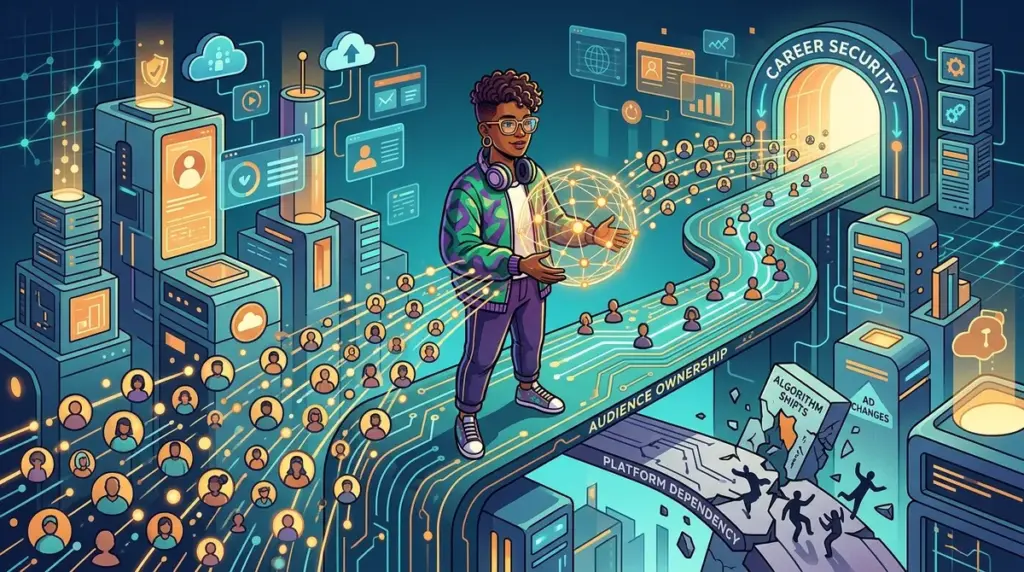
The traditional career ladder for digital professionals is being replaced by a more volatile reality: platform dependency. Whether you are a solo creator, a marketing director at a high-growth startup, or an SEO lead, your professional value is increasingly tied to your ability to command attention. However, if that attention is mediated by a third-party algorithm—be it Google’s SGE, TikTok’s For You page, or LinkedIn’s feed—you do not own your career; you are merely renting it. Real career security in the current economy is defined by audience ownership, the transition from being a "user" of a platform to a direct owner of first-party data. This shift signifies how the internet has truly created new career paths from scratch, offering opportunities previously unimaginable.
The Fragility of Rented Distribution
Most digital careers are built on "rented land." When a platform changes its monetization strategy or tweaks its ranking signals, the impact on those relying on it is immediate and often catastrophic. We have seen this play out with the decline of organic reach on Facebook, the pivot to video that decimated text-based publishers, and the current rise of zero-click searches that keep users on Google’s results page rather than sending them to yours.
Best for: Independent consultants and agency founders who need to insulate their lead flow from algorithm updates.
The risk is not just theoretical. When you rely on a platform for distribution, you are subject to their tax. This tax is paid in either advertising spend to reach the followers you already earned or in the "content treadmill" required to stay relevant to an algorithm that prioritizes freshness over depth. Ownership removes this tax by establishing a direct line of communication—typically through email, SMS, or a proprietary community platform—where the cost of distribution remains flat regardless of how many people you reach.
The Rise of the Zero-Click Search Economy
For SEO professionals, the shift toward audience ownership is a response to the "walled garden" approach of modern search engines. With AI-generated summaries and rich snippets answering queries directly on the SERP, the traditional "search-to-click" pipeline is leaking. By focusing on audience ownership, you transform a one-time visitor into a recurring asset. Instead of fighting for the same keyword every month, you capture the user’s identity on the first visit, effectively ending your reliance on that specific search term for future revenue.
Converting Fleeting Attention into First-Party Data
The goal of any digital strategy should be the migration of users from discovery platforms (high reach, low control) to relationship platforms (lower reach, total control). This is not about abandoning social media; it is about using social media as a top-of-funnel discovery engine rather than a final destination.
- Incentivized Migration: Use high-value lead magnets—such as proprietary datasets, templates, or white papers—to move followers from LinkedIn or X to an email list.
- Newsletter Integrity: Treat an email list as a product, not a distribution channel for links. If the content is valuable enough to stand alone, the unsubscribe rate drops significantly.
- Community Moats: Platforms like Discord or Slack allow for multi-directional communication, making the audience sticky and less likely to churn when you change your primary content format.
- SMS and Push Notifications: For high-urgency niches (e.g., e-commerce or stock alerts), direct-to-device communication bypasses the inbox entirely, though it requires a higher threshold of trust.
Warning: Relying on a single newsletter platform like Substack or Beehiiv without regularly exporting your CSV files is just another form of platform dependency. If you don’t have a backup of your subscriber data on your own local server or a secondary CRM, you don’t truly own the audience.
Data Portability as a Financial Moat
From a commercial perspective, an owned audience is a transferable asset. If you are a creator looking to sell your business or an employee looking to move to a new role, a direct-access audience is a quantifiable "book of business." In the M&A world, a company with an email list of 50,000 engaged subscribers is valued significantly higher than a company with 500,000 followers on a social platform. The reason is simple: the conversion rate of email consistently outperforms social by a factor of 10x to 40x depending on the industry.
This portability also provides a safety net against de-platforming or shadow-banning. If your primary discovery channel disappears tomorrow, an owned audience ensures your revenue doesn't drop to zero. You can simply point your subscribers to a new URL or a different platform, and the business continues without interruption.
The Technology Stack of Ownership
To achieve true ownership, your stack must prioritize data sovereignty. This means using tools that allow for easy API integrations and full data exports. A "closed" ecosystem that makes it difficult to leave is a red flag. Professional-grade setups often involve a headless CMS for content, a robust ESP (Email Service Provider) like Klaviyo or ConvertKit for automation, and a dedicated analytics suite that tracks first-party cookies rather than relying on third-party tracking pixels that are being phased out by privacy regulations.
Building Your 90-Day Audience Migration Roadmap
Transitioning to an ownership model requires a tactical shift in how you measure success. Move away from "vanity metrics" like likes and shares, and focus on "conversion to owned" (CTO). Your roadmap should include auditing your current traffic sources and identifying where the most valuable users are congregating. Once identified, implement a "gate" that offers disproportionate value in exchange for an email address.
In the first 30 days, focus on the technical infrastructure—setting up your landing pages and automated welcome sequences. In the following 60 days, optimize your content strategy to include "calls to ownership" in every piece of public-facing content. By day 90, you should have a clear understanding of your subscriber acquisition cost (SAC) and the lifetime value (LTV) of those subscribers. This data is the foundation of career security; it allows you to predict revenue and scale your efforts without asking for permission from an algorithm.
Frequently Asked Questions
Is email marketing still effective with the rise of AI filters?
Yes, but the bar for quality has risen. AI filters prioritize engagement. If your subscribers regularly open and reply to your emails, you will maintain high deliverability. The focus must be on "permission-based" marketing rather than bulk cold outreach.
Can I own an audience on a platform like Discord?
Only partially. While Discord offers more direct access than a Facebook feed, you are still subject to their Terms of Service and platform stability. Always pair a community platform with an email list to ensure you have a "hard" backup of your user data.
What is the most important metric for audience ownership?
The "Direct-to-Subscriber Ratio." This measures how many people who see your content on social media or search engines actually convert into your owned database. A high ratio indicates that your brand has enough authority to pull people away from the algorithm's distractions.