Marketing budgets often bleed out through the gap between reach and results. For SEOs and brand strategists, the failure to distinguish between popularity, influence, and authority isn't just a semantic error—it is a strategic one. High traffic numbers (popularity) do not guarantee a shift in consumer behavior (influence), and neither necessarily translates into the long-term trust required to dominate search engine results pages (authority). Understanding these distinctions allows a business to stop chasing vanity metrics and start building a defensible market position. This strategic focus is key to building genuine online influence rather than just chasing superficial popularity.
Popularity: The Vanity of the Top-of-Funnel
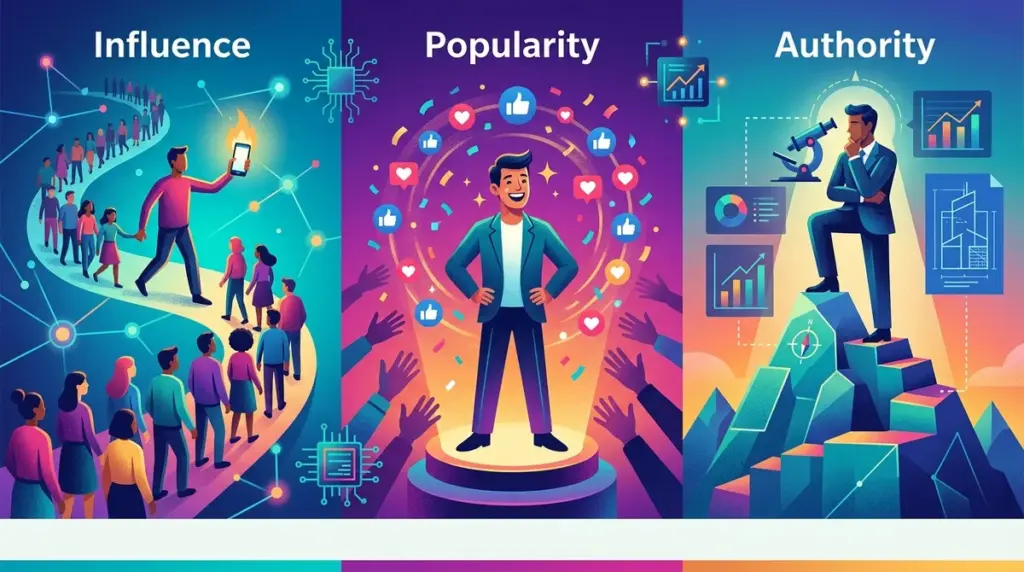
Popularity is a measure of visibility. It is defined by raw volume: page views, follower counts, and impressions. In the context of digital business, popularity is the easiest metric to manipulate and the hardest to monetize directly without a massive scale. A viral tweet or a trending TikTok video represents popularity. It indicates that the content has successfully navigated an algorithm, but it says nothing about the quality of the audience or their intent to purchase.
Best for: Top-of-funnel brand awareness, ad-supported media models, and rapid testing of creative hooks.
Metrics that Mask Mediocrity
The danger of prioritizing popularity is the "empty calorie" effect. A site might see a 400% spike in traffic from a generic news-cycle keyword, but if the bounce rate is 95% and the conversion rate is zero, that popularity is a liability. It consumes server resources and skews data, making it difficult to identify what actually drives revenue. Commercially, popularity is a lead indicator of reach, but a lag indicator of value.
Influence: The Kinetic Energy of Digital Capital
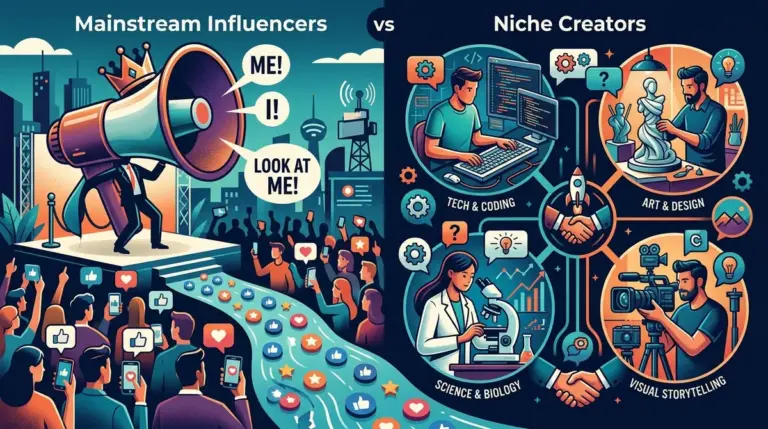
Influence is the ability to affect the character, development, or behavior of someone or something. Unlike popularity, influence is measured by action. If a creator with 5,000 followers can move 500 units of a product, they are more influential than a celebrity with 5 million followers who moves 50. Influence is rooted in the relationship between the source and the audience, often built on shared values or specific niche expertise. This demonstrates why niche creators often outperform those with broader appeal, as their focused engagement drives tangible results.
In a technical SEO context, influence translates to click-through rates (CTR) and user signals. When a recognized industry leader shares a link, the resulting traffic is high-intent. These users stay longer, navigate deeper into the site, and interact with the brand. This is kinetic energy; it is the force that turns a passive observer into an active participant.
Pro Tip: When auditing potential partner sites or influencers, ignore the follower count. Instead, calculate the "Conversion Delta"—the measurable difference in engagement or sales when that specific entity mentions a brand versus a standard paid placement. High influence always correlates with a lower cost-per-acquisition (CPA).
Authority: Building a Defensive Content Moat
Authority is the institutionalized version of trust. In the eyes of search engines and sophisticated buyers, authority is synonymous with E-E-A-T (Experience, Expertise, Authoritativeness, and Trustworthiness). While popularity is fleeting and influence is relational, authority is structural. It is built through a consistent history of providing accurate, high-quality information that other experts cite.
Authority is what allows a site to rank for competitive, high-intent keywords without needing a viral hit every week. It is the result of a robust backlink profile from other high-authority domains, a clean technical foundation, and a deep library of topically relevant content. For a startup, authority is the moat that protects them from larger competitors with bigger ad budgets.
Primary Authority Signals:
- Backlink Quality: Links from .edu, .gov, or established industry journals that are not "pay-to-play."
- Topical Coverage: Exhaustive content clusters that prove the site understands every facet of a specific subject.
- Author Citations: Content written by or reviewed by recognized experts with a verifiable digital footprint.
- Longevity: A consistent record of uptime, content updates, and domain age.
The Strategic Intersection: How They Interact
The most successful digital strategies treat these three pillars as a cycle rather than silos. Popularity provides the initial data set to identify what resonates. Influence converts that data into a community and immediate revenue. Authority solidifies that community into a permanent market share that search engines reward with sustainable organic traffic.
Consider a SaaS startup. They might use a popular meme to get attention (Popularity), have a respected CTO write a guest post on a major tech blog to drive sign-ups (Influence), and spend six months publishing original research papers that other sites link to (Authority). If they only focus on popularity, they become a "one-hit wonder." If they only focus on authority, they may grow too slowly to survive the burn rate. The balance is what creates a market leader.
Auditing Your Digital Footprint
To move forward, you must categorize your current assets. Review your top-performing pages from the last quarter. Are they "popular" (high traffic, low time-on-site), "influential" (high conversion, moderate traffic), or "authoritative" (steady organic growth, high-quality backlinks)?
Shift your KPIs to reflect these differences. Stop reporting "Total Reach" as a primary success metric for SEO campaigns. Instead, track "Topical Authority Score" through share of voice in specific keyword clusters. For social campaigns, replace "Likes" with "Direct Action Rate." By isolating these three variables, you can identify exactly where your marketing funnel is leaking and apply the correct fix—whether that’s a broader reach, a more persuasive voice, or a more credible foundation.
Frequently Asked Questions
Can you have authority without popularity?
Yes. Many B2B firms or technical journals have immense authority within their niche and rank highly for specific, high-value keywords, despite having low overall traffic compared to consumer lifestyle sites. This is often more profitable than the reverse.
How long does it take to build authority versus influence?
Influence can be "borrowed" or bought through partnerships almost instantly. Authority is earned over time, usually taking six to eighteen months of consistent, high-quality output and link-earning before search engines fully recognize a domain as a primary source.
Is popularity ever a bad thing for a brand?
Popularity becomes a negative when it attracts the "wrong" audience. If a luxury brand goes viral among a demographic that cannot afford the product, it can dilute the brand's perceived exclusivity and skew the data used for future product development and targeting.