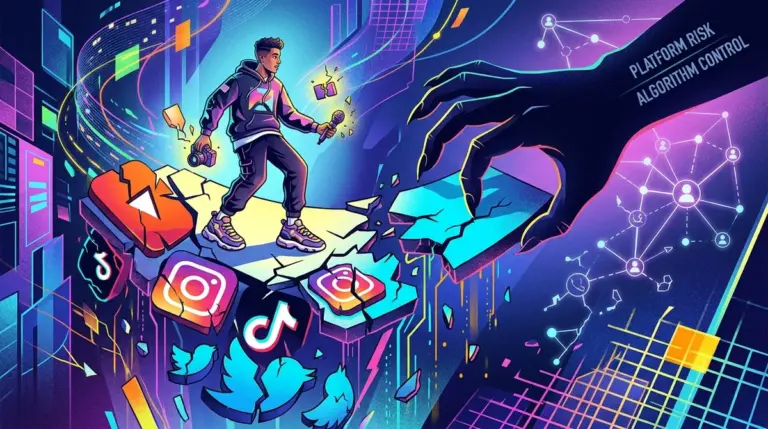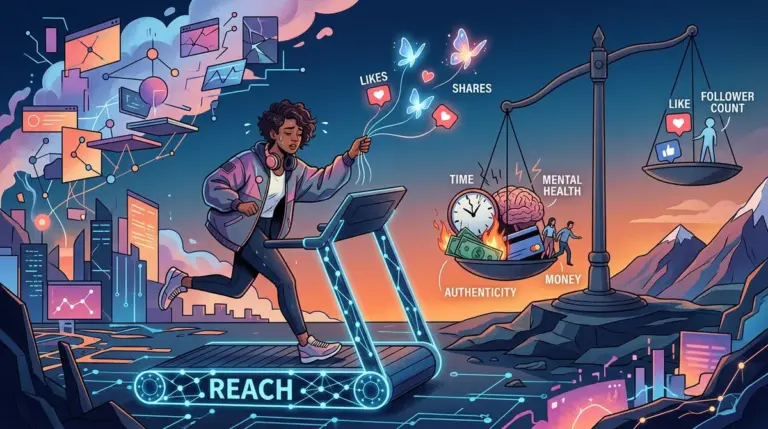
Consumer behavior is no longer a linear progression from awareness to consideration to purchase. In the current digital economy, the traditional marketing funnel has been replaced by an algorithmic loop where social platforms do not just host conversations—they manufacture demand. For marketers and agency owners, the shift is fundamental: consumers are moving away from active search intent and toward passive discovery driven by high-velocity short-form video and localized social proof. This algorithmic dominance means creators must grapple with the risks inherent to platforms that can change their rules without notice.
The Shift from Search Intent to Algorithmic Discovery
Historically, digital commerce relied on "pull" marketing. A user had a problem, searched for a solution on a search engine, and evaluated options. Today, platforms like TikTok and Instagram utilize "push" dynamics. Their algorithms prioritize engagement metrics over keyword relevance, meaning they identify what a user wants before the user has even articulated the need. This creates a behavior pattern known as discovery-based shopping.
Best for: Direct-to-consumer (DTC) brands and impulse-buy categories under $100.
When a platform’s feed becomes a personalized storefront, the barrier to entry for new brands drops significantly. However, the shelf life of that attention is shorter. To capitalize on this, businesses must pivot from optimizing for long-tail keywords to optimizing for "watch time" and "shareability." If a video does not hook a viewer within the first 1.5 seconds, the algorithm de-prioritizes the content, effectively killing the conversion opportunity before it begins.
Social Proof and the Industrialization of Influence
The concept of social proof has evolved from static testimonials to living, breathing "Get Ready With Me" (GRWM) content and raw product testing. Consumers now exhibit a high degree of skepticism toward polished, high-production advertisements, favoring instead the perceived authenticity of the creator economy. This has led to the "mirroring effect," where users purchase products to emulate the lifestyle or aesthetic of a specific creator niche.
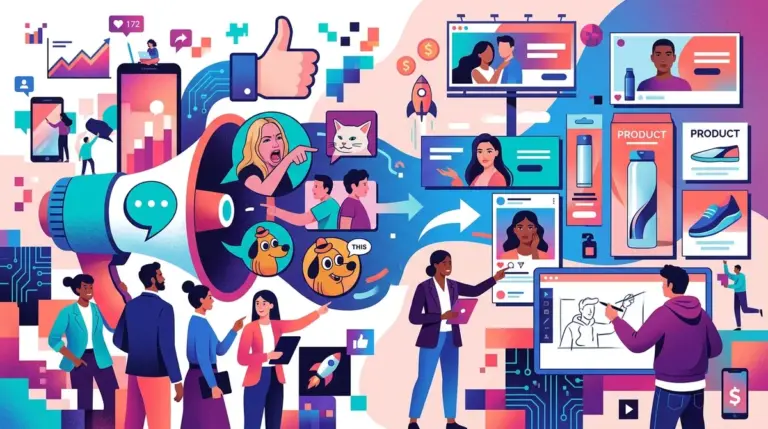
Micro-influencers (those with 10k to 50k followers) often drive higher conversion rates than celebrities because their endorsement feels like a peer recommendation rather than a paid placement. For agencies, the strategy has shifted from buying reach to buying trust. This requires a granular understanding of "community clusters"—specific subcultures on social media that have their own language, memes, and purchasing triggers.
Warning: Relying solely on platform-native influencers creates an attribution blind spot. Without robust UTM tracking and post-purchase surveys, brands often over-attribute sales to the last click, ignoring the top-of-funnel awareness generated by social discovery.
The Death of Friction: In-App Commerce and One-Click Conversions
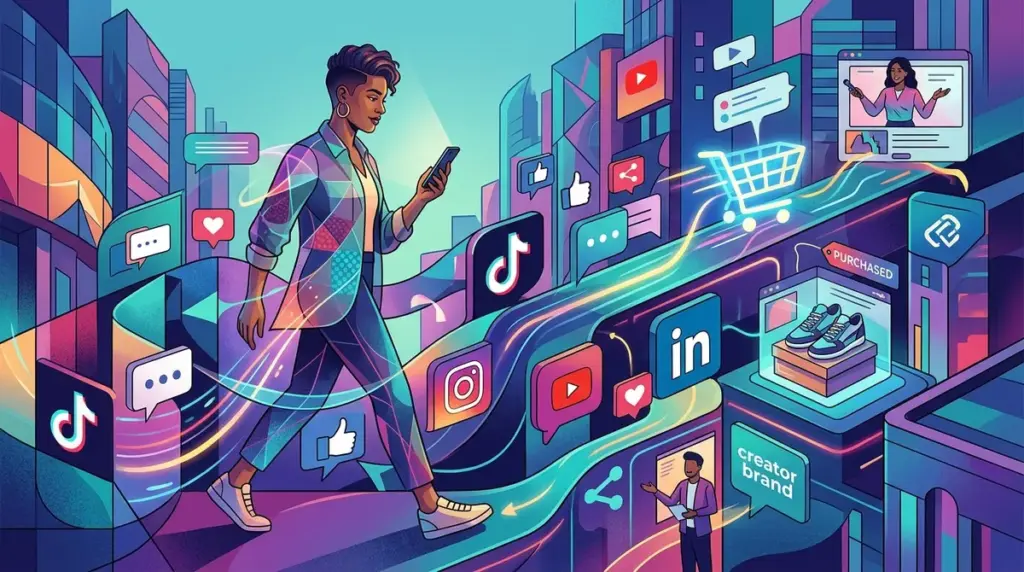
Every click between a social post and a checkout page is a point of potential abandonment. Social platforms have responded by building closed-loop ecosystems. TikTok Shop and Instagram Shopping allow users to store credit card information and complete transactions without ever leaving the app. This reduces "transactional friction," which is the primary hurdle in mobile commerce.
By removing the need to navigate to an external mobile site—which may have slow load times or a clunky UI—platforms are training consumers to expect instant gratification. This behavior has significant implications for site owners: if your external mobile experience isn't faster and more intuitive than an in-app shop, you will lose the sale to a competitor who stays within the platform's walls.
Short-Form Video as the New Product Manual
Consumers are increasingly replacing traditional product descriptions with video searches. A 30-second clip demonstrating a product’s utility provides more "information density" than a 500-word product page. This has forced brands to become production houses. The behavior here is a preference for visual evidence over marketing copy. If a customer can see the texture of a skincare cream or the fit of a jacket in motion, the perceived risk of the purchase decreases.
The Psychology of Real-Time Scarcity and Live Commerce
Live streaming commerce, popularized in Asian markets and now aggressive in the West, leverages psychological triggers like FOMO (fear of missing out) and "social competitive buying." When a creator announces a limited-time discount during a live session, the real-time comment feed acts as a catalyst. Seeing others type "ordered!" or "sold out?" creates a sense of urgency that static e-commerce cannot replicate.
- Impulse Triggers: Flash sales exclusive to live broadcasts.
- Interactive Validation: Real-time Q&A sessions that resolve buyer objections instantly.
- Community Momentum: The "herd effect" of seeing hundreds of people viewing the same item simultaneously.
Data Personalization and the Expectation of Relevance
Social platforms have set a high bar for personalization. Because users spend hours training algorithms with their likes, skips, and shares, they now expect every ad they see to be hyper-relevant. If a brand serves a generic, broad-targeted ad, the consumer perceives it as "noise" or "spam." This has shifted consumer behavior toward a demand for "curated" experiences.
For marketers, this means the end of the "one-size-fits-all" creative. You now need a modular creative strategy: 50 variations of an ad targeting 50 different micro-segments. The platforms provide the data, but the brand must provide the creative diversity to match it.
Adapting Your Strategy for Social-First Discovery
To stay competitive, businesses must stop treating social media as a distribution channel and start treating it as the primary storefront. This involves shifting budgets from traditional search ads to creator partnerships and native shop integrations. Focus on reducing the time-to-value for the consumer. If your content doesn't solve a problem or provide entertainment within the first few seconds, you are not just losing a view; you are training the algorithm to ignore your brand in the future.
Prioritize "shoppable" content formats and ensure your fulfillment backend can handle the sudden spikes in traffic that come with viral social discovery. The goal is to move from being a brand that people search for to a brand that people happen upon and feel compelled to buy immediately.
Frequently Asked Questions
How does social media affect the length of the buying cycle?
Social platforms significantly compress the buying cycle. By combining discovery, social proof, and one-click checkout in a single session, the time from initial awareness to final purchase can drop from days or weeks to mere minutes, particularly for lower-priced consumer goods.
Is search engine optimization (SEO) still relevant if consumers are moving to social?
Yes, but the definition of SEO is expanding. "Social SEO" involves optimizing your video captions, profiles, and hashtags so your content appears in the internal search results of apps like TikTok and YouTube, which are increasingly used as primary search engines by younger demographics.
What is the biggest risk of relying on social platforms for sales?
The primary risk is "platform dependency." Changes to a platform's algorithm or fee structure can instantly throttle your reach or margins. It is essential to use social platforms as a top-of-funnel engine while aggressively moving customers into owned channels like email lists or SMS programs.
Why is short-form video more effective than high-quality photography?
Short-form video provides more context and "perceived honesty." While a photo can be easily edited to hide flaws, video shows the product in motion and in various lighting conditions, which builds higher levels of consumer trust and reduces the likelihood of returns.