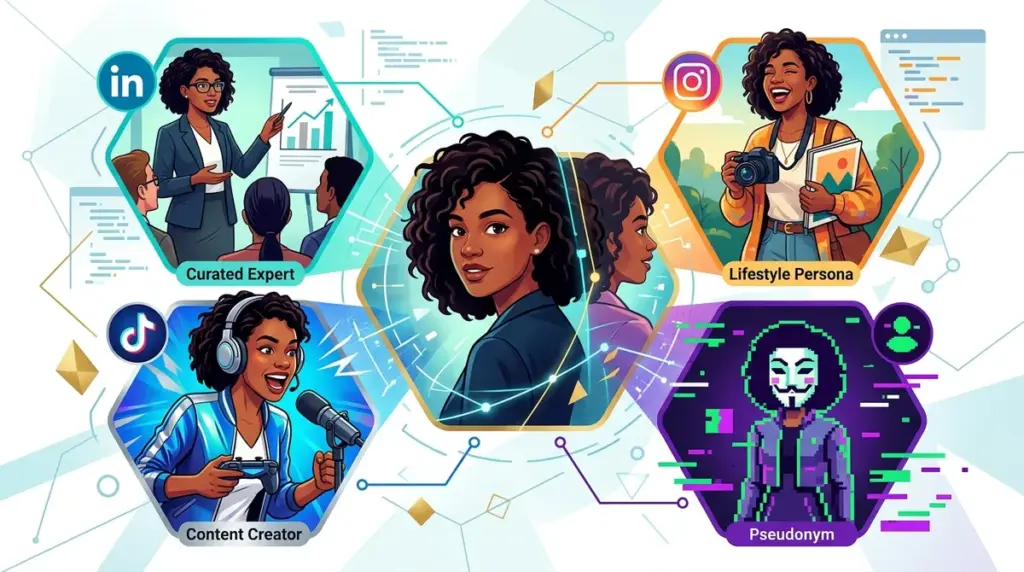
Modern digital identity is no longer a monolithic profile. For creators, marketers, and brand architects, identity has become a portfolio of distinct personas engineered to exploit specific platform algorithms and social norms. The "authentic self" is a marketing myth; in reality, users perform different versions of themselves based on the perceived ROI of the platform—whether that ROI is professional networking, social clout, or community belonging. Understanding these shifts is critical for any business trying to map a customer journey across fragmented digital touchpoints. Navigating this fragmented landscape effectively will define what a strong online presence looks like in 2026.
The Professional Performance: LinkedIn and the Cult of Competence
On LinkedIn, identity is filtered through the lens of the "aspirational employee" or the "benevolent leader." The platform’s architecture rewards a specific type of sanitized vulnerability—the "fail-forward" narrative. Here, users build identities that prioritize legibility to recruiters and peers. Every post is a signal of industry alignment, often stripping away personal eccentricities in favor of a polished, corporate-adjacent persona.
Best for: B2B lead generation, authority building, and talent acquisition.
The identity here is transactional. When a user comments on a post, they are aware that their current employer and future prospects are watching. This creates a "chilling effect" on controversial opinions but fosters a high-trust environment for professional services. For brands, this means the voice must be authoritative, stable, and focused on utility rather than entertainment.
The Real-Time Radical: X and the Economy of the Hot Take
X (formerly Twitter) demands a high-velocity identity. Unlike the static resume of LinkedIn, an X persona is built through stream-of-consciousness participation in the "global town square." Users here often adopt a more combative, witty, or hyper-niche identity. The platform rewards "main character energy"—the ability to insert oneself into the discourse of the hour.
Because the platform is text-heavy and chronological, the identity is often centered on intellectual or cultural signaling. A user might be a buttoned-up analyst on LinkedIn but a "shitposter" or a radical contrarian on X. This fragmentation allows individuals to test ideas that would be too risky for their professional circles. For marketers, X is where you find the unvarnished sentiment of your audience, provided you can filter through the performative outrage.
The Pivot to Substack and Identity Ownership
As X becomes more volatile, many creators are migrating their "intellectual identity" to Substack. This represents a shift from "poster" to "author." On Substack, the identity is more intimate and long-form. The relationship is no longer mediated by a public feed but by an inbox. This allows for a more nuanced, complex identity that doesn't rely on 280-character provocations to survive.
Visual Narrative and the Lo-Fi Shift on TikTok and Instagram
The divide between Instagram and TikTok highlights the evolution of visual identity. Instagram, historically the home of the "curated life," forced users into a high-pressure identity of aesthetic perfection. The "Instagram Face" and the "grid aesthetic" turned individuals into lifestyle brands. However, this identity is currently in crisis as users suffer from "curation fatigue."
TikTok has pioneered the "lo-fi" identity. Here, the persona is intentionally unpolished. Users film in their bedrooms, use minimal lighting, and speak directly to the camera with a level of perceived intimacy that Instagram lacks. The identity on TikTok is built on "relatability," even if that relatability is just as manufactured as an Instagram filter.
- Instagram Identity: Aspirational, polished, static, brand-focused.
- TikTok Identity: Iterative, participatory, raw, creator-focused.
- The Cross-Platform Conflict: Brands often fail when they port Instagram-style "perfection" into the TikTok "authenticity" ecosystem.
Warning: Context Collapse
Context collapse occurs when these disparate identities collide. When a professional contact finds your pseudonymous Reddit account or your "lo-fi" TikTok rants, the friction can damage your primary brand. For businesses, managing multiple platform voices requires a "firewall" approach—ensuring the tone of each channel serves the platform without contradicting the core brand values.
Pseudonymity as a Business Asset on Reddit and Discord
Reddit and Discord represent the return of the "handle." On these platforms, identity is disconnected from the real-world name (IRL) and tied instead to "Karma" or community-specific roles. This pseudonymity allows for a level of honesty and niche expertise that is impossible on "real-name" platforms like Facebook or LinkedIn.
On Reddit, a user’s identity is their contribution history. They are judged by the value they provide to specific subreddits. This is the "expert identity." A user might be a hobbyist woodworker, a crypto skeptic, and a parent, maintaining distinct reputations in each community without them ever overlapping. For brands, entering these spaces requires respecting the "pseudonymous expert" identity; traditional top-down marketing is viewed as an intrusion.
Mapping the Multi-Platform Strategy
To effectively engage with users who hold these fragmented identities, brands must stop treating "the customer" as a single data point. Instead, view them as a collection of platform-specific behaviors. The person who ignores your ad on LinkedIn might be the same person who engages with your meme on X or your tutorial on YouTube.
Successful digital presence requires:
- Voice Adaptation: Adjusting the vocabulary and "vibe" to match the platform's identity norms.
- Asset Optimization: Using high-production video for YouTube but "behind-the-scenes" vertical video for TikTok.
- Community Integration: Participating in the specific rituals of a platform (e.g., Reddit AMAs or X Spaces) rather than just broadcasting.
Executing a Coherent Multi-Persona Presence
The goal is not to be the same everywhere, but to be recognizable everywhere. Your core values should remain constant, but the "costume" you wear must change. If you are a fintech startup, your LinkedIn identity is "The Secure Infrastructure," your X identity is "The Future of Finance Disruptor," and your Reddit identity is "The Transparent Developer." By leaning into these platform-specific identities, you meet the audience where they are, in the headspace they have chosen for that specific session.
Frequently Asked Questions
Does a brand need to be on every platform?
No. It is better to master two platforms where your target identity thrives than to have a mediocre presence on five. Choose platforms where your brand’s core value aligns with the dominant identity performance of that user base.
How do I handle a PR crisis across different platforms?
Address the crisis using the specific language of each platform. A formal PDF statement works for LinkedIn, but a direct, "no-filter" video response is often more effective for TikTok or X. Tailor the delivery to the identity the audience expects from you on that channel. Understanding this tailoring is key to grasping how digital presence shapes opportunity across the modern professional landscape.
Is "authenticity" still a viable strategy?
Authenticity is now a stylistic choice, not a moral one. On platforms like TikTok, "authenticity" is a specific aesthetic involving certain camera angles and speaking styles. True authenticity is consistency between your brand's promises and its actions, regardless of the platform-specific persona you adopt.