
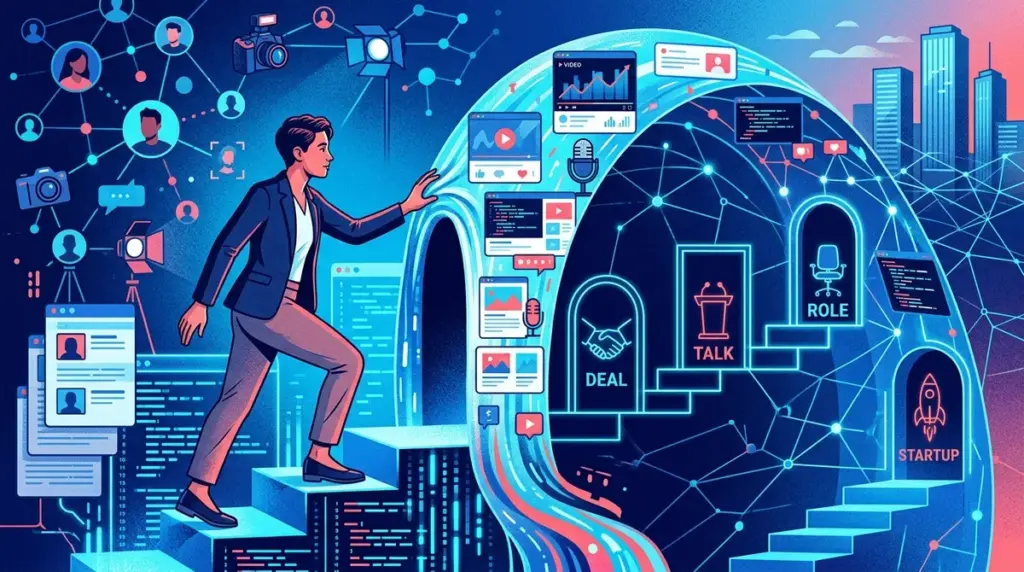
In high-stakes hiring and B2B lead generation, the traditional resume has been demoted to a secondary verification document. The primary vetting process now occurs in the wild: via search engine results, social proof signals, and indexable proof-of-work. For the modern professional—whether a founder, a senior marketer, or a creative director—a digital presence is no longer a passive gallery of past achievements. It is a live, high-intent asset that dictates the quality of inbound opportunities, the ceiling of your billable rates, and the speed of your career pivots. Indeed, for the modern professional, a digital presence is no longer a passive gallery of past achievements but a dynamic tool for career advancement.
The Shift from Static Credentials to Indexable Proof
The transition from "who you know" to "what you can be seen doing" has fundamentally altered professional mobility. Recruiters and potential partners are moving away from self-reported skills on LinkedIn toward verifiable evidence. This shift favors professionals who treat their digital footprint as a product rather than a profile.
Best for: Independent consultants and agency leads looking to justify premium pricing through visible authority.
When a decision-maker searches for your name, they aren't looking for a list of job titles; they are looking for a footprint of your thinking. A well-maintained personal domain or a niche newsletter acts as a permanent record of intellectual property. This creates a "long tail" of professional opportunity. An article written three years ago on a specific technical challenge can still trigger a high-value consulting inquiry today because it remains indexed and relevant to specific search queries.
Architecting a Proof-of-Work Ecosystem
To capture the highest-tier opportunities, your digital presence must be structured across multiple layers of the internet. This isn't about being everywhere; it is about being in the right places with the right depth of content.
- The Owned Asset: A personal website or domain serves as the central hub. This is the only platform where you control the UX and the data. It should house long-form case studies that detail the "how" behind your results, not just the "what."
- The Proof Layer: For developers, this is GitHub; for designers, Behance or Dribbble; for strategists, it is often a Substack or a series of white papers. This layer provides the raw evidence of your technical competence.
- The Distribution Layer: Platforms like LinkedIn or X (formerly Twitter) serve as the top-of-funnel. Their purpose is to drive traffic back to your owned assets and to signal that you are active within your industry's current discourse.
The synergy between these layers creates a "moat" around your professional reputation. If one platform changes its algorithm or goes defunct, your primary assets—your mailing list and your domain—remain intact and discoverable.
The Algorithmic Advantage in Talent Discovery
Modern recruitment tools and AI-driven sourcing platforms prioritize candidates who have a high "density" of relevant keywords associated with their name across the web. If your digital presence is sparse, you are invisible to the automated filters that now handle the first 80% of the talent search. By consistently publishing on specific topics, you effectively "train" the algorithms to categorize you as an expert in that niche. This is the difference between hunting for jobs and having high-value roles find you.
Warning: Relying solely on third-party platforms like LinkedIn creates a "rented land" risk. If your account is flagged or the platform's organic reach drops, your professional visibility can evaporate overnight. Always prioritize building an email list or an indexed personal site to maintain direct access to your audience.
Quantifying the ROI of Digital Authority
For agency owners and consultants, digital presence translates directly into lower customer acquisition costs (CAC). A strong personal brand acts as a pre-vetted lead generator. When a client approaches you after reading your analysis of a market trend, the "sales" portion of the conversation is already 70% complete. They aren't questioning your expertise; they are checking your availability and fit.
This authority also allows for price decoupling. In a commodity market, you are paid for your time. In an authority-driven market, you are paid for your perspective. The more visible your perspective is, the higher the premium you can command. This is why the most successful professionals spend 10-20% of their time on "public-facing output"—it is the highest-leverage activity for long-term revenue growth.
Managing the Risks of Digital Transparency
A digital presence is a double-edged sword. While it creates opportunity, it also creates a permanent record of errors or outdated thinking. Professionals must treat their digital footprint with the same rigor a brand manager treats a corporate image. This means performing regular audits of your search results and ensuring that your most prominent content reflects your current level of expertise.
Digital decay occurs when your most visible work is three to five years old. To a potential partner, this signals that your skills may have plateaued. Maintaining a "fresher" presence—even if it is just one high-quality update per quarter—is essential for maintaining your market value.
Strategic Steps for Digital Presence Optimization
Optimizing your presence is a technical exercise in brand positioning. It requires a move away from vanity metrics (likes and followers) toward conversion metrics (inbound inquiries and high-value connections).
1. Audit Your Search Intent: Search for your name in an incognito window. Analyze the top five results. Do they represent your current career trajectory? If the top result is an old university project or a dormant social media profile, you have a discovery problem that needs immediate remediation through new content creation.
2. Define Your Vertical: Avoid being a generalist. The internet rewards specificity. Whether it is "Growth Marketing for Fintech" or "Operations for Scaling Agencies," your digital presence should scream a specific solution to a specific problem.
3. Build a Feedback Loop: Use analytics to see which pieces of content are driving the most engagement from high-value profiles. If a specific article on LinkedIn is being shared by C-suite executives, that is a signal to double down on that topic and expand it into a long-form piece on your website.
Frequently Asked Questions
How much time should I realistically spend on my digital presence?
Consistency beats intensity. For most professionals, two to four hours a week is sufficient to maintain a high-quality presence. This includes one "deep" piece of content (a blog post or newsletter) and daily or bi-weekly engagement on a distribution platform like LinkedIn.
Do I need a personal website if I have a strong LinkedIn profile?
Yes. A personal website allows you to control the narrative, use custom SEO strategies, and host content that isn't restricted by a social network's formatting or character limits. It also serves as a professional insurance policy against platform changes.
What is the most important metric for professional digital presence?
The most important metric is the "Quality of Inbound." Are the people reaching out to you the type of people you want to work with? If you are getting high-volume but low-quality inquiries, your digital presence is likely misaligned with your actual expertise or target market.
Can a digital presence help if I am an introvert?
Actually, a digital presence is an introvert's greatest tool. It allows you to demonstrate your expertise and build a reputation without the need for constant real-time networking. It lets your work do the talking, so when you do enter a room, your reputation has already cleared the path for you.