The barrier to entry for global visibility has collapsed to zero. In the legacy media era, fame was a curated resource controlled by a handful of talent scouts, editors, and studio executives. Today, fame is an algorithmic output. For creators, startups, and digital marketers, this shift represents a move from "permission-based" visibility to "performance-based" attention. When everyone has a platform, the value of fame doesn't disappear; it fragments. Understanding how to navigate this fragmentation is the difference between building a durable digital asset and becoming a one-hit wonder in a TikTok feed. Understanding how to navigate this fragmentation is the difference between building a durable digital asset and becoming a one-hit wonder in a world where how small creators build big influence online is constantly evolving.
The Transition from Follower Graphs to Interest Graphs
The most significant structural change in online fame is the death of the "Follower Graph" in favor of the "Interest Graph." On platforms like the early versions of Facebook or Instagram, your reach was a direct function of your follower count. You built an audience, and then you broadcasted to them. This created a predictable, linear growth model where "fame" was synonymous with "subscriber count." This created a predictable, linear growth model where "fame" was synonymous with "subscriber count," a stark contrast to what makes someone a microcelebrity in 2026.
Modern platforms, led by TikTok and followed by YouTube Shorts and Instagram Reels, have inverted this. The algorithm prioritizes content resonance over creator identity. This means a user with zero followers can reach ten million people overnight if the content triggers specific engagement signals—watch time, completion rate, and shares. For a brand or creator, this means that "fame" is now ephemeral and must be re-earned with every single upload. The legacy "moat" of a large follower count is evaporating as platforms prioritize keeping users on the app over honoring a creator's historical reach.
The Erosion of the Vanity Metric
Follower counts are increasingly becoming a lagging indicator rather than a driver of success. In the current ecosystem, a creator with 50,000 highly engaged "true fans" often generates more revenue and influence than a legacy influencer with 2 million dormant followers. The market is shifting its valuation toward "Active Attention"—the ability to move an audience to a specific action, whether that is a newsletter sign-up, a product purchase, or a community contribution.
The Mechanics of the 15-Minute Micro-Cycle
Andy Warhol’s "15 minutes of fame" has been compressed into 15 seconds of vertical video. The velocity of trends is now so high that the lifecycle of a meme or a viral personality is measured in days. This creates a "churn" problem for digital fame. To stay relevant, creators are forced into a high-frequency production cycle that often leads to burnout or a dilution of brand quality.
- Trend Hijacking: Using existing audio or visual formats to gain algorithmic favor.
- Context Collapse: When a niche creator is pushed to a general audience that lacks the context to understand their work, often leading to "negative virality."
- Algorithmic Punishment: The drop in reach that occurs when a creator deviates from the specific niche the algorithm has categorized them in.
Best for: Creators looking for longevity should focus on "slow-burn" content—long-form video, podcasts, or written deep dives—to supplement the high-velocity short-form content that drives discovery.
Pro Tip: Never rely on a single platform's discovery algorithm for your entire business model. Use the "Discover-to-Own" pipeline: use high-reach platforms like TikTok for discovery, but aggressively migrate that audience to owned channels like email lists, Discord servers, or private communities where you control the distribution.
The Economics of the Creator Middle Class
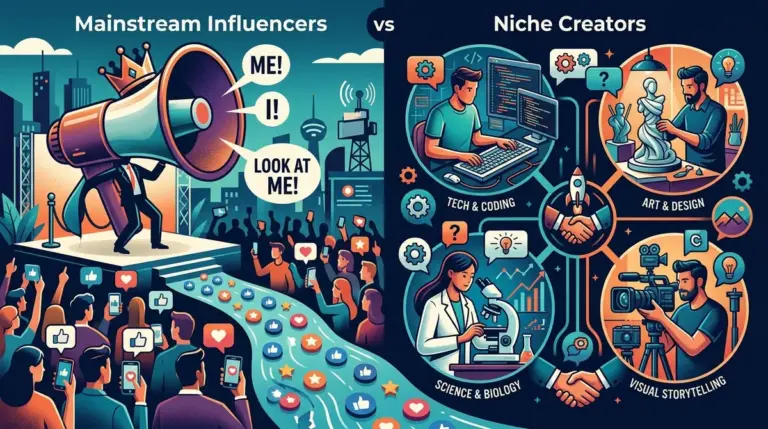
As fame becomes more accessible, it also becomes less lucrative at the "top" while becoming more sustainable in the "middle." We are seeing the rise of the "Creator Middle Class"—individuals who may not be household names but who generate six-figure incomes by dominating specific, high-value niches. These niches (e.g., B2B SaaS workflows, specialized hobbyist electronics, or local real estate investing) allow for much higher monetization per view than general entertainment.
The monetization stack has evolved. While YouTube AdSense was once the primary goal, it is now often the smallest piece of the pie. Modern online fame is fueled by:
- Direct-to-Consumer (DTC) Brands: Creators launching their own physical or digital products.
- Paid Memberships: Using platforms like Patreon or Substack to put a "tax" on their most dedicated fans.
- High-Ticket Consulting: Leveraging "authority" fame to sell high-margin B2B services.
Navigating Platform Risk and Audience Ownership
The paradox of modern fame is that the platforms that give you the most reach are the ones you have the least control over. A change in the API, a shift in the recommendation engine, or a sudden policy update can wipe out a creator's visibility overnight. This is "Platform Risk."
Successful creators treat platforms like rented land. You use the land to grow your crop, but you must eventually buy your own farm. This involves building a brand that exists independently of the UI/UX of a specific app. If your "fame" is tied to a specific filter or a specific algorithmic quirk, it is a liability, not an asset. The goal is to transform "platform fame" into "brand equity."
The Role of Authenticity in a Saturated Market
When everyone can use AI to generate high-quality visuals and scripts, "polish" is no longer a differentiator. In fact, over-produced content is often viewed with skepticism. The current trend favors "lo-fi" authenticity—raw, behind-the-scenes, and unedited content that signals a human connection. This is why "Get Ready With Me" (GRWM) videos and "build in public" threads perform so well; they offer a sense of intimacy that high-budget commercials cannot replicate.
Building a Platform-Proof Digital Identity
To survive the volatility of online fame, you must shift your strategy from chasing virality to building a moat. This requires a three-pronged approach: first, master the algorithmic triggers of at least one discovery platform (TikTok, Reels, or YouTube Shorts). Second, create a "bridge" to an owned medium—this is usually a newsletter or a dedicated community site. Third, diversify your revenue streams so that you are not dependent on a single platform's monetization tools.
Focus on "Cumulative Fame." This is the type of recognition where each piece of content adds to a cohesive narrative, rather than just being a standalone viral hit. When you own the narrative, you own the audience. When you own the audience, the platform becomes a tool you use, rather than a master you serve.
Frequently Asked Questions
Is it still possible to grow on social media without a marketing budget?
Yes. Because modern algorithms prioritize engagement metrics (watch time and shares) over follower counts, high-quality content can still achieve massive organic reach. However, the "quality" required to stand out is higher than ever, and consistency is non-negotiable.
How do I protect myself from "Platform Risk"?
The most effective way is to build an email list. Email is one of the few digital channels that is not controlled by a centralized recommendation algorithm. Additionally, diversifying your presence across at least two different platform types (e.g., one short-form video and one long-form written) provides a safety net.
What is the most important metric for measuring online influence?
Conversion rate and "Share of Voice" within a specific niche are far more important than total followers. If your audience doesn't take action when you make a recommendation, your "fame" is purely cosmetic and has no commercial value.