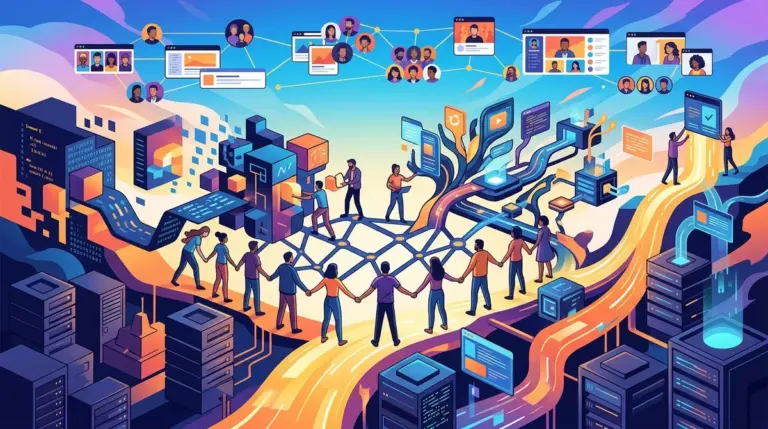

Mainstream search volume is a lagging indicator. By the time a keyword hits a high-volume threshold in traditional SEO tools, the most lucrative window for organic dominance and cultural relevance has already narrowed. High-growth brands no longer wait for the data to aggregate; they look to the fringes—specifically, niche communities on Discord, Reddit, and specialized forums—where trends are incubated months before they reach TikTok or Instagram. Understanding how these micro-ecosystems operate allows marketers to pivot from reactive optimization to proactive positioning. Understanding why online communities matter helps marketers identify emerging trends.
The Lifecycle of a Trend: From Niche Loop to Cultural Standard
Trends do not emerge in a vacuum. They follow a predictable trajectory from high-context, closed-loop environments to low-context, mass-market platforms. In a niche community, language is dense, specific, and often exclusionary. This is where the innovation happens. As the concept gains friction, it "leaks" into broader social platforms, where it is simplified for a general audience. For a digital business, the goal is to identify the "leakage point" before the competition.
Example: The Rise of "Gorpcore"
Before "Gorpcore" (the fashion trend of wearing high-performance outdoor gear in urban settings) became a staple for brands like Arc'teryx and North Face, it was a functional necessity discussed in ultralight backpacking forums and niche Japanese style magazines. Early adopters tracked technical specs like Denier counts and seam-sealing techniques. When these discussions moved to Reddit’s r/streetwear, the aesthetic was decoupled from the function, signaling a massive commercial opportunity for retailers to market technical gear to non-hikers.
The Role of High-Context Environments
High-context environments, such as private Slack channels or specialized subreddits like r/MechanicalKeyboards, serve as decentralized R&D labs. In these spaces, users provide immediate, brutal feedback on product iterations. For a creator or a startup, these communities offer a level of granular data that a broad survey could never replicate. They define the "vibe" and the vocabulary that will eventually dominate the SERPs (Search Engine Results Pages).
Why Search Volume is a Lagging Metric for Trend Discovery
Traditional SEO relies on historical data. If you are building a content strategy solely around "high volume, low difficulty" keywords, you are competing for the leftovers of a trend. Niche communities drive trends through "velocity" rather than "volume."
- Keyword Velocity: The rate at which a specific term increases in usage within a closed community over a 30-day period.
- Sentiment Shift: When a community moves from discussing a problem to discussing a specific, niche solution (e.g., moving from "how to focus" to "best L-Theanine dosages").
- Platform Migration: When a topic moves from a text-heavy forum (Reddit) to a visual platform (TikTok), it is about to go mainstream.
Best for: Identifying "Zero Volume" keywords that are poised to explode. By targeting terms that have 0-10 monthly searches but high engagement on Reddit, you can capture the "Featured Snippet" or the top organic spot before the term becomes competitive.
Warning: Entering a niche community with the sole intent of "extracting" value or pitching products is a fast track to a brand reputation crisis. These ecosystems have high "cringe-detection." Use these spaces for ethnographic research and sentiment analysis, not direct lead generation.
Identifying the "Point of Leakage"
The "Point of Leakage" occurs when a niche concept is adopted by a "Bridge Creator"—an influencer who has one foot in a specialized community and one foot in the mainstream. When a tech YouTuber with a million subscribers mentions a specific mechanical switch usually only discussed on Geekhack, that is the signal to start producing content around that topic.
To track this effectively, agencies should monitor the "Following" lists of key Bridge Creators. If multiple creators in a vertical start following the same niche brand or using the same specialized terminology, a mainstream surge is imminent. This is the moment to deploy landing pages, comparison guides, and "What is [Term]?" explainers.
Operationalizing Niche Intelligence
To turn niche insights into commercial assets, your team must move beyond standard keyword research. This requires a shift in how you allocate your content budget. Instead of spending 100% of your resources on established keywords, allocate 20% to "Experimental Niche Content."
The "Niche-to-Mainstream" Content Framework
1. The Glossary Phase: Create a definitive guide to the terminology used in the niche. This establishes your site as an authority when the mainstream starts searching for definitions.
2. The Comparison Phase: As the trend grows, users will look for "Best [Niche Item] for Beginners." This captures the first wave of mainstream interest.
3. The Integration Phase: Show how the niche trend fits into existing mainstream workflows (e.g., "How to use AI-generated textures in standard graphic design").
This tiered approach ensures that you own the entire funnel, from the moment a trend is a whispered secret to the moment it is a household name. It also protects your site against algorithm updates by building a moat of high-relevance, unique information that cannot be easily scraped or replicated by generic AI content generators.
Building a Trend-Responsive Content Engine
Success in modern digital business requires a "listening" infrastructure. This isn't about social media monitoring for brand mentions; it's about monitoring for *conceptual shifts*. If you are a publisher in the wellness space, you shouldn't just track "Biohacking." You should be tracking specific peptides or light-therapy protocols being discussed in private longevity groups. If you are in SaaS, you should be watching how developers on Stack Overflow are hacking together workarounds for existing software limitations.
By the time a trend is "trending" on Twitter, the most profitable SEO positions are already taken. The real value lies in the quiet conversations happening in the corners of the internet. Your job is to translate those conversations for the world.
Frequently Asked Questions
How do I find which niche communities are relevant to my brand?
Start by analyzing the "Referral" traffic of your competitors and looking for forum links. Use tools that map "Audience Overlap" to see where your current customers spend time when they aren't on your site. Look for Discord servers linked in the bios of micro-influencers in your space.
Is it ethical to use niche community discussions for content ideas?
Yes, provided you are adding value and not simply plagiarizing. The goal is to act as a translator for a broader audience. Always credit original innovators or "Bridge Creators" where appropriate, as this builds trust with both the niche and the mainstream audience.
How long does it take for a niche trend to hit the mainstream?
The "Niche-to-Mainstream" pipeline has accelerated significantly. In 2015, it might have taken 18-24 months. Today, thanks to the TikTok algorithm, a trend can move from a Discord server to a national retail shelf in as little as 3 to 6 months. This makes early identification more critical than ever.
What is the best way to measure the potential of a niche trend?
Look for "Cross-Pollination." If a trend is being discussed in two unrelated niche communities (e.g., a specific software tool being discussed by both architects and crypto-traders), it has a high probability of mainstream breakout because it solves a universal problem across different verticals.