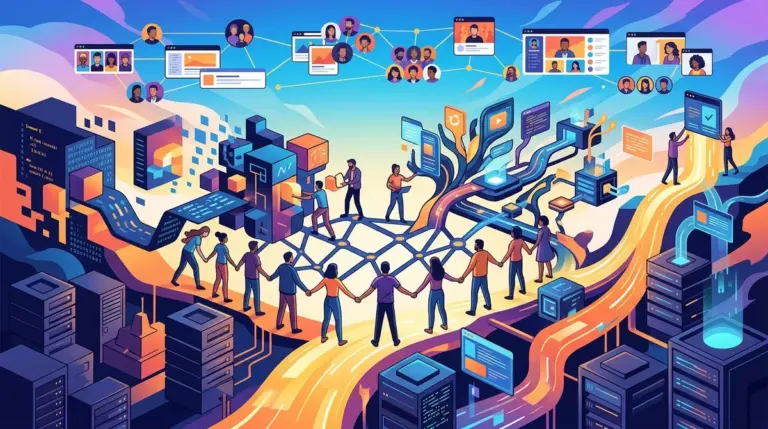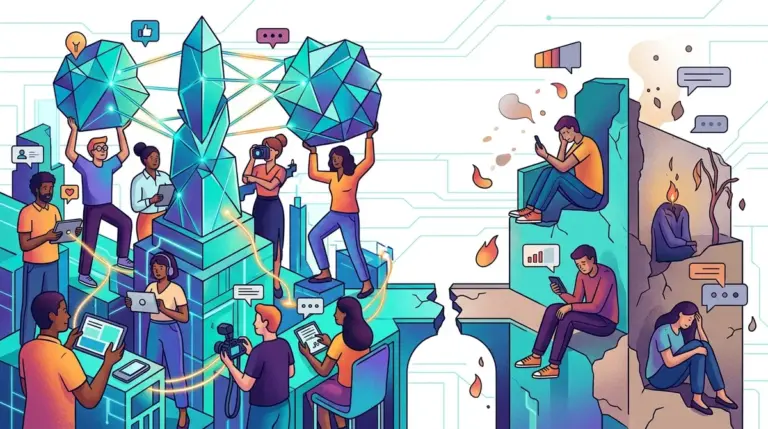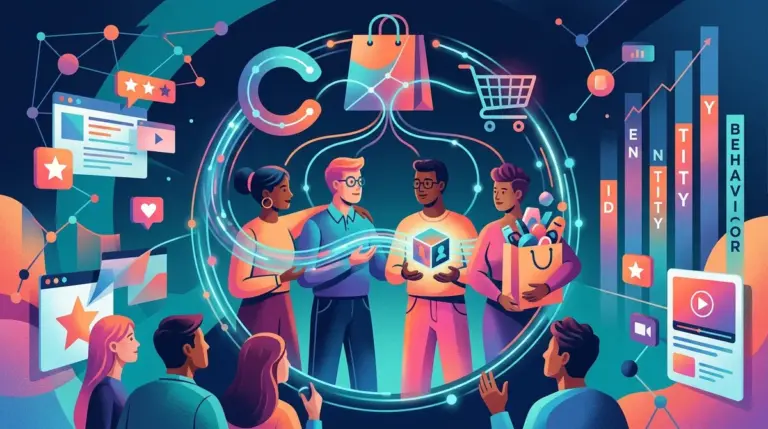
The transition from public social media feeds to gated, real-time chat environments marks the most significant shift in digital strategy since the rise of the algorithmic timeline. For brands and creators, the "town square" of Twitter or Facebook has been replaced by the "campfire" of Discord, Slack, and encrypted group chats. This migration isn't just a change in platform; it is a fundamental restructuring of how information moves, how communities are governed, and how commercial value is extracted from digital interactions. Understanding this shift is no longer optional for agencies or publishers looking to maintain relevance in a landscape where organic reach on public platforms is effectively dead.
The Erosion of the Public Feed and the Rise of Intentional Spaces
Public social networks operate on an extraction model, where user attention is harvested for ad impressions. In contrast, platforms like Discord and Slack operate on a participation model. The value is derived from the density of the network and the specific utility of the conversations. For a digital business, this means moving away from broad-reach metrics like "impressions" toward high-intent metrics like "active participants" and "retention rates."
Best for: High-ticket service providers, niche publishers, and software-as-a-service (SaaS) companies requiring deep user feedback loops.
The move toward these platforms is driven by a desire for signal over noise. On a public feed, a brand competes with global news, memes, and family updates. In a dedicated Slack or Discord, the brand owns the context. This "Dark Social" environment—where links are shared in private channels rather than public posts—now accounts for a massive percentage of web traffic that traditional analytics tools struggle to attribute correctly.
Discord: The Infrastructure of the Creator Economy
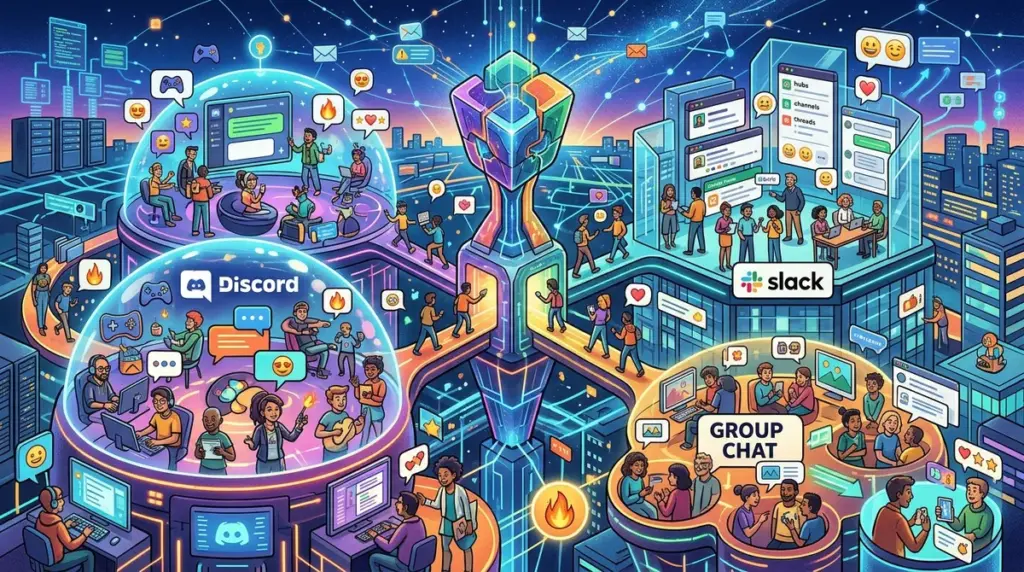
Discord has evolved from a gaming-centric voice tool into a sophisticated community management operating system. Its primary differentiator is its hierarchical architecture. Unlike a single-stream group chat, Discord allows for granular segmentation through channels, categories, and roles.
Programmable Communities and Bot Ecosystems
The power of Discord lies in its API and the ability to automate community management. Developers use bots like MEE6 or Dyno to automate onboarding, while custom integrations can gate specific channels based on external triggers, such as a user’s subscription status on Patreon or a purchase via Shopify. This turns a chat room into a functional part of a sales funnel.
- Role-Based Access: Assigning "VIP" or "Beta Tester" roles creates a tiered experience that rewards loyalty and increases customer lifetime value.
- Synchronous Engagement: Features like "Stages" and "Voice Channels" allow for live Q&As and town halls that build trust faster than static blog posts.
- Data Sovereignty: While Discord owns the platform, the community owner manages the membership, providing a direct line to the core audience without algorithmic interference.
Pro Tip: Do not treat Discord as a broadcast channel. If your bot-to-human message ratio exceeds 1:10, your churn rate will spike. Successful servers prioritize peer-to-peer interaction over brand-to-user announcements.
Slack: The Industrialization of Professional Networking
Slack’s primary impact on digital culture is the professionalization of the "inner circle." While originally a tool for internal corporate communication, it has become the default home for high-level mastermind groups, industry-specific networking, and B2B customer success channels. For agencies, a shared Slack channel with a client is now a standard delivery requirement, replacing the slow cadence of email with a continuous stream of value.
The Friction of Asynchronous Work Culture
The cultural shift Slack introduced is the expectation of immediacy. This has a commercial downside: the "always-on" trap. For digital businesses, managing a Slack community requires a defined set of rules regarding response times and "deep work" periods. However, the benefit is a reduction in project friction. When a developer can ping a client for a quick API key or a designer can share a Figma link for instant feedback, the lifecycle of a project accelerates significantly.
Best for: B2B networking, professional masterminds, and collaborative project management where real-time file sharing and app integrations (Google Drive, Jira, GitHub) are essential.
The Commercial Reality of Dark Social and Group Chats
While Discord and Slack are structured, the rise of WhatsApp, Telegram, and Signal represents a move toward hyper-intimate, unmoderated digital spaces. For marketers, these are the hardest to penetrate but offer the highest conversion rates. When a recommendation happens in a WhatsApp group of five close friends, the "trust tax" is zero.
The challenge for digital business owners is attribution. When a user sees a product on a public feed but discusses it and clicks a link in a private group chat, the analytics often show "Direct" traffic. This masks the true ROI of social presence. To counter this, savvy agencies are using unique UTM parameters for community-specific links and vanity URLs that are only shared within these gated environments.
Operationalizing Community for Brand Growth
To leverage these platforms effectively, brands must stop thinking like broadcasters and start thinking like facilitators. The goal is to create an environment where the community provides value to itself, reducing the brand's overhead while increasing the platform's stickiness.
Transitioning from a public-first strategy to a community-first strategy requires three specific operational changes:
1. Moderation as Marketing: Community managers are the new CMOs. They set the tone, enforce the rules, and identify the "power users" who will act as brand ambassadors.
2. Integration over Promotion: Use webhooks to bring external data into the chat. For example, a "Success" channel that automatically posts when a customer hits a milestone using your software.
3. Value Gating: Use these platforms as a "middle of the funnel" asset. Offer access to the community as a lead magnet or a bonus for purchasing a premium product.
Strategic Implementation for Digital Leaders
The move toward gated communities is a response to the "context collapse" of the open web. Users are tired of being products; they want to be participants. For a digital business, the most valuable asset is no longer an email list of 100,000 passive subscribers, but a Discord server of 1,000 active participants who provide real-time product feedback, defend the brand against criticism, and self-organize to solve problems. The shift is from "reach" to "depth." Agencies that can build and manage these ecosystems will outperform those still chasing the diminishing returns of the Facebook ad auction.
Frequently Asked Questions
How do I measure the ROI of a private community?
Focus on "Community-Qualified Leads" (CQLs) and churn reduction. Track how many users in your private channels upgrade to higher-tier plans compared to those who are not members. Additionally, monitor the "time to resolution" for customer support issues handled within the community vs. traditional tickets.
Which platform should I choose for a B2B audience?
Slack is the industry standard for professional networking due to its integration with enterprise software and its familiarity in the workplace. However, if your B2B model relies on a high volume of users or requires more robust moderation tools, Discord is often the more cost-effective and scalable choice.
Is "Dark Social" really a threat to my SEO and tracking?
It isn't a threat if you plan for it. Use granular UTM tagging for every link shared in private channels. While you won't see the specific conversation that led to the click, you will see that the traffic originated from your "Private Community" source, allowing for more accurate budget allocation.
How much staff time does a Discord or Slack community require?
A community of 500 to 1,000 active members typically requires at least one part-time moderator (10-15 hours per week) and a library of automated bots to handle basic onboarding and spam filtering. As the community grows, the goal is to promote "community champions" from within to handle frontline moderation in exchange for perks or early access.