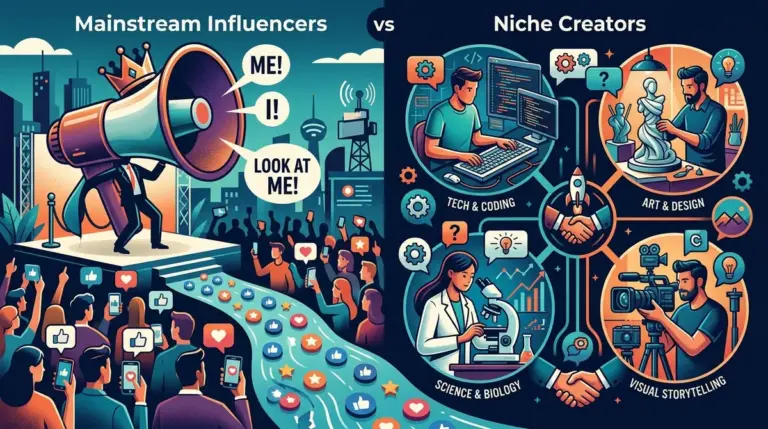
The era of the "influencer" as a mere distribution node for third-party brands is cooling. In its place, a new class of digital creators is treating content as the R&D department for diversified media conglomerates. Instead of renting an audience from a platform and selling it to the highest bidder via programmatic ads, these creators are building owned-and-operated ecosystems. This shift requires moving from a "reach" mindset to an "equity" mindset, where the primary goal is capturing first-party data and building a brand that survives the inevitable decay of any single social algorithm. This shift requires moving from a "reach" mindset to an "equity" mindset, where the primary goal is capturing first-party data and building a brand that survives the inevitable decay of any single social algorithm.
The Transition from Platform Renter to Digital Landlord
Most creators start as platform renters. They build on TikTok, YouTube, or Instagram, subject to the whims of shadowbans and monetization policy shifts. A media brand, however, is defined by its ability to reach its audience without a middleman. This transition usually begins with the aggressive migration of followers to a "controlled" environment—typically a newsletter or a private community platform.
Best for: Creators with over 50,000 followers who see less than 5% organic reach on their primary social channel.
The logic is purely financial. A YouTube subscriber is worth cents in annual recurring revenue (ARR) through AdSense. A newsletter subscriber, by contrast, can be worth $5 to $50 per year through a combination of direct sponsorships, premium subscriptions, and product sales. By treating social media as a top-of-funnel discovery engine rather than a destination, creators insulate themselves against platform volatility.
Engineering a Multi-Channel Content Flywheel
Building a media brand from scratch requires a content architecture that maximizes output without burning out the founder. Successful creators use a "pillar and micro-content" strategy. A single 60-minute podcast or deep-dive video is decomposed into ten short-form clips, three newsletter segments, and a series of data-driven threads for platforms like X or LinkedIn.
Vertical Integration of Physical and Digital Goods
The most sophisticated media brands are vertically integrated. They don't just talk about a niche; they sell the tools required to succeed in it. This might look like a fitness creator launching a proprietary supplement line or a tech reviewer building a specialized software utility. By owning the product, the creator captures the full margin that would otherwise go to an advertiser.
This integration changes the content strategy from "entertainment" to "utility." Every piece of content serves as a case study for the product, reducing the cost per acquisition (CPA) to near zero. When the media arm and the product arm share the same audience, the business achieves a level of capital efficiency that traditional DTC (Direct-to-Consumer) brands cannot match.
The Tech Stack of the Modern Media Brand
A creator-led media brand is only as strong as its underlying infrastructure. Relying on a patchwork of disconnected tools leads to data silos. Modern creators are opting for integrated stacks that prioritize audience segmentation and conversion tracking.
- Newsletter & CMS: Platforms like Ghost or Beehiiv are preferred over legacy systems because they offer built-in referral programs and native ad networks.
- Community Layers: Tools like Circle or Skool allow creators to move beyond passive consumption into active participation, often charging a premium for access.
- Data Attribution: Using UTM parameters for every social post to track which platform actually drives high-intent newsletter signups, rather than just "vanity" views.
- E-commerce: Shopify remains the standard for physical goods, but digital products are increasingly moving toward platforms that handle global VAT and tax compliance automatically.
First-Party Data as the Ultimate Defensive Moat
In a post-cookie digital environment, first-party data is the only reliable asset for a media brand. When a creator knows the specific interests, job titles, and buying habits of their audience—collected through surveys and click-behavior—they can sell sponsorships at 3x to 5x the market rate of a standard CPM. Advertisers are no longer buying "eyeballs"; they are buying access to a verified, high-intent segment of the market.
Pro Tip: Do not wait for a "viral moment" to launch your owned-media channel. The most successful transitions happen when creators start their newsletter on day one, even if the initial list is just 100 people. Small, high-intent lists are easier to monetize and provide a feedback loop that social algorithms cannot replicate.
Scaling Your Creator-Led Media Operation
As the brand grows, the founder must transition from being the "talent" to being the "editor-in-chief." This involves hiring specialized writers, video editors, and operations managers to maintain the brand voice while increasing volume. The goal is to create a brand that is larger than any single personality, allowing for a potential exit or acquisition in the future—something that is nearly impossible for a pure "influencer" business.
Focus on building "IP" (Intellectual Property) rather than just "content." This means creating recurring franchises, recognizable segments, and proprietary data reports that the audience expects every week. When the audience shows up for the format rather than just the face, you have successfully built a media brand.
FAQ
How do I choose which platform to prioritize for growth?
Follow the "Path of Least Resistance" for your specific content type. If you are visual and product-heavy, Instagram and TikTok are discovery engines. If you are data-driven and B2B, LinkedIn and X provide higher-quality leads. Always ensure the platform has a clear "off-ramp" to your email list.
When should a creator hire their first employee?
The first hire should almost always be an editor or a virtual assistant who handles the "repurposing" workflow. If you are spending more than 20% of your time on technical tasks like video cutting or newsletter formatting, you are losing money by not focusing on high-level strategy and production.
Is it better to have a paid subscription or a free, ad-supported model?
A hybrid model is usually best. Use a free newsletter to maintain a wide top-of-funnel and build brand awareness, then offer a "Pro" or "Inner Circle" tier for your most dedicated 2-5% of followers. This provides stable recurring revenue while still allowing for large-scale sponsorship deals.