The transition from "influencer" to "founder" marks the end of the vanity metric era. For years, creators measured success by reach, views, and likes—metrics that often failed to translate into a resilient balance sheet. In the current market, attention is a volatile raw material that must be refined into owned assets to survive. Sustainable income in the creator economy requires a shift from platform-dependent advertising revenue to a vertically integrated business model where the creator owns the customer relationship, the data, and the distribution channel.
Decoupling Revenue from Algorithm Volatility
Relying solely on platform payouts like the YouTube Partner Program or TikTok Creator Fund is a high-risk strategy. These revenue streams are subject to arbitrary policy changes and algorithm shifts that can slash a creator's income overnight without recourse. To build a sustainable business, creators must move their audience from "rented" platforms to "owned" ecosystems.
Best for: Creators with over 10,000 highly engaged followers looking to hedge against platform risk.
The first step in this decoupling is the aggressive capture of first-party data. This usually manifests as an email list or a private community. By using tools like Ghost or Beehiiv, creators can bypass the algorithmic gatekeepers and reach their audience directly. The economic value of an email subscriber is significantly higher than a social media follower because the conversion rate for direct-to-consumer offers is historically 3x to 5x higher via email than through social feeds. This ownership allows for a predictable sales funnel that functions regardless of whether a social platform changes its ranking signals.
The Vertical Integration of Creator Brands
Modern creators are no longer just content machines; they are becoming specialized media companies that launch physical and digital products. Vertical integration involves controlling multiple stages of the value chain. Instead of taking a flat fee for a brand deal, creators are launching their own brands (e.g., Prime, Feastables) or taking equity in startups where they can provide long-term distribution.
- Digital Products: Low-overhead assets like templates, specialized cohorts, or proprietary datasets that provide high margins (80-90%).
- Micro-SaaS: Building software that solves a specific pain point for their niche audience, creating recurring monthly revenue (MRR).
- Paid Communities: Platforms like Skool or Circle where members pay for access to the creator and a peer network, shifting the value proposition from content to connection.
- Licensing and IP: Selling the rights to content or brand elements for use in traditional media or physical retail.
This shift requires a change in operations. A creator must transition from a solo operator to a manager of a small team—hiring editors, community managers, and operations leads to handle the logistics of product fulfillment while the creator focuses on the "top of funnel" attention generation.
Warning: Beware of "Algorithm Debt." This occurs when a creator spends years tailoring their content to a specific platform's quirks, only to find their skills and audience are non-transferable when that platform's relevance fades. Always build your product roadmap independent of platform-specific features.
The Unit Economics of High-Intent Communities
Sustainability is not always a volume game. For many creators, the path to a seven-figure income is not through millions of views, but through a high-LTV (Lifetime Value) relationship with a smaller, high-intent audience. This is the "1,000 True Fans" theory updated for the 2024 tech stack. If a creator can provide $1,000 of value per year to 1,000 people, they have a $1 million business.
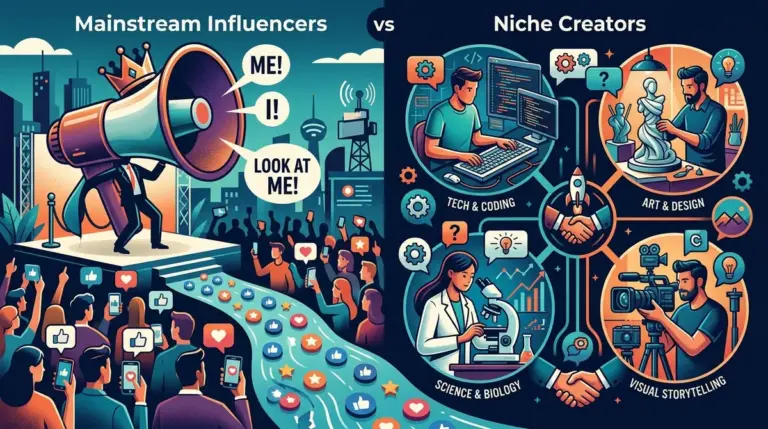
Achieving these unit economics requires deep specialization. Generalists struggle to monetize because their attention is "thin"—it covers many topics but lacks the depth to solve expensive problems. In contrast, creators who focus on specific technical niches, financial markets, or specialized creative workflows can charge premium prices for their insights. They aren't selling content; they are selling a shortcut to a desired outcome.
The Role of First-Party Data in Scaling
When a creator owns their data, they can use it to build sophisticated marketing personas. They can track which topics lead to the highest product conversion rates, rather than just which topics get the most clicks. This data-driven approach allows for more efficient ad spend if the creator decides to use paid acquisition to scale their owned products, creating a flywheel effect where organic attention feeds a paid engine that drives sustainable growth.
Operationalizing the Conversion Funnel
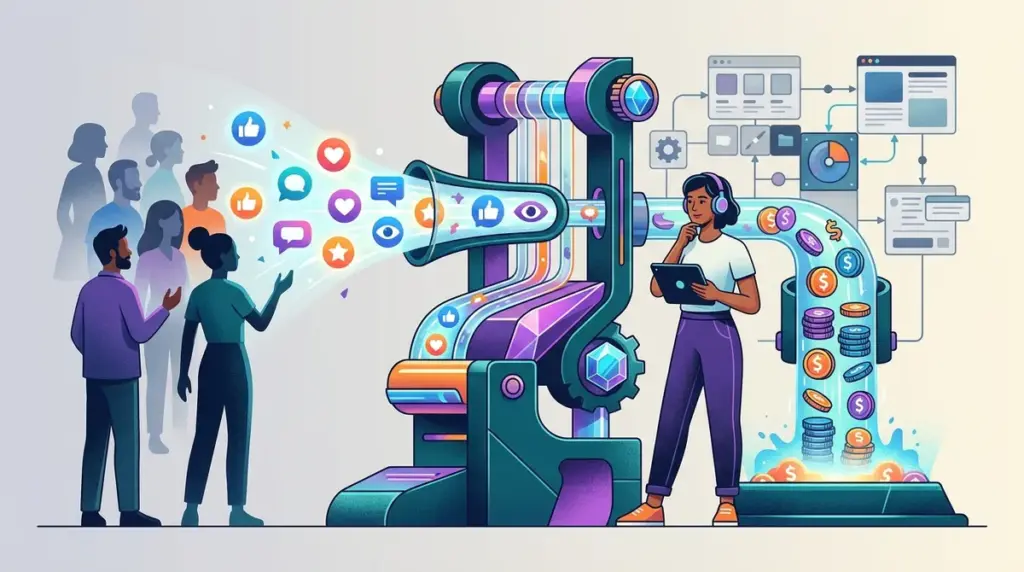
To turn attention into income, the creator must build a structured funnel that moves a casual viewer through stages of increasing commitment. This is often referred to as the "Value Ladder."
Stage 1: Discovery. High-frequency, short-form content on platforms like X, TikTok, or Reels designed to capture initial interest. The goal here is not profit, but reach and brand awareness.
Stage 2: Education. Long-form content (newsletters, YouTube videos, podcasts) that builds trust and demonstrates expertise. This is where the creator captures the email address.
Stage 3: Transformation. The paid offering. This could be a $50 ebook, a $500 course, or a $5,000 mastermind. The product must deliver a tangible transformation or solve a specific problem identified in Stage 2.
The Transition Roadmap
To move from a hobbyist to a sustainable creator business, start with a rigorous audit of where your audience lives and how much of that access you actually control. If 90% of your reach is tied to a single platform's home feed, your immediate priority is lead capture. Set up a landing page with a "lead magnet"—a high-value free resource—to begin building your email list. Once you have a direct line to 1,000+ subscribers, survey them to identify their biggest pain points. Use this data to build your first minimum viable product (MVP). Stop chasing the next viral hit and start building the infrastructure that makes virality unnecessary for your survival.
Frequently Asked Questions
How much of my content should be free vs. paid?
A common ratio is the 80/20 rule: 80% of your content should be free to maintain top-of-funnel growth and trust, while 20% is gated or promotional. However, the free content should be high enough quality that it could be paid; this sets the expectation for the value of your actual products.
What is the most stable revenue stream for creators today?
Owned recurring revenue, such as a paid newsletter or a subscription-based community, is the most stable. Unlike brand deals, which are seasonal and discretionary, subscriptions provide a predictable monthly floor that allows for better financial planning and hiring.
Do I need a large following to start monetizing?
No. If you solve a high-value problem for a specific niche, you can monetize an audience of a few hundred people. The key is the "depth" of the problem. A creator helping SaaS founders optimize their exit strategy needs far fewer followers than a lifestyle vlogger relying on AdSense.
Which platform is best for building an owned audience?
Email remains the gold standard for ownership. While platforms like Substack or Ghost are popular for newsletters, the critical factor is that you can export your subscriber list (CSV) and move it to any other service at any time. This portability is the definition of ownership.