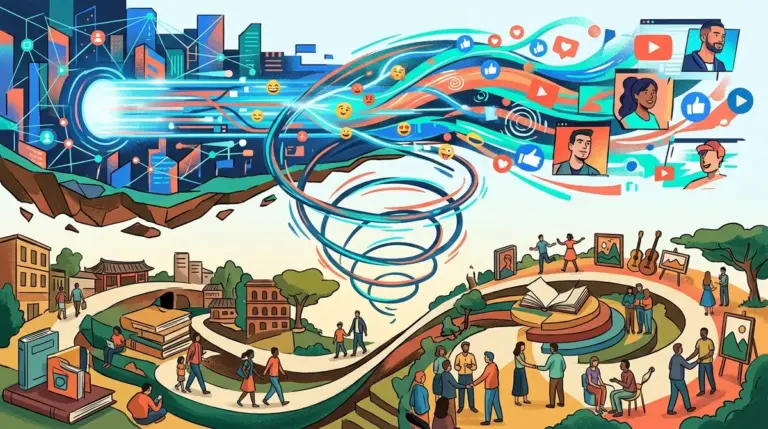

Startup stories do more than entertain. They shape what founders build next, what investors fund, what operators copy, and what the wider market starts treating as inevitable. If you run a publication, agency, software company, investor newsletter, or creator-led brand, the right startup stories are not just reading material. They are market signals. They show how distribution changed, how product categories were reframed, how founder narratives influenced valuation, and how internet culture turned obscure products into category leaders.
This list ranks the startup stories that most clearly changed the tech conversation, not simply the companies that became large. The focus is editorial impact: stories that altered how people talked about growth, creator economics, direct-to-consumer distribution, AI, remote work, community-led products, or startup mythology itself. For marketers and publishers, these are case studies in narrative leverage. For founders, they show which story angles actually moved markets and which only generated temporary hype. These stories offer a fascinating lens into how the internet shapes everyday life and influences our collective narrative.
What to Look For in a Startup Story
A startup story matters when it changes behavior outside the company itself. The strongest examples do at least three things: they introduce a new operating playbook, they create a repeatable media narrative that others imitate, and they shift buyer or investor expectations. A useful startup story is not just “company X grew fast.” It is “company X changed how customer acquisition works,” “company X made a once-niche user behavior mainstream,” or “company X turned a founder identity into a distribution channel.”
For commercial readers, the practical filter is simple. Ask whether the story changed pricing norms, distribution tactics, hiring patterns, product packaging, creator incentives, or investor language. If the answer is yes, it belongs on the shortlist. If the story only produced admiration without changing market behavior, it is cultural noise, not a durable tech conversation.
1. Airbnb
Airbnb changed the startup conversation by making trust, not inventory, the center of a marketplace story. Before Airbnb, the dominant internet narrative was that scale came from owning infrastructure or aggregating professional supply. Airbnb proved that ordinary people could become global inventory if the product solved identity, reviews, payments, and expectation-setting well enough. That reframed marketplaces, travel, and the broader idea of underused assets becoming businesses.
Best for: Founders studying marketplace trust mechanics, brand storytelling under regulatory pressure, and how a startup turns a fringe behavior into a normalized consumer habit.
Pros: The company’s early survival story, including scrappy fundraising and unconventional growth moves, became a blueprint for startup resilience. Its design-first framing helped push the idea that user experience can unlock supply in markets previously limited by fear. It also changed investor appetite for two-sided marketplaces by showing that fragmented, nonprofessional supply could still become a global business.
Cons: The story is so iconic that it often gets oversimplified into a hustle myth. That can hide the harder lessons around regulation, neighborhood backlash, platform quality control, and the operational burden of trust at scale.
Verdict: Airbnb remains one of the clearest examples of a startup story that changed both consumer behavior and investor logic. Its real lesson is not “rent out spare rooms.” It is that a company can manufacture trust strongly enough to create a market that looked too messy to scale.
2. Stripe
Stripe changed the tech conversation by turning payment infrastructure into startup culture. Payments had long been treated as a back-office function, difficult but unglamorous. Stripe made APIs, developer experience, and clean documentation into a growth narrative. That shifted how software founders thought about infrastructure. Suddenly, the companies behind the scenes could command the same attention as consumer apps because they were reducing friction at the exact point where internet businesses made money. This transformation highlights how tech and pop culture colliding can redefine even the most mundane functions.
Best for: Teams building developer products, fintech infrastructure, or any company where product adoption depends on implementation speed.
Pros: Stripe made technical simplicity a marketable story. Its documentation, onboarding, and product naming became part of the brand itself, which influenced an entire generation of API-first startups. It also helped normalize the idea that infrastructure companies could build broad product suites without losing developer trust, provided the core experience stayed clean.
Cons: The Stripe narrative can encourage copycat positioning around developer love without matching the execution depth. Many startups borrowed the aesthetic of clarity without solving the underlying complexity as effectively.
Verdict: Stripe’s story mattered because it upgraded infrastructure from invisible plumbing to strategic leverage. It changed what founders expect from B2B product design and what investors look for in technical distribution.
3. Notion
Notion changed the conversation around software by making flexibility itself the product. Instead of forcing users into a rigid workflow, it sold the idea that software should feel like building blocks. That story landed at the intersection of productivity, creator culture, and community-led growth. Users did not just adopt Notion; they published templates, built personal brands around workflows, and turned product education into a creator economy.
Best for: SaaS operators, community-led growth teams, and product marketers studying how users become educators and distributors.
Pros: Notion showed how a product can scale through user-generated use cases rather than top-down feature messaging. Its template ecosystem reduced onboarding friction while creating endless social proof. The brand also benefited from a rare mix of design appeal and practical utility, making it highly shareable in both consumer and professional contexts.
Cons: Flexibility can create ambiguity. For some teams, the blank-canvas model increased setup time and governance problems. The broader startup lesson is not that open-ended software always wins, but that flexibility needs a content ecosystem to become commercially efficient.
Verdict: Notion changed the tech conversation because it turned workflow design into public content. It is one of the clearest examples of product usage becoming media distribution.
4. Substack
Substack pushed the creator economy from abstract promise to direct revenue model. The company’s story was not simply about newsletters. It was about ownership: audience ownership, subscription revenue, and the idea that writers could build independent media businesses without relying on ad-driven platforms. That changed how journalists, analysts, niche experts, and creator-operators thought about publishing economics.
Best for: Publishers, creators, media operators, and marketers tracking audience monetization shifts.
Pros: Substack made recurring revenue feel accessible to individual creators, not just media companies. It also changed the conversation around personal brand monetization by tying reputation directly to paid subscriptions. The company’s public narrative around independent publishing influenced countless adjacent businesses in courses, podcasts, communities, and niche research products.
Cons: The story can overstate the portability of creator success. Subscriber businesses depend heavily on existing audience trust, publishing consistency, and topic defensibility. Many imitators learned that “own your audience” is not enough without a clear value proposition and retention engine.
Verdict: Substack mattered because it reframed media from traffic acquisition to subscriber economics. Its biggest impact was cultural: it made independence look operationally viable, not just aspirational.
5. Figma
Figma changed the conversation around collaboration by proving that browser-based software could outperform installed desktop tools in professional creative work. The product story was not merely “design in the browser.” It was “multiplayer for work,” applied to a category that had been dominated by file-based workflows. That shifted expectations across software, from design to docs to whiteboarding to engineering collaboration.
Best for: Product teams, software founders, and operators evaluating collaboration as a core product mechanic rather than an add-on feature.
Pros: Figma made real-time collaboration the headline, not a secondary convenience. That changed how teams purchased software and how startups pitched productivity. It also proved that community assets, plugins, and shared systems could deepen product lock-in without feeling restrictive. The browser delivery model lowered friction for adoption inside distributed teams.
Cons: The Figma story is often reduced to “real-time collaboration wins,” which misses the importance of performance, ecosystem depth, and workflow reliability. Multiplayer alone is not a moat.
Verdict: Figma’s story changed the market because it reset user expectations. Once teams experienced live collaborative creation, older file-centric workflows started to feel structurally outdated.
6. Shopify
Shopify changed the startup conversation by making independent commerce look scalable at the same time that marketplaces were concentrating power. Its story gave merchants an alternative to becoming tenants on giant platforms. For years, the dominant internet narrative favored aggregation. Shopify popularized a counter-narrative: brands could own their storefronts, customer data, and merchandising logic while still accessing a broad ecosystem of apps, services, and channels.
Best for: E-commerce operators, agencies, DTC brands, and founders studying ecosystem-led growth.
Pros: Shopify’s biggest narrative contribution was making merchant empowerment commercially legible. It created a platform model that benefited from scale without erasing brand independence. The app ecosystem, partner network, and content machine around entrepreneurship turned the product into a cultural signal for modern commerce, not just a store builder.
Cons: The independence story can obscure how difficult customer acquisition remains for merchants. Owning the storefront does not solve rising ad costs, retention challenges, or operational complexity.
Verdict: Shopify changed the conversation because it gave digital commerce a political angle: control versus dependency. That framing still shapes how brands evaluate channels, marketplaces, and owned media.
7. OpenAI
OpenAI changed the tech conversation faster than almost any startup-scale company in recent memory by turning artificial intelligence from a specialist field into a mainstream product category. The key shift was not simply technical progress. It was interface and accessibility. Once generative AI became usable by nontechnical people at scale, the startup ecosystem reorganized around new assumptions about content creation, coding, search, support, and software interfaces.
Best for: Founders, product strategists, publishers, and agencies trying to separate durable AI workflow shifts from short-lived novelty.
Pros: OpenAI made AI legible to the mass market. That changed investor behavior, startup roadmaps, and enterprise experimentation almost overnight. The story also forced every software category to answer a new question: what does this product look like when generation, summarization, and conversational input become default user expectations?
Cons: The intensity of the story produced a flood of thin wrappers and speculative positioning. For many businesses, the media conversation ran ahead of unit economics, accuracy requirements, and defensibility.
Verdict: OpenAI belongs near the top because it shifted the entire startup vocabulary. Even companies far outside AI had to rethink product design, search behavior, and content economics in response.
8. Clubhouse
Clubhouse had a shorter arc than others on this list, but its story changed the conversation around social product design, exclusivity, and pandemic-era behavior. It showed how quickly scarcity, invitation mechanics, and celebrity proximity could create cultural heat. For a period, live audio felt like the next major social format, and nearly every large platform reacted.
Best for: Marketers and founders studying hype cycles, social mechanics, and the gap between cultural momentum and durable retention.
Pros: Clubhouse demonstrated how format novelty plus social signaling can compress growth timelines. Its invite-only rollout generated status, while live participation created a feeling of immediacy that text and recorded content could not match. The company also triggered copycat launches across the major platforms, which is a clear sign of narrative impact.
Cons: The retention model proved weaker than the initial fascination. Live audio is demanding, hard to archive, and difficult to fit into daily routines at scale. The story became a cautionary tale about mistaking peak attention for product permanence.
Verdict: Clubhouse changed the tech conversation less through long-term market dominance than through the speed of its influence. It remains one of the best examples of how cultural heat can force industry-wide imitation before product-market fit is fully proven.
9. Zoom
Zoom changed the conversation by turning reliability into a breakout growth story. Video conferencing existed long before Zoom, but the company became the default reference point when remote work moved from edge case to operating norm. Its story mattered because it showed how execution on a seemingly boring category can become culturally central when the product removes enough friction at exactly the right moment.
Best for: B2B founders, operators, and product teams in mature categories where incumbents have created user fatigue.
Pros: Zoom’s growth narrative proved that ease of joining, connection stability, and low cognitive overhead can outperform feature-heavy incumbents. The company also became a symbol of remote work infrastructure, influencing adjacent conversations around distributed teams, digital events, and work-from-anywhere policies.
Cons: Some of Zoom’s visibility was accelerated by external conditions that were impossible to replicate. That makes the story easy to misread as a pure product lesson when timing played a major role.
Verdict: Zoom changed the conversation because it made usability a strategic advantage in enterprise software. It reminded the market that products in old categories can still become category-defining if they remove enough friction.
10. Canva
Canva changed the startup conversation by expanding who gets counted as a software user. It did not win by targeting elite designers first. It won by making visual production accessible to marketers, teachers, small businesses, creators, and teams that needed speed more than formal design training. That shifted the conversation from professional-grade capability to mass creative participation.
Best for: Growth teams, product marketers, and founders studying prosumer expansion and template-led adoption.
Pros: Canva turned templates into a distribution engine and a retention mechanism. It reduced the intimidation factor of design software while still supporting team workflows, brand controls, and collaborative use. The broader market impact was significant: visual communication became operationally easier for nonexperts, which affected content velocity across social, e-commerce, education, and internal communications.
Cons: The accessibility story can make the category look easier than it is. Maintaining simplicity while serving increasingly advanced use cases is a difficult product balancing act.
Verdict: Canva changed the conversation because it reframed software adoption around confidence, not credentials. It proved that lowering creative friction can expand a market far beyond its traditional professional base.
11. Robinhood
Robinhood changed the conversation around fintech by packaging investing as a mobile-first consumer behavior rather than a specialized financial activity. Commission-free trading was the headline, but the deeper shift was cultural. The app merged finance, internet-native design, and social momentum into a product that made market participation feel immediate, frequent, and shareable.
Best for: Fintech founders, consumer app strategists, and marketers analyzing how interface choices alter user behavior in regulated categories.
Pros: Robinhood accelerated price compression across brokerage and pushed incumbents to rethink mobile experience. It also showed how product design can radically expand participation in categories once shaped by high friction and institutional tone. The company’s story influenced countless debates around gamification, financial literacy, and the ethics of growth design.
Cons: The same mechanics that drove engagement also intensified scrutiny. Regulatory pressure and public backlash exposed the risks of simplifying high-stakes behavior too aggressively.
Verdict: Robinhood belongs on this list because it changed not only pricing and access, but also the moral debate around product design in fintech. Few startup stories forced such a visible collision between growth and responsibility.
12. Patreon
Patreon changed the conversation by giving creators a recurring-revenue model before the creator economy became a catch-all industry term. The company’s story mattered because it offered a practical answer to a longstanding internet problem: how do creators monetize loyal audiences without relying entirely on ads, sponsorships, or platform algorithms? Membership became the product, and fan support became infrastructure rather than improvisation.
Best for: Creator businesses, media strategists, community builders, and platforms studying recurring monetization outside traditional SaaS.
Pros: Patreon helped normalize the idea that niche audiences can support sustainable businesses if the value exchange is explicit. It also influenced broader product thinking around tiers, exclusivity, community access, and behind-the-scenes content as monetizable assets. For many creators, it changed monetization from campaign-based income to ongoing member economics.
Cons: Membership businesses can become operationally heavy. Retention depends on continuous value delivery, and many creators underestimate the workload required to sustain paid communities over time.
Verdict: Patreon changed the tech conversation because it made audience intimacy economically legible. Its real contribution was proving that recurring support could work for independent creators long before the market fully organized around that idea.
How to Measure Which Startup Stories Actually Matter
If you are using startup stories for strategy rather than entertainment, measure them on four dimensions. First, copy rate: did other startups, investors, or incumbents change behavior in response? Second, vocabulary shift: did the story introduce new language that spread across decks, media, and hiring? Third, product imitation: did competitors rebuild their roadmaps around the same mechanic? Fourth, monetization impact: did the story change pricing, business models, or customer expectations in a measurable way?
For publishers and marketers, the best startup stories also create durable search and audience value because they connect company narratives to broader market transitions. A useful editorial angle is not just the founder journey. It is the operating lesson underneath it: trust as infrastructure, templates as distribution, APIs as brand, subscriptions as independence, collaboration as default, or AI as interface. Those are the frames that keep attracting readers after the hype cycle fades.
FAQ
What makes a startup story influential enough to change the tech conversation?
The story must alter behavior outside the company. That can mean investors funding similar models, competitors copying product mechanics, customers changing expectations, or media adopting new language to describe a category.
Are the biggest startup stories always tied to the biggest companies?
No. Some companies become large without changing how the market thinks. Others, like Clubhouse, can have an outsized cultural effect despite a shorter period of dominance. Influence and scale overlap, but they are not identical.
How should founders use these stories without copying them badly?
Extract the transferable mechanism, not the surface aesthetic. For example, Stripe’s lesson is not minimalist branding alone. It is that implementation speed and documentation can become distribution. Notion’s lesson is not blank pages. It is that user-created templates can lower adoption friction and drive community growth.
Which of these stories matters most for publishers and creators?
Substack, Patreon, Notion, and Canva are especially useful because they show how products become media systems. Each changed how audiences are built, monetized, or activated through content and community.
Why do short-lived startup stories still matter?
Because they reveal how quickly markets can reorganize around a compelling narrative. Even when the company cools, the reaction it triggered across platforms, investors, and users can permanently reshape product strategy.