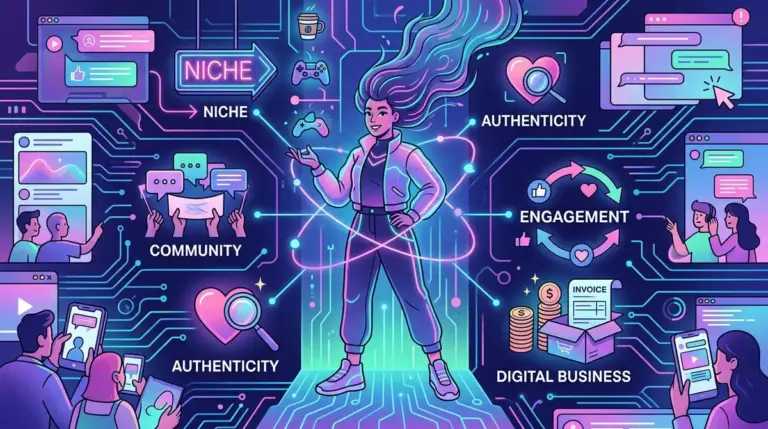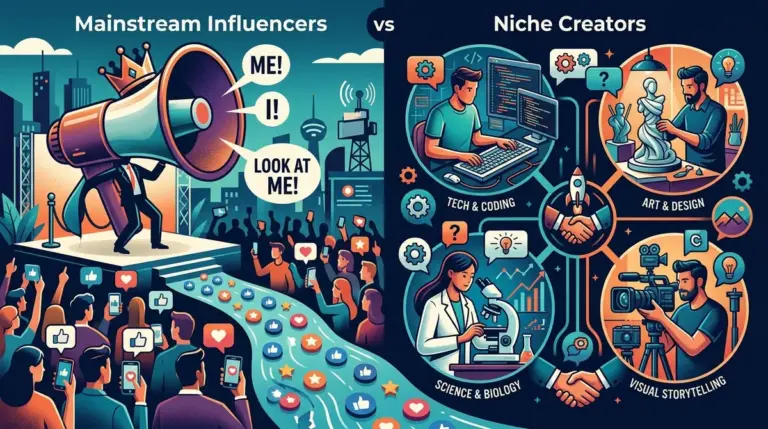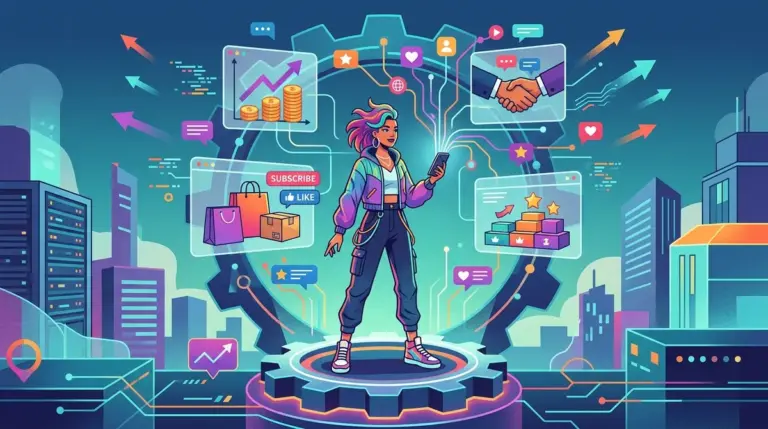
The traditional metric of digital success—raw follower count—is becoming an increasingly poor indicator of actual market influence. In the current creator economy, a developer with 5,000 LinkedIn followers who consistently solves legacy architecture problems possesses more commercial leverage than a lifestyle influencer with half a million generic subscribers. This shift toward "niche authority" allows small creators to outcompete legacy media brands by maintaining lower overhead and higher trust scores. For agencies and marketers, understanding this transition is the difference between chasing vanity metrics and capturing high-intent audiences. This transition demonstrates how creators are effectively monetizing their expertise rather than just chasing broad appeal.
The Economics of Niche Saturation and Vertical Authority
Influence is no longer a game of broad reach; it is a game of depth within a specific vertical. Small creators build influence by identifying a "micro-problem" and becoming the definitive source of truth for it. This is often referred to as the 1,000 True Fans model, but updated for a fragmented algorithmic landscape. When a creator focuses on a narrow topic—such as "No-code automation for boutique law firms"—they eliminate 99% of their competition. They aren't fighting for the attention of the general public; they are dominating a high-value sliver of the market. This focus on niche authority is precisely why these creators often outperform mainstream influencers in their specific domains.
Best for: B2B consultants, specialized software developers, and technical educators who need to establish high-ticket authority quickly.
Vertical authority creates a moat that is difficult for larger entities to cross. Large publishers are often beholden to broad SEO keywords to maintain traffic volume, which forces them to write generalized content. Small creators can afford to be hyper-specific, using long-tail keywords and community-specific jargon that signals expertise to a sophisticated audience. This specificity leads to higher conversion rates because the content feels like a bespoke solution rather than a generic overview.
Exploiting Platform-Specific Algorithmic Loops
Small creators build massive reach by treating social platforms as discovery engines rather than final destinations. The strategy involves using high-velocity, short-form video (TikTok, Reels, YouTube Shorts) to A/B test hooks and topics with zero distribution cost. If a 60-second clip on a specific technical hurdle gets high completion rates, the creator knows there is a market for a 2,000-word deep dive or a paid course on that subject.
High-Frequency Testing via Short-Form Video
Instead of spending weeks on a single whitepaper, successful creators use a "modular content" approach. They break down complex ideas into 15-second "insight nuggets." By monitoring the "Re-watch Rate" and "Share-to-Save Ratio," they identify which specific pain points resonate most with their core demographic. This data-driven approach removes the guesswork from content strategy. For instance, a creator might notice that while "SEO tips" performs poorly, "Internal linking strategies for Shopify stores" triggers a spike in saves. This is a clear signal to double down on e-commerce technical SEO content.
Leveraging Search-First Social Media
Platforms like TikTok and Pinterest have evolved into visual search engines. Small creators optimize their profiles not just for "vibes," but for search intent. By using keyword-rich captions and on-screen text, they ensure their content surfaces when users search for specific solutions. This creates a "passive influence" loop where old content continues to attract new followers months after the initial post, providing a compounding return on effort that generalist creators rarely achieve.
Pro Tip: Never rely on a single platform’s algorithm for your entire business model. Use social platforms for discovery, but aggressively migrate your most engaged users to an "owned" channel like an email list or a private community. A platform shift can wipe out 90% of your reach overnight, but an email list is a portable asset.
The Tech Stack of the Modern Solo-Media Entity
Small creators are effectively "lean startups" that use automation to punch above their weight. To build influence without a massive team, they employ a specific stack of tools designed for high-output distribution and community management. The goal is to minimize the time spent on administrative tasks and maximize the time spent on "high-leverage" creative work.
- Content Repurposing Tools: Platforms that automatically clip long-form podcasts into social-ready snippets using AI to detect the most engaging moments.
- Direct-to-Consumer Infrastructure: Tools like Beehiiv or Substack that allow creators to bypass the algorithm and reach their audience directly via email.
- Community Operating Systems: Platforms like Circle or Skool that move the conversation away from noisy social feeds into a branded, moderated environment.
- CRM for Creators: Specialized databases that track "super-fans" and high-value leads, allowing for personalized outreach that scales.
By integrating these tools, a single creator can manage an ecosystem that previously required a marketing department of five. This efficiency allows them to maintain a high "signal-to-noise" ratio, which is essential for building long-term trust with an audience that is increasingly skeptical of polished, corporate messaging.
Monetization as a Proxy for Influence
In the new creator economy, monetization is not just an endgame; it is a feedback loop that validates influence. Small creators often skip traditional ad-based revenue in favor of "high-intent" monetization models. This includes digital products, paid newsletters, and specialized consulting. When an audience is willing to pay for a creator's insight, it confirms that the creator has moved beyond being "entertaining" to being "essential."
This "essential" status is what brands are looking for in partnerships. Agencies are moving away from paying for "shoutouts" and toward "collaborations" where the creator's expertise is integrated into the product development or marketing strategy. This is the Creator-as-a-Service (CaaS) model, where the creator provides the market research, the distribution, and the creative direction in one package.
Operationalizing Your Influence Strategy
To transition from a generalist to an influential niche creator, you must move from a "broadcast" mindset to a "service" mindset. Influence is built through the consistent delivery of high-value information that solves specific problems for a specific group of people. Use the following roadmap to audit and refine your approach:
Identify your "Minimum Viable Niche." If your topic is too broad to define in one sentence, narrow it down until you are the only person talking about it from your specific angle. Audit your current content for "Search Intent"—are you answering questions people are actually asking, or are you just contributing to the noise? Finally, build your "Owned Audience" infrastructure immediately. Every piece of content you produce should have a clear path leading the viewer toward a platform you control. The goal is not to be famous everywhere; it is to be indispensable to the right people.
Frequently Asked Questions
How many followers do I need to start monetizing?
There is no hard number, but creators in high-value niches (like B2B tech or finance) often start seeing significant revenue with as few as 1,000 to 2,000 highly engaged subscribers. The key is the "depth" of the relationship and the "value" of the problem you are solving.
Which platform is best for building influence in 2024?
For discovery and rapid growth, TikTok and YouTube Shorts are currently the most effective. For high-ticket authority and professional networking, LinkedIn remains the leader. For long-term retention and community building, email newsletters and private Discord or Circle groups are essential.
How do I find a niche that isn't already saturated?
Look for "intersections" rather than broad categories. Instead of "Marketing," try "Marketing for SaaS startups in the healthcare space." The more specific the intersection, the lower the competition and the higher the perceived expertise.
Is it better to post daily or focus on high-quality weekly content?
The algorithm favors consistency, but the audience favors value. A hybrid approach works best: use high-frequency "low-effort" content (like short-form video) to stay top-of-mind, and "high-effort" long-form content (like deep-dive articles or videos) to build deep authority and trust.