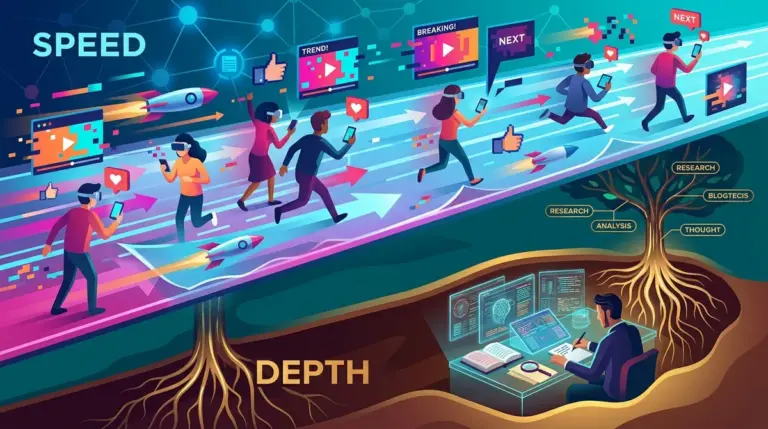
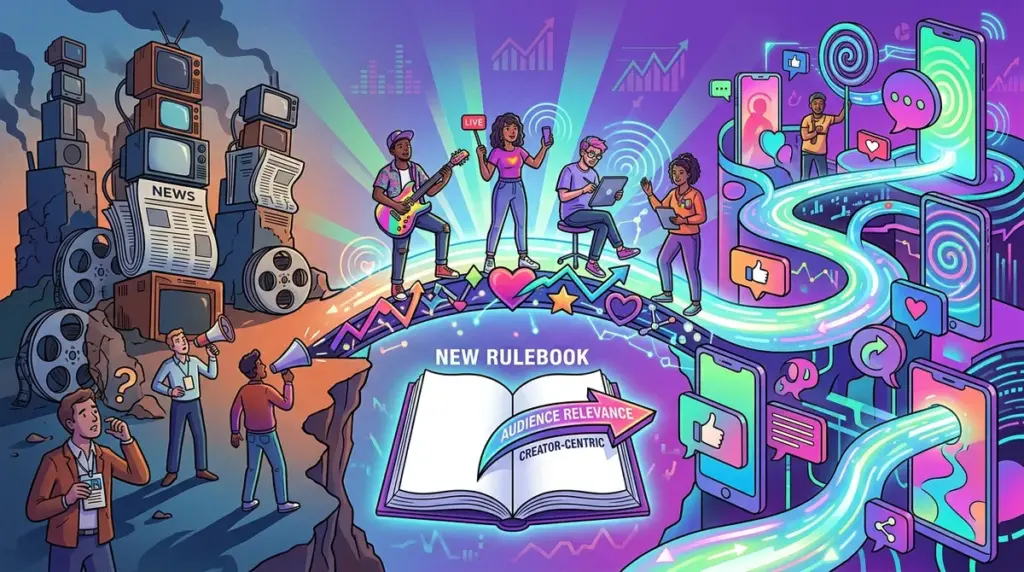
The traditional media playbook—built on the pillars of massive reach and broad-spectrum appeal—has collapsed under the weight of algorithmic fragmentation. In the current landscape, "relevance" is no longer a measure of how many eyes see a piece of content, but how deeply that content integrates into specific, high-intent communities. For publishers and brand-side marketers, the shift from the social graph (who you know) to the interest graph (what you care about) has fundamentally altered the ROI of digital presence. Success in this era requires moving beyond vanity metrics and focusing on the technical and cultural mechanisms that drive true engagement.
The Erosion of the Social Graph
For a decade, media relevance was tied to the size of a following. If a brand had a million followers on Facebook or X, it had a guaranteed distribution channel. That era is over. Platforms have pivoted toward discovery-based feeds where content is served based on immediate performance rather than historical loyalty. This transition has turned every post into a cold-start problem, where past success does not guarantee future visibility.
Best for: Digital publishers and venture-backed startups looking to stabilize traffic in a post-referral world.
To survive this shift, media entities must stop treating social platforms as distribution pipes and start treating them as R&D labs. The goal is to identify which specific content formats—whether short-form video, data-driven infographics, or long-form threads—trigger algorithmic favor within a specific niche. This requires a granular approach to analytics that prioritizes "save" rates and "share" velocity over simple "likes."
The Rise of Interest-Based Clusters
Relevance is now found in the "edges" of the internet—Discord servers, Subreddit communities, and specialized Slack channels. These clusters are highly resistant to traditional advertising but deeply responsive to authentic authority. Media relevance in the social era is defined by the ability to move through these clusters without being rejected as "noise." This is achieved by producing "high-signal" content that provides immediate utility or unique insight that cannot be found via a generic search query.
Warning: Relying on platform-native tools for audience data is a strategic trap. As platforms tighten their "walled gardens," the data you receive is often anonymized and delayed. Always prioritize driving social traffic back to owned assets—newsletters, membership portals, or proprietary apps—to build a durable first-party data set.
The Economics of Niche Authority
The "middle" of the media market is disappearing. Generalist news and lifestyle sites are being squeezed by AI-generated aggregators on one side and hyper-specialized creators on the other. Relevance today is a function of specificity. A media brand that focuses exclusively on the intersection of "generative AI and supply chain logistics" is more commercially viable than a broad "tech news" site because its audience is pre-segmented for high-value advertisers.
To build this authority, publishers should focus on three core pillars:
- Proprietary Data: Publishing original research or datasets that others must cite.
- Contrarian Analysis: Moving beyond reporting what happened to explaining why the consensus is wrong.
- Vertical Integration: Developing products or services (like job boards or specialized events) that serve the specific needs of the niche.
The Creator-Led Distribution Model
Audiences no longer trust corporate mastheads; they trust individuals. This is why we see legacy media houses and startups alike pivoting toward "creator-led" strategies. By empowering individual editors and journalists to build their own personal brands, the parent organization gains access to the trust those individuals have cultivated. This isn't just about influencer marketing; it's about humanizing the source of the information. When a recognizable expert shares a report, the "relevance" of that report is amplified by their personal reputation.
Engineering for Zero-Click Content
One of the most significant challenges in the social era is the "zero-click" trend. Platforms like LinkedIn and Instagram are incentivized to keep users on their site, often penalizing posts that contain external links. To remain relevant, media brands must master the art of the "native value-add." This means providing the core insight of an article directly within the social post itself.
While this may seem counterintuitive to a traffic-driven business model, it builds long-term brand equity. When a user consistently finds value in your native social content, they are far more likely to seek out your website or subscribe to your newsletter when they need a deeper dive. Relevance is earned through consistent, friction-free value delivery.
Technical Infrastructure for Modern Media
Behind the scenes, media relevance is supported by a robust technical stack. This includes high-performance CMS platforms that prioritize Core Web Vitals, but also more advanced tools like semantic SEO layers and automated content tagging. By using machine learning to categorize content at a granular level, publishers can serve more relevant "recommended reading" and create more effective personalized email journeys. The goal is to create a seamless transition from a social discovery to an owned-platform experience.
Auditing Your Media Relevance Strategy
To realign your strategy with the current social era, begin by auditing your existing content performance through the lens of community impact rather than raw traffic. Identify which pieces of content generated the highest number of "meaningful" interactions—such as detailed comments, direct messages, or citations in other publications. These are your signals for future relevance.
Next, diversify your distribution. If more than 40% of your traffic comes from a single social platform, you are at the mercy of an algorithm you do not control. Shift your focus toward building a direct relationship with your audience. This involves optimizing your "on-ramp" from social platforms—using lead magnets, exclusive webinars, or high-value gated content to convert anonymous social scrollers into known newsletter subscribers.
Finally, invest in "evergreen relevance." While the social era thrives on the "now," the most successful media brands balance trending topics with deep-dive, foundational content that remains relevant for months or years. This creates a "flywheel" effect where new social discovery constantly feeds back into a library of high-value, authoritative assets.
Frequently Asked Questions
How do I measure relevance if follower counts are no longer accurate?
Focus on "Engagement Depth." Measure the ratio of shares to likes, the average time spent on your articles coming from social referrals, and the conversion rate of social visitors to newsletter subscribers. High shares and high conversions indicate that your content is resonating with a core audience rather than just passing through a feed.
Is long-form content still viable in a short-form social era?
Yes, but its role has changed. Long-form content is now the "destination" rather than the "entry point." Use short-form video or threads to highlight the most provocative or useful parts of your long-form piece, then provide a clear path for those who want the full context to access the long-form version on your owned platform.
How often should I pivot my content strategy based on algorithmic changes?
Never pivot your core brand identity, but adjust your delivery tactics quarterly. The "what" (your expertise and niche) should remain constant, while the "how" (video vs. text, thread vs. carousel) should evolve based on platform performance data and user behavior trends.
What is the most effective way to move social followers to a newsletter?
The "Partial Value" technique is most effective. Provide a complete, useful insight on social media, but offer an expanded resource—such as a template, a checklist, or a deeper dataset—available only via email. This rewards the user for making the jump from the social platform to your owned list.