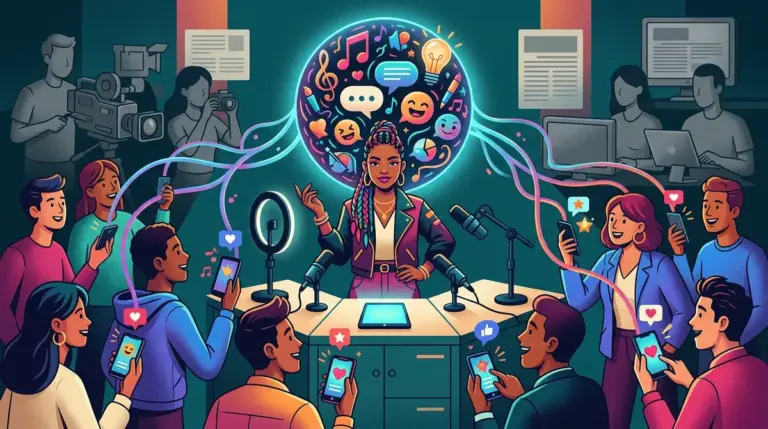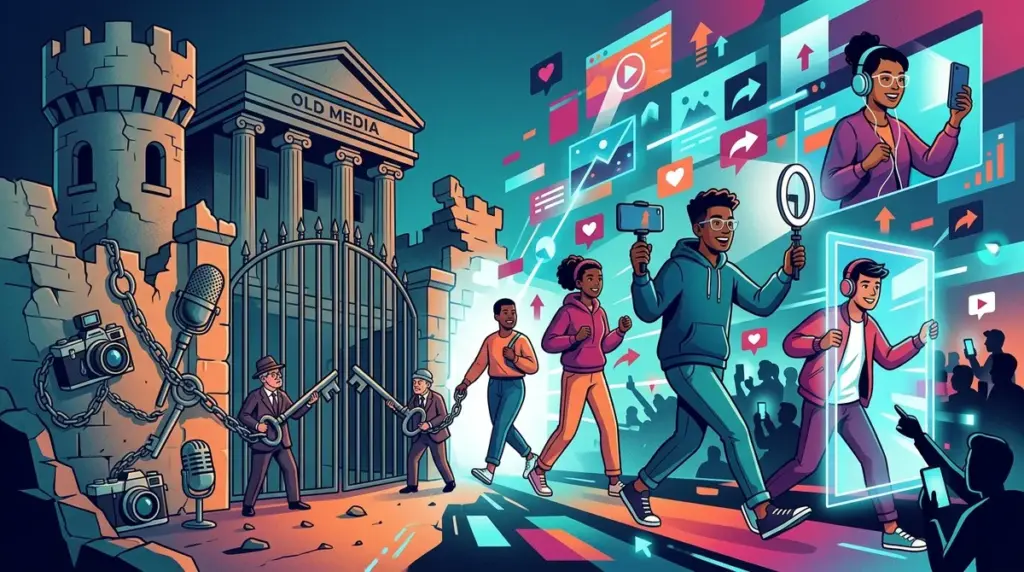
The traditional media monopoly has collapsed. For decades, a handful of editorial boards at legacy publications and network executives acted as the sole arbiters of cultural relevance and commercial viability. If your product wasn't in the pages of a major glossy or featured on a morning talk show, it effectively didn't exist for the mass market. Today, that gatekeeping power has shifted from institutions to individuals. Internet personalities—ranging from technical YouTubers to niche Substackers—now command higher trust scores and more direct purchasing influence than the mastheads that once defined entire industries.
For marketers and business owners, this isn't just a shift in "influencer marketing"; it is a fundamental restructuring of how information is distributed and how value is captured. The "institutional seal of approval" has been replaced by the "creator’s recommendation," a transition that requires a complete overhaul of traditional PR and advertising spends.
The Erosion of Institutional Authority
Institutional trust is at a historic low. When a legacy publication reviews a product, the audience often perceives a layer of corporate bias or a disconnect from the end-user experience. Conversely, an internet personality whose livelihood depends on the integrity of their relationship with their audience has a massive incentive to be honest. This is the "skin in the game" factor that legacy media lacks.
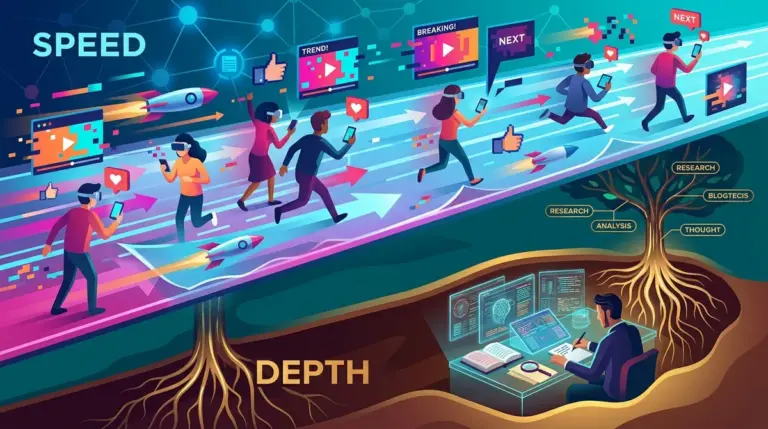
Key Shift: Traditional gatekeepers operated on a model of scarcity—limited pages, limited airtime. Internet personalities operate on a model of abundance and curation. In a world of infinite content, the person who filters the noise becomes the new gatekeeper. They don't just provide reach; they provide context and validation.
The Rise of Permissionless Leverage
In the old world, you needed permission to reach an audience. You needed an editor to greenlight your story or a buyer to put your product on a shelf. Modern creators use permissionless leverage—code and media—to build their own distribution networks. A developer on Twitter can launch a SaaS product to 50,000 followers without ever issuing a press release. This bypasses the traditional gatekeeper entirely, allowing for faster feedback loops and higher profit margins by removing the middleman.
The Economic Efficiency of Niche Personalities
Broad reach is becoming a vanity metric. A legacy TV spot might reach five million people, but the "waste" (viewers with zero interest in the product) is astronomical. An internet personality with 50,000 highly engaged followers in a specific vertical—such as mechanical keyboards, biohacking, or seed-stage investing—offers a density of intent that traditional media cannot match.
Best for: Startups and D2C brands looking to minimize Customer Acquisition Cost (CAC) by targeting pre-qualified communities rather than broad demographics.
- Conversion Velocity: Audiences move from discovery to purchase faster when the recommendation comes from a trusted individual.
- Long-tail SEO Value: Creator content (YouTube videos, blog posts, podcasts) often has a longer shelf life and better search intent than a fleeting news cycle mention.
- Lower Production Overhead: Partnering with creators often includes content production, reducing the need for expensive external creative agencies.
Warning: Do not treat internet personalities like billboard space. The moment a creator’s content feels like a scripted corporate mandate, they lose the very authority that makes them valuable. Successful partnerships prioritize the creator’s voice over the brand’s style guide.
The Algorithm as the New Editor-in-Chief
If the internet personality is the new gatekeeper, the algorithm is the new managing editor. Platforms like TikTok, YouTube, and X (formerly Twitter) use interest-based graphs rather than social graphs. This means content is served to people based on what they care about, not just who they follow. This has leveled the playing field, allowing a creator with zero "legacy" status to go viral and disrupt a market overnight.
For brands, this means the strategy must shift from "buying placement" to "earning engagement." You cannot force your way past the algorithmic gatekeeper with a large budget alone; the content must resonate with the personality’s audience to trigger the distribution engine.
Vertical Authority vs. Horizontal Reach
We are seeing the rise of the "Micro-Gatekeeper." These are individuals who dominate a specific, narrow niche. While they may never be household names, they hold absolute authority within their domain. For a B2B software company, a mention from a respected industry analyst on LinkedIn is worth more than a full-page ad in a general business magazine. The goal is to identify who the "nodes" are in your specific network and build direct relationships with them.
Operationalizing the Shift in Your Marketing Mix
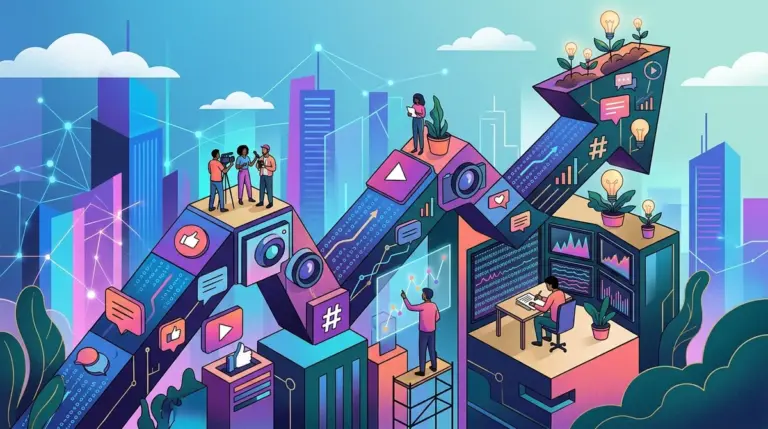
Transitioning from a gatekeeper-centric strategy to a personality-centric one requires a change in how you allocate resources. You are no longer just buying impressions; you are investing in social capital. This requires a more nuanced approach to attribution and relationship management.
Instead of a one-size-fits-all PR kit, brands should develop "Creator Briefs" that provide the necessary technical specs and value propositions while leaving the narrative execution to the personality. This allows the creator to translate your brand message into the "language" of their community, which is the only way to bypass the audience's natural ad-blocking filters.
Strategic Adjustments for the Creator Economy
To capitalize on this shift, businesses must stop viewing creators as a line item in the marketing budget and start viewing them as strategic distribution partners. This involves moving away from transactional, one-off posts toward long-term ambassadorships. When a personality repeatedly uses and discusses a product over six months, it moves from "sponsored content" to "essential tool" in the eyes of the audience.
Focus on the "Trust Stack." A consumer sees a creator use a product on TikTok, reads a deep-dive review in that creator's newsletter, and finally sees a tutorial on their YouTube channel. This multi-touchpoint journey, led by a single personality, is the modern equivalent of the traditional marketing funnel, but with significantly higher conversion rates.
Frequently Asked Questions
How do I measure the ROI of a personality-led campaign?
Move beyond likes and comments. Use unique discount codes, custom landing pages, and post-purchase surveys ("How did you hear about us?") to track direct conversions. Additionally, monitor "branded search volume" during and after a campaign to see how much the personality moved the needle on general awareness.
Is it risky to tie my brand to an individual personality?
Yes, there is "key person risk." If a creator becomes embroiled in controversy, your brand can be affected. Mitigate this by diversifying your creator portfolio and including "morality clauses" in contracts, but recognize that some level of risk is the price of the high-trust environment they provide.
What is the best way to approach a high-level creator?
Avoid generic outreach. Reference specific past content they have produced and explain exactly why your product provides value to their specific audience. Treat it as a business development pitch rather than a standard PR inquiry. High-level creators are looking for products that enhance their own brand equity.