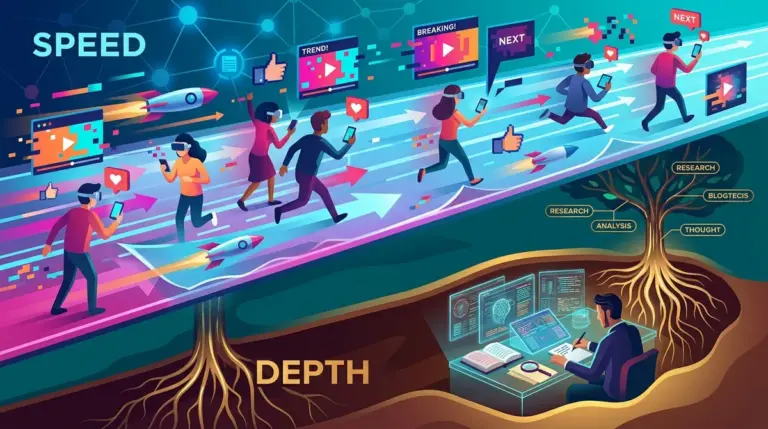

Founders and creators are increasingly abandoning the high-churn treadmill of short-form social media in favor of the long-form podcast ecosystem. While a viral tweet has a half-life of roughly 18 minutes, a podcast episode continues to generate organic discovery through search engines and recommendation algorithms for months. For a digital business, the podcast is no longer a vanity project; it is a high-leverage customer acquisition channel that converts passive listeners into high-LTV (Lifetime Value) brand advocates by bypassing the traditional skepticism of paid advertising.
The Shift from Impressions to High-Intent Retention
Traditional digital marketing focuses on impressions, but impressions are a weak proxy for trust. In the current creator economy, the bottleneck is not reach—it is attention span. Podcasts solve this by capturing "found time"—periods during commutes, workouts, or chores where the audience is physically unable to scroll past an ad. This creates a captive environment where a founder can articulate complex value propositions that would be lost in a 280-character post.
Best for: B2B SaaS founders and high-ticket service providers who need to establish authority before a sales call occurs.
The commercial utility of the medium lies in the depth of the relationship. Data from top-tier podcast hosting platforms indicates that listeners who consume at least 80% of an episode are 4x more likely to visit a brand's website compared to those who see a display ad. This is not "brand awareness"; it is the systematic warming of cold leads through long-form narrative.
Engineering the Guesting Strategy for Backlink Equity
Hosting a show is a significant operational burden, but "guesting"—appearing on established shows—is a high-ROI growth hack for SEO and authority. When a founder appears on a reputable industry podcast, the resulting show notes page typically includes a high-authority backlink. These links are often placed on domains with high Domain Authority (DA) and relevant topical clustering, which signals to search engines that the founder’s site is a trusted resource within a specific niche.
- Targeting Niche Density: Focus on shows with 1,000 to 5,000 highly engaged listeners in a specific vertical rather than general business shows with 50,000 passive listeners.
- The Show Note Hook: Ensure the host links to a specific, high-value lead magnet or a deep-dive resource page rather than just the homepage.
- Entity Association: By appearing alongside other industry leaders, your brand name becomes programmatically linked to high-value "entities" in Google’s Knowledge Graph.
Identifying High-Value Micro-Influencer Shows
The mistake most creators make is chasing the "Joe Rogan" tier of shows. For a startup founder, the real growth happens in the "Mid-Tail." These are shows hosted by industry consultants, agency owners, or niche journalists. These hosts have direct access to decision-makers. A single appearance on a podcast dedicated to "Supply Chain Optimization for E-commerce" is worth more in direct revenue than a mention on a generic "Entrepreneurship" show.
Pro Tip: Never pitch a podcast host without citing a specific segment from a previous episode. Hosts are inundated with generic PR pitches; demonstrating that you understand their narrative arc and audience pain points is the only way to bypass the gatekeepers of high-authority shows.
Content Atomization: Turning 60 Minutes into 60 Assets
The most sophisticated creators treat the podcast recording as the "source code" for their entire content engine. A single 45-minute interview can be decomposed into a multi-channel distribution blitz. This reduces the cost of content production while ensuring a consistent brand voice across platforms.
Using AI-driven transcription and video editing tools, a single episode can be transformed into:
1. Vertical Video Clips: 5-10 high-impact "nuggets" for TikTok, Reels, and YouTube Shorts.
2. Long-form Editorial: A 1,500-word blog post optimized for long-tail keywords identified during the conversation.
3. Newsletter Deep-dives: Specific insights or frameworks shared during the show can serve as the core logic for a weekly email.
4. LinkedIn Carousels: Step-by-step guides based on the tactical advice given in the audio.
Technical Implementation for Search Visibility
Audio content is no longer invisible to search engines. Google’s ability to index spoken word through Natural Language Processing (NLP) means that your podcast strategy must include a technical SEO component. If you are not providing a clean, crawlable transcript, you are leaving 50% of your potential traffic on the table.
Structured Data and Audio SEO
To maximize the "discoverability" of a podcast, creators must implement Podcast Schema (Pop17/PodcastEpisode). This structured data helps search engines understand the episode title, description, and host, often resulting in a rich snippet in the SERPs (Search Engine Results Pages) that allows users to play the audio directly from the search results. Furthermore, timestamped show notes act as a "Table of Contents" for Google, allowing the engine to surface specific segments of your audio in response to "How-to" queries.
The 90-Day Podcast Growth Roadmap
To turn podcasting into a measurable growth channel, founders should follow a structured rollout that prioritizes data over vanity. Start by guesting on five niche shows to refine your "core narrative" and test which talking points resonate with listeners. Monitor the referral traffic from these show notes pages to identify which audiences have the highest conversion rate.
Once the narrative is proven, transition to hosting a "Limited Series"—a 10-episode run focused on a very specific industry problem. This lowers the barrier to entry compared to an indefinite weekly show while allowing you to own the "Search Real Estate" for that specific topic. Use these episodes as sales assets, sending specific links to prospects who ask questions that the podcast answers in detail.
Frequently Asked Questions
How much does it cost to start a professional-sounding podcast?
A high-quality entry-level setup (dynamic microphone like the Shure MV7, an interface, and a subscription to a remote recording platform like Riverside.fm) costs between $400 and $600. The primary cost is not equipment, but the time required for post-production and distribution.
Does podcasting actually help with SEO?
Yes, but indirectly. It drives branded search volume (people searching for your name or company), generates high-authority backlinks from show notes, and provides raw material for keyword-optimized blog posts and transcripts that rank for long-tail queries.
How do I measure the ROI of a podcast appearance?
Track "Direct" and "Branded Search" traffic spikes in the 48 hours following an episode release. Additionally, use a dedicated "vanity URL" (e.g., Pop17/podcastname) or a specific discount code mentioned during the show to attribute leads directly to the audio source.
Should I prioritize video or audio-only?
Always record video. YouTube is currently the largest podcast discovery platform. Even if you only distribute audio to Spotify and Apple, the video clips are essential for social media distribution and "Shorts" which have a much higher organic reach than static images or text.