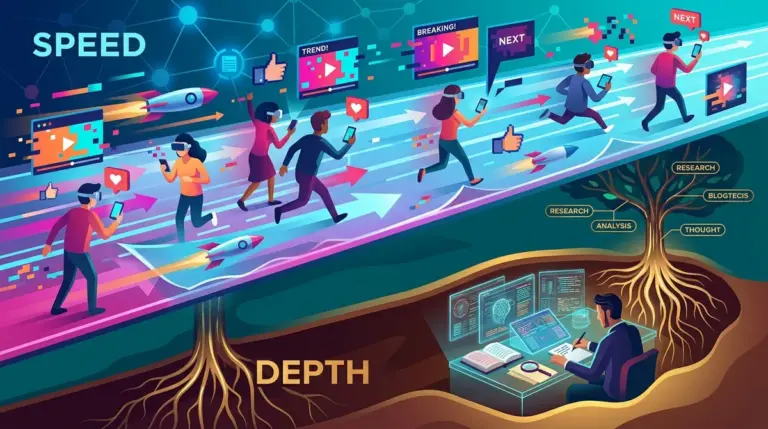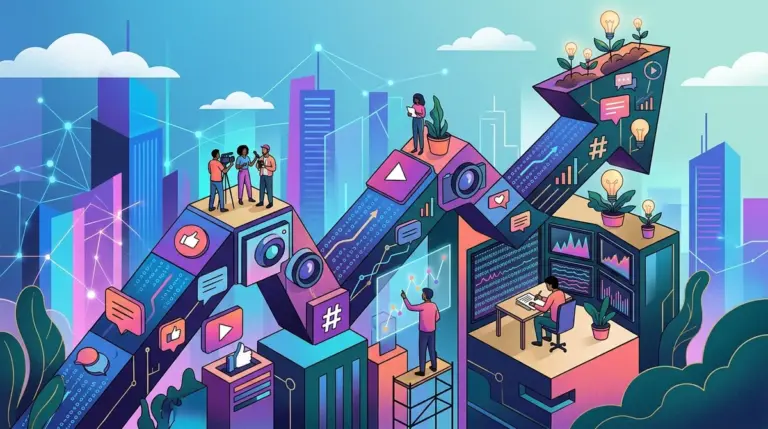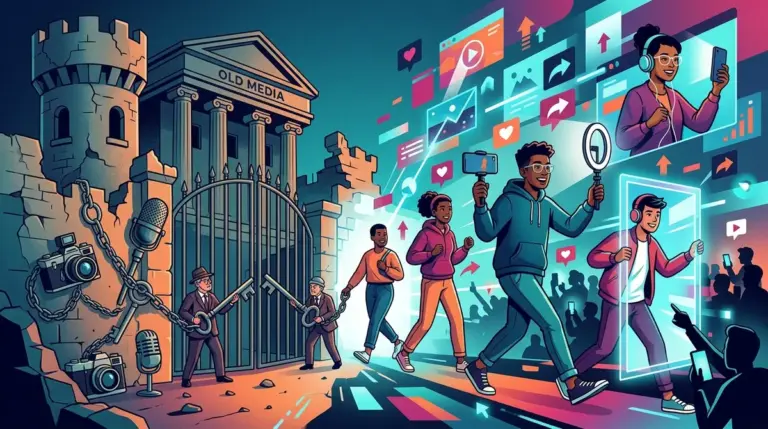

AI is changing how creators build audiences online by making content production faster, distribution smarter, and audience insights more actionable. The biggest shift is not that AI replaces creators; it lowers the cost of testing ideas, personalizing content, and turning one piece of work into many formats that travel across platforms. For creators, founders, and media brands, that means audience growth is becoming less about posting more and more about building repeatable systems.
Why AI matters for audience growth now
For years, creators grew by mastering platform algorithms, publishing consistently, and developing a recognizable point of view. Those fundamentals still matter. What AI changes is the speed and precision of the process. A solo creator can now research trends, outline scripts, edit clips, generate variations of hooks, and analyze comments in a fraction of the time it once took a small team.
That efficiency matters because audience-building online is increasingly competitive. Every category, from finance creators to indie game streamers to startup commentators, is crowded. AI gives creators a way to keep up with the demand for constant output without turning every week into a content treadmill.
It also changes who gets to compete. A creator with strong ideas but limited resources can now produce polished newsletters, short-form video, podcast clips, and community posts with a much smaller budget. In practical terms, AI is widening access while also raising the baseline quality audiences expect.
Where AI is having the biggest impact
1. Faster idea generation and trend spotting
Creators used to spend hours looking for angles that might resonate. AI tools now help scan transcripts, comments, search behavior, and platform patterns to surface recurring questions and emerging topics. That does not replace taste. It gives creators a stronger starting point.
The commercial upside is obvious: when creators identify audience demand earlier, they can publish content while interest is still rising instead of after the trend peaks. For startup-focused creators, that might mean jumping on a new funding narrative. For internet culture writers, it could mean catching a meme format before it gets exhausted.
2. Turning one idea into a content system
One of the most valuable uses of AI is repurposing. A single podcast episode can become short clips, quote posts, an email summary, a LinkedIn-style opinion post, a thread, and a script for a follow-up video. This is not just about squeezing more output from one recording. It is about meeting audiences where they already spend time.
Creators who build audiences well today do not think in isolated posts. They think in content systems. AI makes those systems easier to run by handling first drafts, formatting, transcription, summarization, and clip selection. That means more surface area for discovery without multiplying production costs.
3. Better hooks, titles, and packaging
Audience growth often depends less on the quality of the core idea and more on whether people stop scrolling long enough to engage. AI is increasingly useful for testing headlines, thumbnails, captions, and opening lines. A creator can generate multiple versions of a title, compare styles, and quickly refine the one that best matches the platform.
This is especially useful for creators who have expertise but struggle with packaging. A startup analyst may know exactly why a product launch matters, but AI can help frame that insight in a way that is clearer, sharper, and more clickable without becoming cheap clickbait.
4. Personalization at scale
As audiences fragment across platforms and niches, creators need to speak to different segments without sounding generic. AI helps tailor messaging for different audience groups: beginners versus experts, founders versus operators, casual readers versus superfans. The same core idea can be adapted into multiple versions with different examples, tone, and depth.
This is where AI starts to feel less like a writing assistant and more like a distribution engine. Creators can maintain a consistent brand voice while adjusting how they present ideas across channels. That makes growth more efficient because content does not need to be rebuilt from scratch every time.
5. Community management and audience intelligence
Audience-building is not only about publishing. It is also about listening. AI can help creators sort comments, identify recurring objections, detect sentiment shifts, and spot the questions people keep asking. That feedback loop is valuable because it turns audience behavior into editorial direction.
For paid communities, membership products, and creator-led businesses, this can directly affect revenue. If AI shows that subscribers are repeatedly asking for a specific tutorial, template, or breakdown, creators can convert that demand into a product, workshop, or premium content series.
What smart creators are actually using AI for
The most effective creators are not using AI as a magic growth button. They are using it in targeted ways that save time or improve decision-making. Common high-value use cases include:
- Researching audience questions before recording or writing
- Generating outlines for videos, newsletters, and podcast episodes
- Creating multiple hooks, titles, and captions for testing
- Transcribing and repurposing long-form content into short-form assets
- Summarizing audience feedback from comments, DMs, and community posts
- Drafting sponsor-friendly copy while preserving the creator’s voice
- Localizing or adapting content for different regions and audience segments
The pattern is clear: AI works best when it supports repeatable workflows. It is less useful when creators expect it to manufacture originality on demand.
The new advantage is taste, not just output
As AI makes content production easier, volume alone becomes less impressive. Audiences are already seeing more posts, more clips, and more synthetic-feeling content. That means the real advantage shifts toward judgment: what to say, what not to say, what angle is worth pursuing, and what voice feels distinct enough to remember.
This is why the strongest creator brands are likely to become more valuable, not less. AI can help anyone produce. It cannot easily replicate a creator’s lived experience, credibility, humor, timing, or worldview. In a feed full of competent content, personality and perspective become stronger differentiators.
For Pop17 readers tracking startup and creator-economy trends, this is the bigger business story. AI is commoditizing parts of production while increasing the premium on brand. The creators who win will be the ones who combine efficient systems with a clear editorial identity.
How creators can use AI without sounding artificial
Keep the source material human
The best AI-assisted content usually starts with real opinions, original reporting, firsthand experience, or a strong thesis. If the input is bland, the output will be forgettable. Creators should treat AI as a multiplier for ideas they already own, not a substitute for having something to say.
Edit for rhythm, specificity, and voice
AI drafts often flatten personality. Smart creators rewrite openings, swap generic phrases for concrete examples, and add the details that make content feel lived-in. A founder-creator should sound like someone who has shipped products, missed deadlines, and learned from users, not like a generic productivity account.
Use AI to test, not to imitate
There is a difference between optimizing your own style and copying someone else’s. Creators can use AI to explore alternate structures, stronger hooks, and better pacing without turning their work into a clone of whatever is already performing well. In crowded categories, imitation may drive short-term reach but usually weakens long-term brand value.
The business upside for creators and media brands
AI-driven audience growth is not just a content story. It is a margin story. When production and repurposing become cheaper, creators can publish more strategically, launch new formats faster, and support sponsorships with better consistency. That improves the economics of running a creator business.
For independent creators, this can mean reaching a level of output that once required editors, producers, and social managers. For media startups, it can mean testing niche verticals before hiring full teams. For talent managers and creator agencies, it creates a path to scale creator operations without making every brand feel mass-produced.
The creators best positioned to benefit are those who connect audience growth to monetization early. If AI helps increase discoverability, the next question is what that attention is for: subscriptions, sponsorships, digital products, events, consulting, or community memberships. Growth without a business model is still fragile.
A practical AI workflow for audience growth
Creators who want commercially useful results should think in stages:
- Find demand: analyze search trends, comments, and community questions.
- Develop an angle: turn broad interest into a specific, ownable point of view.
- Produce once: record or write one strong core asset.
- Repurpose widely: use AI to create clips, summaries, captions, and alternate formats.
- Test packaging: compare hooks, titles, and thumbnails.
- Read the feedback: identify what audiences actually respond to.
- Monetize the signal: build offers around repeated demand.
That workflow is where AI is most transformative. It helps creators move from random posting to a more disciplined growth engine.
What to watch next
The next phase is likely to be less about basic generation and more about integrated creator infrastructure. AI tools are getting better at connecting research, scripting, editing, publishing, analytics, and monetization in one loop. That will make audience-building feel more like operating a lightweight media company than simply posting online.
For creators, the opportunity is real but the bar is rising. AI can help build an audience faster, but it also makes average content easier to produce. The creators who stand out will use AI to sharpen strategy, not replace originality. In a more automated internet, human taste becomes the product.