
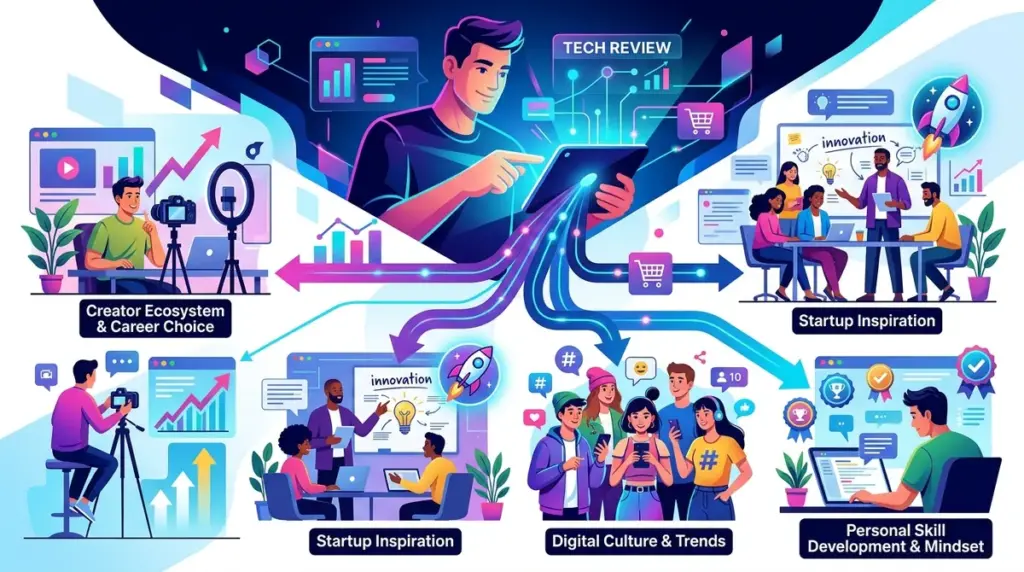
In a saturated digital economy, the tech review has evolved from a simple pre-purchase checklist into a high-stakes instrument of market positioning. For a SaaS founder or a digital publisher, a review is rarely just about the immediate conversion; it is a public audit of a brand’s technical maturity and its long-term viability. When a platform like The Verge or a niche technical analyst deconstructs a product, they aren't just telling consumers whether to click "buy." They are setting the benchmark for what the industry expects from that entire product category.
The SEO Battle for Third-Party Validation
Search engine results pages (SERPs) for high-intent keywords are increasingly dominated by third-party review aggregators and editorial roundups rather than brand-owned domains. If you search for "best headless CMS" or "enterprise CRM for fintech," the top three positions are almost never the software providers themselves. They are comparison engines and editorial reviews. This shift means that tech reviews serve as the primary gatekeeper for organic traffic.
Best for: Marketing directors looking to lower Customer Acquisition Cost (CAC) through indirect organic channels.
For agencies and publishers, appearing in these reviews is a matter of survival. A positive mention in a "Best of" list provides a permanent backlink with high topical authority, which signals to search algorithms that your domain is a trusted entity within a specific niche. This creates a "halo effect" where the review’s authority boosts your own site’s ranking for unrelated long-tail keywords. The influence here isn't just on the person reading the review; it’s on the algorithm deciding which brand deserves the most visibility.
Reviews as a Proxy for Product-Market Fit
Venture capitalists and angel investors now use the sentiment and volume of tech reviews as a non-traditional metric for due diligence. A product that generates high-velocity, detailed user feedback—even if some of it is critical—demonstrates a level of market engagement that a silent user base does not. It proves that the tool is actually being integrated into workflows.
When a review highlights a specific technical limitation, it provides the engineering team with a prioritized roadmap that is validated by the market. This is "unpaid R&D." Instead of guessing which features to build next, product managers can look at the recurring complaints in G2 or Capterra reviews to identify the exact friction points preventing scale. The review becomes a public-facing Jira board that informs the next sprint.
Warning: Avoid "Review Gating"—the practice of only soliciting reviews from customers you know are happy. Modern sentiment analysis tools used by competitors and investors can easily spot the lack of critical feedback, which often signals a curated, non-authentic brand presence that lacks transparency.
The Cultural Impact of the Creator Reviewer
The rise of the "prosumer" reviewer—think MKBHD for hardware or specialized YouTube channels for dev tools—has shifted the power dynamic away from traditional PR departments. These creators don't just list specs; they contextualize tech within the broader creator economy. A review from a trusted influencer can dictate the design language of an entire industry. For example, when major reviewers criticized the lack of physical ports on laptops, the industry was forced to pivot back to utility over minimalism in subsequent hardware cycles.
This cultural influence extends to internal hiring. Top-tier engineering talent wants to work for companies that are perceived as "winning" the tech discourse. A brand that consistently receives praise for its API documentation or its UI/UX in public reviews will have a significantly easier time recruiting senior developers. In this context, the review is a recruitment tool that validates the company's technical stack to potential hires.
Quantifying the Impact Beyond the Click
To understand the true reach of a tech review, marketers must look at metrics that sit outside the standard conversion funnel. A single high-authority review can impact:
- Sales Cycle Velocity: Sales teams can use third-party reviews as collateral to overcome objections, reducing the time spent in the "consideration" phase.
- Brand Sentiment Baseline: Aggregated review scores often appear in "Knowledge Panels" on Google, forming the first impression before a user even visits your site.
- Customer Retention: Seeing a product they already use praised in a major publication reinforces the user's decision, reducing churn through psychological validation.
- Partnership Opportunities: Other SaaS companies look at review ecosystems to identify potential integration partners who have a proven track record of reliability.
Strategic Implementation of Review Management
Managing the influence of reviews requires a shift from reactive damage control to proactive narrative building. This involves identifying the specific technical "moats" your product has and ensuring that reviewers have the necessary documentation to highlight them. If your software has a superior data encryption protocol, don't just hope the reviewer finds it; provide a technical white paper as part of the reviewer’s kit. You are not just asking for a rating; you are providing the evidence needed for them to build a compelling case for your product’s superiority.
Furthermore, the "long-tail" of reviews—smaller, niche blogs and technical forums—often carries more weight with high-value enterprise clients than a single mention in a massive mainstream outlet. These niche reviews are often written by practitioners for practitioners, leading to a higher level of trust and a more direct impact on technical decision-making.
Actionable Steps for Leveraging Tech Sentiment
To turn reviews into a strategic asset, stop treating them as static testimonials. Instead, integrate them into your broader business intelligence. Monitor the reviews of your closest competitors to identify their "feature gaps." If a competitor is consistently criticized for poor mobile responsiveness, that becomes the centerpiece of your next ad campaign and review outreach.
Establish a system where the marketing team feeds review data directly to the product and customer success teams. This creates a closed-loop system where the public perception of the product directly informs its evolution. In the digital age, your product is not what you say it is; it is the sum of the public's documented experiences with it. Mastering that narrative is the only way to maintain a competitive edge in an increasingly crowded marketplace.
Frequently Asked Questions
How do reviews affect B2B sales cycles specifically?
In B2B, reviews act as a "risk mitigator." Decision-makers use third-party validation to justify a purchase to stakeholders or procurement departments. A strong presence on reputable review sites can shorten the evaluation phase by providing immediate social proof and technical verification.
What is the most important metric to track in a review?
Beyond the star rating, look at "Review Velocity"—the frequency with which new reviews are posted. High velocity suggests an active, growing user base, which is a key indicator of product health and market relevance to both users and investors.
Should companies respond to negative technical reviews?
Yes, but the response must be technical and solution-oriented. Avoid generic PR speak. Address the specific technical grievance, explain if a fix is in the roadmap, and provide a direct channel for further discussion. This demonstrates accountability and a commitment to product excellence.