The commercial adoption of generative AI has moved faster than the legal frameworks required to govern it. For agencies, publishers, and creators, the pivot from "experimentation" to "production" introduces a volatile mix of copyright ambiguity and brand reputation risk. While the efficiency gains of using Large Language Models (LLMs) and diffusion models are undeniable, the ethical debt accrued by ignoring data provenance can lead to litigation, platform bans, or the loss of intellectual property protections. Decision-makers must now balance the immediate cost-savings of AI with the long-term necessity of maintaining a defensible, human-centric creative moat.
The Authorship Crisis and the US Copyright Office
The most immediate commercial hurdle for AI-generated creativity is the lack of copyright protection. Current rulings from the US Copyright Office (USCO) have consistently held that works created by AI without "significant human control" are ineligible for copyright. This creates a massive vulnerability for brands: if you generate a logo or a flagship hero image using a prompt alone, that asset effectively enters the public domain. Competitors could, in theory, use your visual identity without legal recourse.
Best for: Legal teams and creative directors who need to ensure that high-value brand assets remain proprietary and enforceable in court.
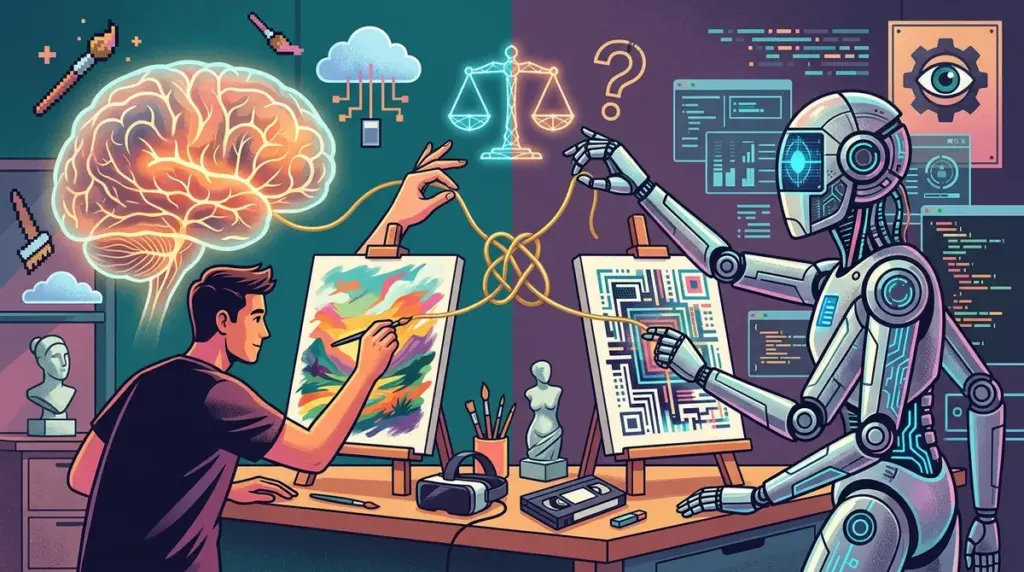
To mitigate this, sophisticated agencies are documenting the "human-in-the-loop" process. This involves saving iterative drafts, manual Photoshop edits, and structural layering that proves human agency over the final output. The goal is to move the work from "AI-generated" to "AI-assisted," a distinction that currently serves as the thin line between owning your IP and giving it away for free.
Data Provenance and the Ethics of Training Sets
The ethical friction in AI stems largely from the "black box" nature of training data. Most foundational models were trained on massive scrapes of the open internet—often including copyrighted artwork, private portfolios, and paywalled journalism—without the consent of the original creators. For a startup or a creator-led business, using these tools means participating in a system that may have cannibalized the very industry they inhabit.
The "Style Theft" Dilemma
While you cannot copyright an "artistic style," the ability of AI to mimic specific living artists with surgical precision has created a moral crisis. When a prompt includes "in the style of [Specific Artist]," the model is essentially leveraging that artist's lifetime of work to generate a derivative product. From a commercial standpoint, this can lead to "association risk," where a brand is publicly called out for exploiting a creator’s aesthetic without compensation. This is not just a PR problem; it is a fundamental shift in how "originality" is valued in the marketplace.
Indemnification as a Competitive Advantage
We are seeing a divergence in the market between "open" and "closed" ecosystems. Platforms like Adobe Firefly have gained traction specifically because they train on licensed or public-domain imagery and offer enterprise indemnification. For a CMO, the peace of mind that comes with knowing a model won't trigger a "substantial similarity" lawsuit is often worth more than the raw creative flexibility of an unconstrained open-source model like Stable Diffusion.
Pro Tip: Always check the Terms of Service for "Output Ownership" and "Indemnification" clauses. If a tool does not explicitly state that you own the output and that they will defend you against copyright claims, do not use it for client-facing work or core brand assets.
The Transparency Mandate: Disclosure and Watermarking
As deepfakes and AI-generated misinformation proliferate, the "right to know" is becoming a standard consumer expectation. Ethical creativity now requires a level of transparency that was previously unnecessary. This isn't just about moral high ground; it’s about platform compliance. Google, TikTok, and Meta have already begun implementing or requiring metadata labels (such as C2PA standards) that identify AI-generated content.
- Content Credentials: Implementing digital "nutrition labels" that track the history of an image from capture to AI-edit.
- Algorithmic Disclosure: Clearly stating in the footer or caption when text or video has been synthesized by AI.
- Opt-out Mechanisms: Ensuring your own site’s robots.txt is updated to prevent your original content from being scraped by future model iterations.
For publishers, the risk of "AI-washing"—passing off synthetic content as human-written—can lead to severe SEO penalties and a total loss of audience trust. The market is already seeing a "flight to quality," where human-bylined, experience-driven content commands a premium over the sea of generic, AI-generated filler.
Commercial Liability and the Substantial Similarity Trap
The legal standard for copyright infringement is "access" and "substantial similarity." Because AI models have "access" to almost everything on the web, any output that looks remotely like an existing copyrighted work is legally vulnerable. This is particularly dangerous in technical writing, code generation, and commercial photography. If an AI-generated snippet of code matches a proprietary library, or an image matches a Getty-licensed photo, the user—not the AI company—is often the one left holding the liability.
To navigate this, agencies are adopting "Clean Room" AI protocols. This involves using AI to generate ideas or mood boards, but then having human designers recreate the final assets from scratch. This ensures that the final product is a result of human labor, even if the inspiration was synthesized by a machine.
Establishing a Creative Provenance Strategy
To stay competitive without sacrificing ethics or legal safety, businesses must move beyond "prompting" and toward a structured AI policy. Start by auditing your current toolset for data transparency. Prioritize models that offer opt-in training for creators or those that provide clear legal protections for commercial users. Secondly, establish a "Human-in-the-Loop" requirement for all client deliverables to ensure copyrightability. Finally, embrace radical transparency with your audience; those who are honest about their use of technology will build more resilient brands than those who attempt to hide it. The future of creativity isn't about choosing between human or machine—it's about managing the relationship between the two with technical precision and legal foresight.
Frequently Asked Questions
Can I copyright an image I made with Midjourney?
Currently, no. The US Copyright Office has ruled that AI-generated images lack the "human authorship" necessary for copyright. You can only copyright the elements you manually added or modified yourself, provided they are significant.
What is the safest AI tool for commercial use?
Tools like Adobe Firefly or Getty Images’ AI Generator are generally considered safer because they are trained on licensed datasets and offer legal indemnification to their users, reducing the risk of copyright infringement claims.
Should I disclose that my blog posts are AI-generated?
Yes. Transparency is becoming a requirement for both SEO and platform compliance. Disclosing AI use helps maintain audience trust and aligns with emerging standards from major social media and search platforms.
Does using AI-generated code put my software at risk?
It can. If the AI generates code that is substantially similar to a licensed or proprietary library, you could be liable for infringement. It is essential to run AI-generated code through plagiarism and license checkers before deployment.