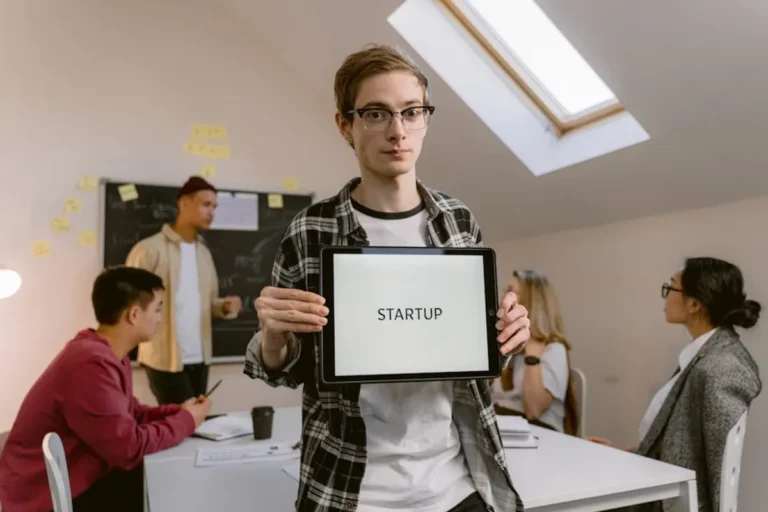
For entrepreneurs navigating today's dynamic market, understanding emerging technology trends is not merely an advantage—it is foundational for sustained relevance and competitive differentiation. The rapid pace of innovation means that what was cutting-edge yesterday can become a baseline expectation tomorrow. Businesses that proactively identify and integrate these shifts can unlock new efficiencies, engage customers more effectively, and discover entirely new revenue streams, while those that do not risk obsolescence. The following outlines critical tech trends poised to reshape industries, offering specific insights into their commercial implications for forward-thinking entrepreneurs.
Generative AI and Intelligent Automation
Generative Artificial Intelligence (AI) has moved beyond theoretical discussion to practical application, offering entrepreneurs unprecedented capabilities in content creation, design, and operational efficiency. This technology utilizes algorithms to produce new data, including text, images, audio, and code, based on learned patterns from existing datasets. For businesses, this translates into automated content generation for marketing campaigns, personalized customer service responses, accelerated product design cycles, and sophisticated data analysis that informs strategic decisions.
- Content Creation: AI tools can draft marketing copy, social media posts, blog outlines, and even video scripts, significantly reducing time and cost associated with content production. This allows smaller teams to maintain a high volume of relevant, targeted communications.
- Customer Experience: AI-powered chatbots and virtual assistants offer 24/7 support, answering common queries, guiding users through processes, and providing personalized recommendations, thereby improving customer satisfaction and reducing support overhead.
- Product Development: Generative AI can assist in rapid prototyping and design iteration, exploring numerous design variations based on specific parameters, which accelerates time-to-market for new products and features.
Commercial Impact: Entrepreneurs leveraging generative AI can achieve scale without proportional increases in headcount, enabling them to compete more effectively with larger organizations. The ability to personalize interactions and automate repetitive tasks frees up human capital for higher-value strategic work.
Personalized Digital Experiences
The expectation for tailored interactions has become a consumer standard, making personalized digital experiences a non-negotiable for entrepreneurs aiming to build strong customer relationships. This trend moves beyond simple name-insertion in emails, encompassing dynamic website content, customized product recommendations, and contextualized communication based on individual user behavior, preferences, and historical data. Advanced analytics and machine learning algorithms are crucial here, allowing businesses to interpret vast amounts of data to create truly unique user journeys.
Best for: E-commerce platforms, content publishers, and service providers seeking to increase conversion rates, customer loyalty, and average order value.
Implementing effective personalization requires robust data collection and analysis infrastructure. Entrepreneurs must focus on ethical data practices and transparent privacy policies to build trust, as consumers are increasingly wary of how their information is used. The goal is to anticipate needs and deliver relevant value at every touchpoint.
Pro Tip: When implementing AI or personalization, start with a clearly defined, measurable objective. For example, use AI to automate 30% of initial customer support inquiries, or personalize product recommendations to increase click-through rates by 15%. This focused approach ensures tangible ROI and avoids broad, unfocused deployments.
Sustainable Innovation and Circular Economy Models
Consumer and regulatory pressures are driving a significant shift towards sustainable business practices. Entrepreneurs who embed environmental responsibility into their core operations and product development are tapping into a growing market segment and future-proofing their ventures. This trend includes developing eco-friendly products, optimizing supply chains for reduced waste and emissions, utilizing renewable energy, and adopting circular economy principles where products and materials are kept in use for as long as possible, then regenerated at the end of their service life.
Commercial Impact: Beyond meeting ethical demands, sustainable innovation can lead to cost savings through reduced resource consumption, enhanced brand reputation, and access to new markets driven by green procurement policies. It also attracts environmentally conscious talent and investors.
Examples include companies designing products for durability and repairability, offering product-as-a-service models, or utilizing advanced recycling technologies to reintegrate materials into new production cycles. Entrepreneurs in this space are often at the forefront of material science and process optimization.
Decentralized Technologies and Web3 Applications
While often associated with cryptocurrencies, decentralized technologies, broadly categorized under Web3, offer entrepreneurs opportunities beyond speculative assets. This trend centers on blockchain, distributed ledger technology, and tokenization, enabling new models of data ownership, verifiable digital identity, transparent supply chains, and novel incentive structures. For entrepreneurs, this means exploring applications that enhance trust, security, and user control.
- Supply Chain Transparency: Blockchain can provide an immutable record of a product's journey from origin to consumer, verifying authenticity, ethical sourcing, and compliance, which is valuable for industries like luxury goods, food, and pharmaceuticals.
- Digital Ownership and Creator Economy: Non-Fungible Tokens (NFTs) enable verifiable digital ownership of assets, opening new avenues for creators to monetize their work directly and for brands to build unique loyalty programs or digital collectibles.
- Data Privacy and User Control: Decentralized identity solutions empower users with greater control over their personal data, potentially fostering new services built on trust and consent.
Consideration: While promising, the Web3 landscape is still evolving, requiring entrepreneurs to carefully assess regulatory implications, user adoption curves, and the maturity of underlying technologies before significant investment.
No-code and Low-code Development Platforms
The demand for custom software solutions often outstrips the availability of skilled developers. No-code and low-code platforms address this gap by enabling entrepreneurs and their teams to build applications, automate workflows, and create websites with minimal or no traditional programming. These platforms use visual interfaces with drag-and-drop components, pre-built templates, and simplified logic, significantly accelerating development cycles and reducing costs.
Best for: Startups needing to rapidly prototype MVPs, small businesses automating internal processes, or marketing teams building dynamic landing pages without relying on extensive IT resources.
This trend democratizes software creation, allowing business-savvy individuals to translate ideas into functional tools without deep technical expertise. It fosters agility, enabling faster iteration and response to market feedback. While not suitable for every complex enterprise application, these platforms are powerful for internal tools, customer-facing portals, and proof-of-concept projects.
Strategic Integration for Growth
Successfully navigating these tech trends requires more than simply acknowledging their existence; it demands a strategic approach to integration. Entrepreneurs should prioritize trends that directly align with their business model, customer needs, and long-term vision. Start with pilot projects to test viability and measure impact before scaling. Foster a culture of continuous learning and experimentation within your organization to stay agile and responsive to the evolving technological landscape. The goal is not to adopt every trend, but to intelligently leverage those that offer the most significant opportunity for differentiation and sustainable growth.
Frequently Asked Questions
How can a small business effectively monitor these rapidly changing tech trends?
Small businesses can monitor trends by subscribing to industry newsletters, following thought leaders on professional platforms, attending virtual tech conferences, and engaging with specialized communities. Prioritize sources that offer practical applications rather than just theoretical discussions.
What is the first step an entrepreneur should take to integrate a new tech trend?
Begin with a clear problem statement or opportunity identified within your business. Then, research how a specific tech trend could address it. Start with a small-scale pilot project or a minimum viable product (MVP) to test the concept, gather data, and assess its impact before committing significant resources.
Are there specific industries where these trends will have the most immediate impact?
While these trends have broad applicability, industries such as e-commerce, digital marketing, manufacturing (for automation and supply chain), and creative services (for generative AI) are likely to experience immediate and transformative impacts. Any business reliant on customer data or content creation will also see significant shifts.
What are the biggest risks for entrepreneurs ignoring these tech trends?
Ignoring these trends carries significant risks, including losing competitive advantage, failing to meet evolving customer expectations, operational inefficiencies, and missing opportunities for new revenue streams. Over time, this can lead to market irrelevance and diminished profitability.