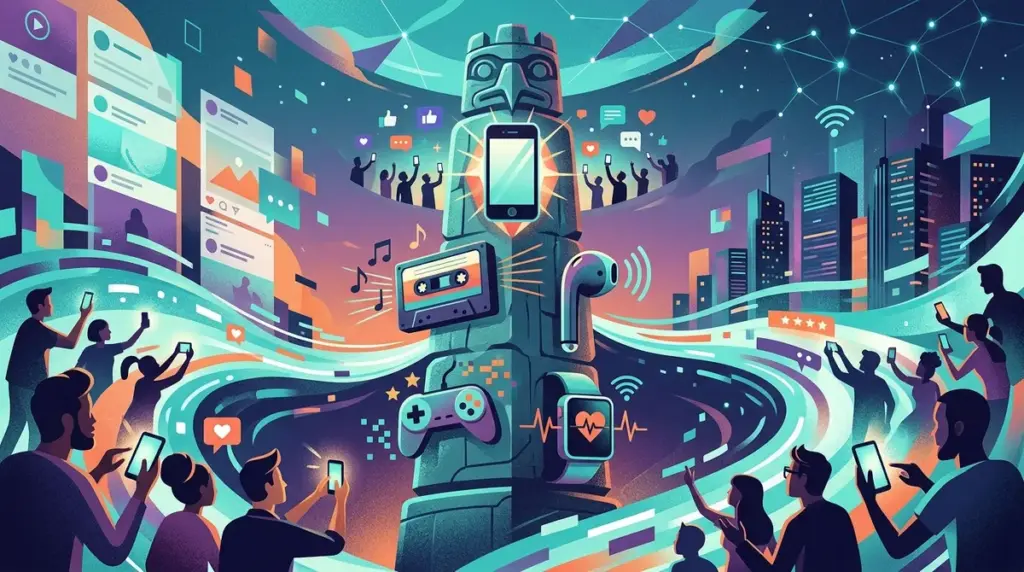
Hardware success is rarely a matter of raw technical specifications. In a market where Moore’s Law has flattened the performance gap between competitors, the difference between a device that ends up in a junk drawer and one that defines a generation is its ability to transition from a tool to a cultural signifier. For marketers and digital strategists, understanding this shift is essential for predicting which platforms will host the next decade of consumer attention. When a gadget becomes a symbol, it stops being a line item on a budget and starts being a lifestyle requirement.
The Mechanics of Status and Utility
A gadget achieves cultural symbol status when it solves a friction point while simultaneously signaling a specific set of values. The original iPod didn't just play MP3s; it signaled an affinity for minimalist design and a rejection of the clunky, file-folder management of the early digital era. Today, we see this in the rise of Teenage Engineering products. Their synthesizers and field recorders are technically proficient, but their primary value to the creator economy is their aesthetic "flex." Owning an OP-1 isn't just about making music; it’s about signaling that the user values high-concept industrial design and tactile feedback over software-only solutions.
Best for: Brand managers looking to identify high-retention hardware ecosystems for long-term sponsorship or integration.
The Role of Industrial Design as Brand Moat
Software is easily replicated, but physical hardware creates a tangible moat. The weight of a device, the specific click-feel of a button, and the choice of materials (machined aluminum versus injection-molded plastic) dictate the user’s subconscious perception of value. When a gadget like the Remarkable 2 tablet gains traction, it isn't because it has more features than an iPad—it’s because it has fewer. By stripping away notifications and backlighting, it became a symbol for "deep work" and digital minimalism. It turned a technical limitation into a high-status productivity signal.
The Creator Economy and the 'Uniform' Effect
In the current digital landscape, gadgets often become symbols because they function as the "uniform" for specific professional niches. If you see a specific microphone or camera in the background of a high-performing YouTube channel, that device becomes the de facto standard for the entire aspiring class of creators. This is the "Social Proof" loop of hardware.
- The Sony ZV-1: Became the symbol of the transition from high-production vlogging to "authentic" everyday storytelling.
- The Elgato Stream Deck: Transformed from a niche gaming peripheral into the universal symbol of the professional workstation, regardless of the industry.
- The Fujifilm X100 series: Re-established the camera as a fashion accessory, signaling a "film-like" intentionality in an era of AI-processed smartphone photography.
These devices don't just perform a task; they validate the user’s membership in a specific creative or professional tribe. For agencies and publishers, tracking these hardware shifts is a leading indicator of where content styles are heading. A surge in analog-style hardware often precedes a shift toward nostalgic, high-grain aesthetic trends in social media advertising.
Warning: Avoid "Feature Creep" when evaluating new hardware for brand partnerships. Devices that attempt to be everything to everyone rarely achieve symbolic status. Cultural symbols are almost always polarizing; they do one thing exceptionally well and ignore the rest.
Scarcity and the 'Drop' Model of Hardware
The commoditization of electronics has led some manufacturers to borrow tactics from the streetwear industry. Companies like Analogue (makers of high-end retro gaming hardware) use limited production runs and "pre-order windows" to create a secondary market that sustains interest long after the initial launch. When a gadget is hard to get, the act of owning it becomes a story in itself. This scarcity drives organic search volume and creates a community of "owners" who act as unpaid brand evangelists.
This model works because it bypasses the traditional "spec war." If a consumer is buying an Analogue Pocket, they aren't comparing its processor speed to a Nintendo Switch. They are buying a piece of functional art that retains its value. This is a crucial distinction for investors and startups: cultural symbols are inflation-proof in a way that generic consumer electronics are not.
Ecosystem Lock-in and the Network Effect
A gadget becomes a symbol when the cost of leaving its ecosystem is higher than the cost of the hardware itself. This isn't just about cloud storage or proprietary cables; it's about the social cost. The "Blue Bubble" phenomenon in iMessage is the most cited example of hardware-driven social signaling. When a device dictates the social dynamics of a peer group, its status as a cultural symbol is cemented. It moves from being a "choice" to being a "standard."
Evaluating Hardware for Market Longevity
When assessing whether a new piece of technology will achieve cultural staying power, look past the press release. Analyze the community forming around the device. Is there a vibrant third-party accessory market? Are users modifying the hardware? Is the device appearing in non-sponsored content from influential creators? These are the markers of a symbolic transition. To capitalize on these trends, businesses should focus on the following metrics:
Secondary Market Value: High resale value on platforms like eBay or Reverb is a direct proxy for cultural relevance and perceived quality. If a two-year-old device sells for 80% of its MSRP, it has achieved symbolic status.
Search Intent Diversity: Look for search queries that aren't just "how to use [Product]," but rather "[Product] aesthetic," "[Product] setup," or "[Product] alternatives." This indicates the device is being used as a benchmark for a specific lifestyle or workflow.
Community Documentation: A gadget with a dedicated subreddit or Discord server where users share "setups" or "EDC" (Every Day Carry) photos is a gadget that has successfully integrated into the user's identity.
Frequently Asked Questions
What makes a gadget a "cultural symbol" versus just a popular product?
A popular product solves a problem for a mass audience, but a cultural symbol represents an identity or a specific set of values. People buy popular products for what they do; they buy cultural symbols for what they say about the owner.
Can software-only brands achieve this same symbolic status?
It is significantly harder. Physicality provides a sensory experience—weight, texture, and visual presence—that software lacks. While apps like TikTok or Notion have cultural weight, they lack the "object of desire" quality that high-end hardware provides.
How can startups build cultural relevance into their hardware?
Focus on a "signature" design element that is recognizable from across a room. Whether it's a specific color (like Dyson's purple) or a unique silhouette, visual distinctiveness is the first step toward becoming a symbol.
Does high price always equal high status in tech?
No. The Casio F-91W watch is a cultural symbol despite costing less than $20. Its status comes from its reliability, its history, and its rejection of unnecessary complexity. Status is about authenticity and clear intent, not just a high price tag.