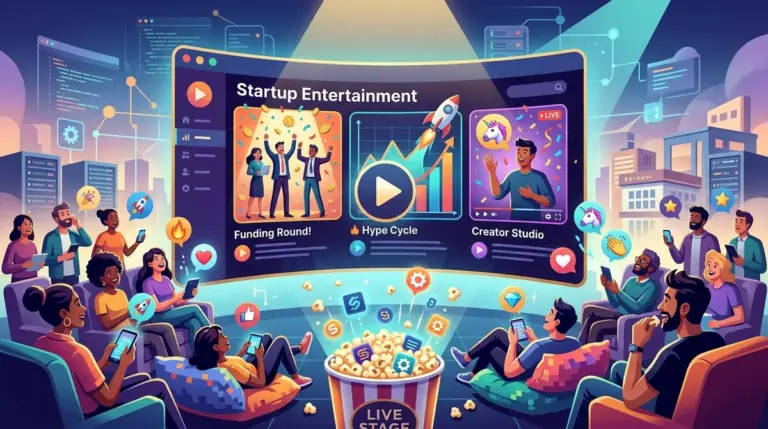
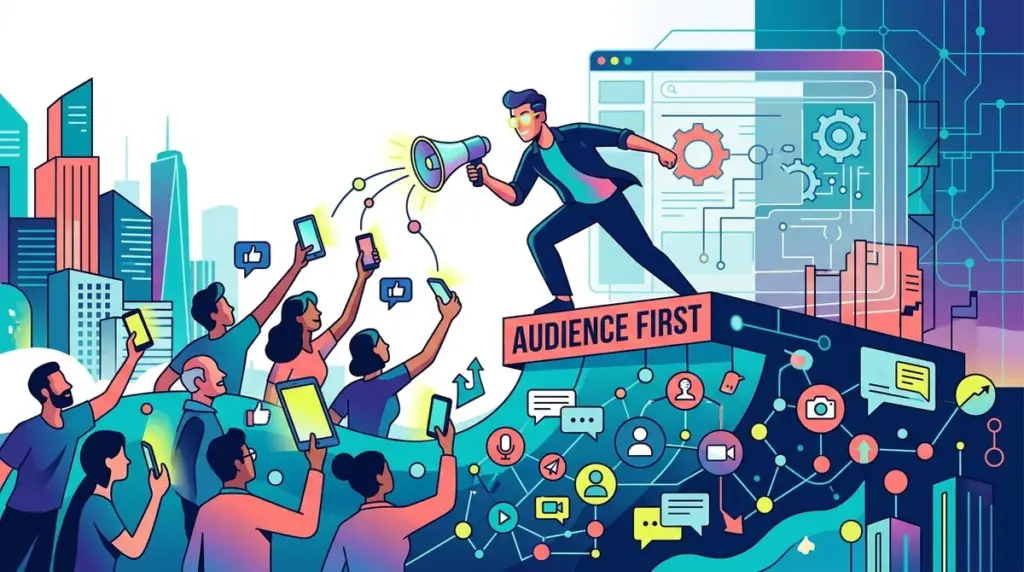
The traditional startup roadmap—raise capital, build a stealth product, and launch with a PR blitz—is failing in a saturated digital economy. High customer acquisition costs (CAC) and the noise of the modern SaaS landscape have inverted the model. Successful founders now treat distribution as a prerequisite rather than a post-launch phase. By building an audience before a single line of code is written, founders de-risk their ventures, validate features in real-time, and create a "distribution moat" that competitors cannot simply buy with ad spend. This shift emphasizes treating distribution as a prerequisite for success, fundamentally altering the traditional startup playbook.
The Shift Toward Minimum Viable Audiences
The concept of the Minimum Viable Product (MVP) has been superseded by the Minimum Viable Audience (MVA). An MVA is a group of people who share a specific pain point and look to a founder for expertise, curation, or community. Unlike a general social media following, an MVA is characterized by a high signal-to-noise ratio. Founders build this by identifying a niche "problem space"—such as the inefficiencies of remote engineering management or the complexities of cross-border tax compliance—and providing consistent, high-value insights long before pitching a solution. This approach redefines early-stage startup growth, focusing on building a Minimum Viable Audience before product development.
Best for: Bootstrapped founders and solo-entrepreneurs looking to achieve product-market fit without burning through venture capital on experimental marketing.
Validating Hypotheses Through Content Segments
Instead of conducting formal market research surveys that often yield biased data, founders use content to test hypotheses. If a founder writes a deep-dive thread on the friction of API integrations and it receives significant engagement from CTOs, they have identified a high-value problem. This "content-as-research" model allows for rapid pivoting. If a topic fails to resonate, the founder has lost only the time spent writing, not months of development resources.
High-Leverage Platforms for Pre-Product Growth
Choosing the right platform is a strategic decision based on where the target persona consumes professional information. For B2B founders, LinkedIn and specialized newsletters are the primary drivers. For B2C or creator-economy startups, platforms like X (formerly Twitter) or vertical-specific communities like Discord provide faster feedback loops.
- LinkedIn: Best for high-ticket B2B services and enterprise software. The algorithmic reach rewards long-form, authoritative commentary on industry shifts.
- Beehiiv and Ghost: These platforms allow founders to own their data. Building an email list ensures that the audience isn't subject to the whims of social media algorithm changes.
- Niche Forums: Engaging in Subreddits or Hacker News provides direct access to technical early adopters who are often the harshest, and therefore most useful, critics.
The Build-in-Public Framework
Building in public is more than just sharing revenue screenshots. It is a tactical transparency that builds a "trust bridge" between the founder and the future user. By sharing the technical challenges, the "why" behind specific feature trade-offs, and even the failures, founders humanize the brand. This transparency transforms passive observers into stakeholders who feel a sense of ownership over the product’s success.
Warning: Avoid the "echo chamber" trap. Building in public often attracts other founders rather than actual customers. Ensure your content addresses the specific pain points of your buyer persona, not just the meta-narrative of being a startup founder.
Converting Attention into Beta Testers
The transition from a reader to a user must be frictionless. Founders use "lead magnets" that are functional rather than just educational. For example, a founder building a productivity tool might first release a sophisticated Notion template or a specialized Google Sheets calculator. This provides immediate value while qualifying the lead. When the actual software is ready for beta testing, the founder has a warm list of users who have already integrated the founder's logic into their workflow.
Differentiator: Unlike paid ads, which stop delivering the moment the budget is cut, an audience-first approach creates a compounding asset. Every piece of evergreen content continues to attract potential users while the founder focuses on product development.
Executing the Audience-to-Product Pivot
Once an audience reaches a critical mass—typically defined by a 20% or higher engagement rate on newsletters or a consistent influx of inbound inquiries—the founder can begin the "soft launch." This involves inviting the most active members of the community into a closed beta. This group serves as a high-fidelity feedback loop, ensuring that the version 1.0 of the product solves the core problem identified during the content-building phase. The goal is to enter the market with a product that has already been vetted by its future users, effectively eliminating the "cold start" problem that plagues most new launches.
Frequently Asked Questions
How much time should I spend on audience building versus product development?
In the pre-seed stage, the split is often 70/30 in favor of audience building. As the product gains traction and requires more engineering resources, this shifts. However, a founder should never completely stop producing content, as it remains the primary engine for low-cost growth.
What if I am a technical founder who isn't a "writer"?
Focus on "documentation" rather than "creation." Share technical hurdles, architectural decisions, and the logic behind your tech stack. Technical audiences value raw, honest documentation over polished marketing copy.
Can I build an audience if my product is in a boring or highly regulated industry?
Yes. In fact, "boring" industries (like compliance, logistics, or insurance) often have the most underserved audiences. Providing clarity in a complex, jargon-heavy field is one of the fastest ways to build authority and trust.
How do I know when my audience is large enough to launch a product?
Size is secondary to engagement. If you can send an email to your list and receive 10-15 detailed replies from people willing to jump on a feedback call, you have enough of an audience to begin validating a physical or digital product.